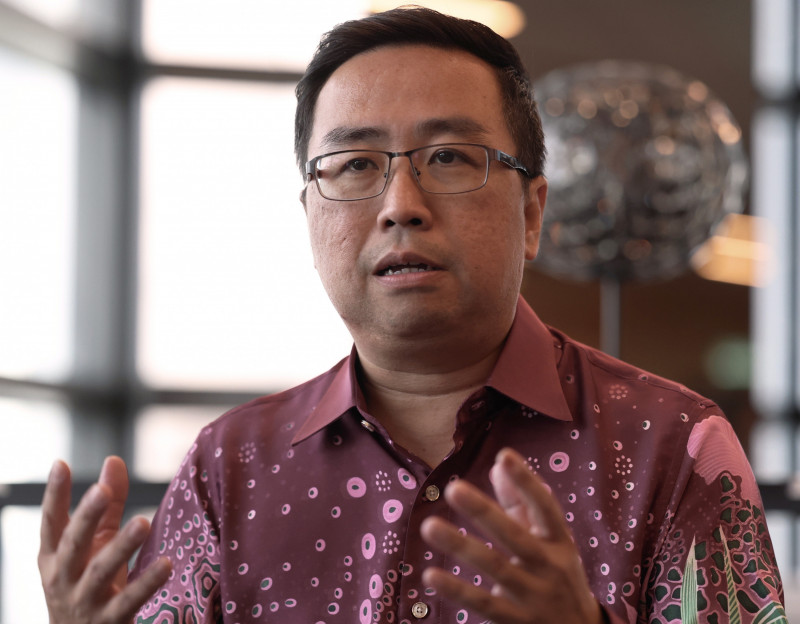
MALAYSIA must sign and ratify at least eight crucial international protocols before it can move forward with exploring nuclear energy as a potential source for electricity generation, according to Minister of Science, Technology, and Innovation (MOSTI) Chang Lih Kang.
The minister outlined the regulatory framework governing nuclear technology use, emphasising the importance of complying with international conventions and United Nations (UN) Security Council resolutions.
Chang explained that Malaysia has already signed and ratified several essential protocols, including The Application of Safeguards in Connection with the Treaty on the Non-Proliferation of nuclear weapons, The Convention on Early Notification of a Nuclear Accident, and The Convention on Assistance in the Case of a Nuclear Accident or Radiological Emergency.
However, there are additional key agreements yet to be signed, such as the Vienna Convention on Civil Liability for Nuclear Damage and the Convention on Supplementary Compensation for Nuclear Damage, which must be addressed before pursuing nuclear energy for power generation.
"To enable these treaties and agreements to be signed, the government will expedite and finalise the gazette of the Atomic Energy Licensing Amendment Bill 2025," Bernama cited Chang saying.
He added that the Ministry of Science, Technology and Innovation (MOSTI), along with the Foreign Ministry, will oversee the completion of this process through the Atomic Energy Licensing Board (AELB).
The minister was responding to questions from Senator Susan Chemerai Anding, who asked about Malaysia's progress in ratifying international agreements for nuclear technology, and whether the country has a clear timeline for completion.
In his response, Chang reassured the public that the government is committed to meeting international obligations before proceeding with nuclear energy plans.
In response to a supplementary question from Senator Datuk Dr Mohd Hatta Md Ramli, who asked about Malaysia’s commitment to nuclear energy for electricity generation, Chang clarified that the country is still in the exploratory phase.
"We have not decided, but we need to be prepared so that if we decide to proceed, the necessary characteristics and conditions are in place," he said.
He added the Malaysian Nuclear Agency currently employs around 300 specialists with expertise in nuclear technology and related fields, underlining the nation's readiness to undertake future nuclear energy initiatives when the time is right. – March 10, 2025