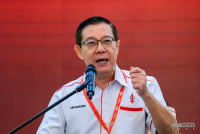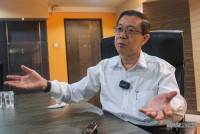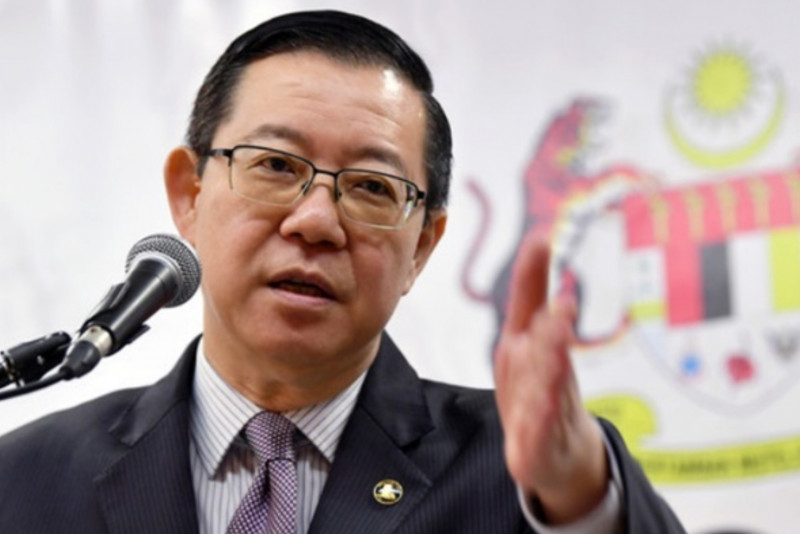

FORMER Finance Minister Lim Guan Eng wants the treasury to be more proactive in addressing the uncertain global economic climate by halting measures which invertedly increase operational costs on small medium enterprises (SMEs)
Besides previously lending his voice to putting on hold the withdrawal of blanket subsidies on fuel, Lim said that he has sent a request to the ministry to exempt nonprofitable and charitable organisations from having to submit e-invoicing as required by the Income Revenue Board.
"At a time when the global economy is uncertain and tariff wars on the rise, many small businesses are concerned about rising costs, and they worry that e-invoicing measures will increase the operational costs," Lim said.
"I have told the Government that societies, community halls and non-governmental organizations are not for profit and commercial purposes and should be exempt from the e-invoicing. It is also suggested that the government should raise the threshold for the implementation of e-invoicing measures from RM150,000 to RM500,000."
Importantly, when the economy may have a risk of recession, the Government should extend the implementation of e-invoicing to reduce administrative pressure on the SMEs, said Lim.
"Besides, I have also reflected to the Government the views of the public on the increase in electricity tariffs and the RON95 petrol subsidy. I believe that the relevant departments will make further announcements and I hope the people will be patient and wait for it."
Lim, who is the former Penang Chief Minister, has taken a consistent stance in urging the monetary authorities to ease constraints, so the additional savings, can be reinvested to boost domestic consumption in view of the uncertain global economy.
In the latest data from Bank Negara, the economy continues to be relatively stable despite the headwinds triggered by the United States (US) tariffs threat.
The Malaysian economy expanded by 4.4% in the first quarter of 2025, driven by the steady expansion in domestic demand.
Household spending was sustained amid positive labour market conditions and income-related policy measures, including the upward revision of minimum wage and civil servant salary.
The steady expansion in investment activities was supported by realisation of new and existing projects.
In the external sector, export growth was slower due mainly to lower mining exports.
This was partially offset by stronger electrical and electronics (E&E) exports and tourism.
At the same time, imports growth, although more moderate, continued to be driven by strong demand for capital goods, reflecting continued investment and trade activities. - June 6