THE High Court of Sabah and Sarawak began hearing a landmark judicial review today over Sabah’s long-contested constitutional entitlement to 40% of net federal revenue collected from the state.
The Sabah Law Society (SLS) is seeking to overturn a 2022 federal government review order, which it argues was unconstitutional and conducted without fulfilling mandatory provisions under Articles 112C and 112D of the Federal Constitution.
Proceedings opened before High Court Judge Datuk Celestina Stuel Galid, with oral arguments heard from all parties.
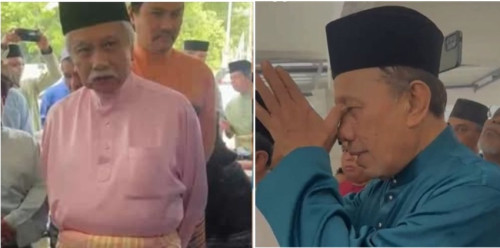
The courtroom was packed, with tight security at the premises. Politicians including Warisan president Datuk Seri Mohd Shafie Apdal, Datuk Seri Yong Teck Lee, and Datuk Darell Leiking were seen in attendance.
Federal government: Review was “ongoing” since 1974
Counsel for the federal government argued that the review process has been “ongoing” since 1974, during which Sabah received an annual fixed grant of RM26.7 million. They maintained that this did not breach Article 112D.
However, SLS questioned the legitimacy of that figure, stating that the last properly constituted review occurred in 1969, with no updated review or Order of the Yang di-Pertuan Agong between 1974 and 2021.
The 1970 review order, signed by then finance minister Tun Razak, had fixed federal grants for the years 1969–1973 at RM20m to RM26.7m.
SLS argued that the absence of any new review mechanism for 48 years constituted a constitutional breach, and cited Article 112D(3) and (4), which use the word “shall”, indicating a mandatory obligation to conduct periodic reviews.
“If you absorb the federal government of doing a review for 48 years, then that means those same years are lost—and so are our rights,” said SLS counsel.
They contended that the so-called “ongoing negotiations” were not supported by evidence, with the federal government admitting that most documents are classified and not available to the court.
SLS: No review means no lawful grant
SLS further contended that a valid review under Article 112D requires agreement between the federal and state governments every five years. In the absence of agreement, the Constitution allows for the appointment of an independent assessor under Article 112D(5)—a provision never invoked.
SLS rejected the claim that the 1969 review order could remain indefinitely in force. They said this would amount to “a non-review”, and that both the 2022 and 2023 review orders failed to account for the 48 “lost years”.
They argued that upon the expiry of the 1969 review order, the default position must revert to the 40% net revenue formula set out in Section 2, Part IV of the 10th Schedule, which entitles Sabah to two-fifths of the difference between its net federal revenue in a given year and that in 1963.
SLS counsel Dr David Fung said the review issue was not academic:
“The court is being asked to provide a binding declaration on a legal right. Governments come and go; the ones who suffer are the people of Sabah.”
He added that Sabah was not asking for “deluxe buildings,” but basic infrastructure—highlighting poor roads, unreliable power supply, and children crossing rivers to attend school.
Jurisdictional challenge under Article 128(1)(b)
The federal and Sabah governments initially questioned whether the High Court had jurisdiction, citing Article 128(1)(b) of the Federal Constitution, which gives the Federal Court exclusive jurisdiction over disputes between governments.
SLS, however, said this case did not involve a direct dispute between the federal and state governments, but rather a public interest review initiated by a non-governmental body.
They cited the Federal Court’s 2024 judgment by Justice Nallini Pathmanathan, which found that Article 128(1)(b) must be interpreted narrowly, and that the High Court retains jurisdiction where only one government is a direct party to the dispute.
The Sabah Attorney-General’s Chambers, led by Datuk Brenddon Soh, agreed it was premature to invoke Article 128(1)(b), stating:
“The state government is not the claimant… There is no review, and no negotiations under Article 112D. No evidence to show the same.”
Federal and state positions diverge
The federal government argued that the 1969 review order remains in force unless superseded, and that continuous payments (even if fixed) show compliance.
The Sabah state government, however, agreed with SLS that there had been no review between 1974 and 2021. It confirmed that the 2022 review order made no reference to the 48 missing years, and that its acceptance of interim grants since 2022 was made on a “without prejudice” basis—reserving its right to claim back unpaid entitlements.
Referencing joint statements between former Prime Minister Ismail Sabri and Chief Minister Hajiji Noor, as well as Sabah’s own correspondence in March 2022, the state government affirmed that no reviews had occurred since the 1969 order.
Court: 48 years is “a long time”
Judge Celestina asked both federal and state counsel to clarify whether any real negotiations or reviews had occurred in those decades.
When pressed, federal counsel admitted: “Apart from the averments in the affidavit, there is nothing to show. I have to be candid on this.”
The court expressed concern over the lack of documentation, noting: “Surely there must be something more than an assertion in the affidavit to say there is an ongoing negotiation or review?”
Celestina noted that while courts usually take up to 40 weeks to deliver a decision, an exception would be made for this case due to its national importance.
Case management has been set on August 7. - July 7, 2025