THE Government is actively preparing for the possibility of unfavourable tariff decisions by the United States, particularly involving key export sectors such as semiconductors and pharmaceuticals.
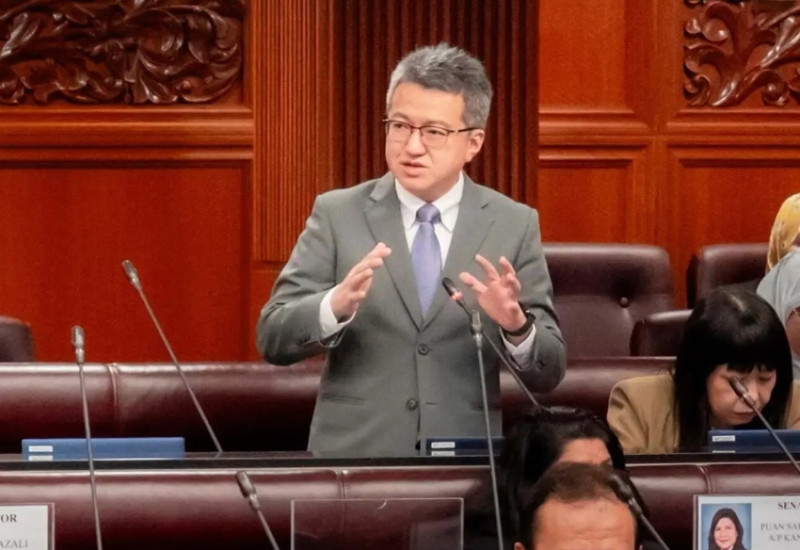
Responding to a question in the Dewan Negara on Thursday, Deputy Investment, Trade and Industry Minister Liew Chin Tong informed that the Trump administration's recent tariff measures already include a 19% retaliatory tariff on Malaysian goods, with specific duties of up to 50% on steel, aluminium, copper, and derivative products, and 25% on automobiles and related parts.
However, concern is now shifting towards semiconductors and pharmaceutical products, both currently exempt but under investigation by the United States under Section 232 of the Trade Expansion Act of 1962.
"On 15 August 2025, President Trump signalled that semiconductors and pharmaceuticals may be subjected to additional tariffs. A decision is expected before December this year," said Liew.
In 2024, Malaysia exported RM3.04 billion worth of pharmaceutical products to the US while importing RM11.77 billion, making exports to the US comparatively minor. As such, the government's immediate focus is on the semiconductor sector, which saw RM56.2 billion in exports to the United States, accounting for approximately 14.5% of Malaysia’s total semiconductor exports.
The Deputy Minister noted, "The electrical and electronics (E&E) and semiconductor industries play a catalytic role in Malaysia's economy, supporting growth in other strategic sectors including automotive, medical devices, renewable energy, digital technologies and aerospace."
To mitigate risks, MITI has adopted a multi-pronged approach that includes trade diplomacy, diversification and expansion of export markets, and enhancing the global competitiveness of domestic firms.
“While US tariffs pose a real risk given the scale of their consumer market, Malaysia’s position within global supply chains must not be underestimated,” the Minister added.
He highlighted that Malaysia is deeply embedded in non-US semiconductor supply chains, including those in Japan, South Korea, China, India, Taiwan, and Southeast Asia.
Previously, Malaysian semiconductor efforts largely revolved around vertical integration by multinationals targeting global markets. However, the newly launched National Semiconductor Strategy (NSS) aims to develop horizontal integration across various domestic sectors — including automotive, defence, medical devices, agriculture, and data centres — to stimulate homegrown technological advancement.
“Malaysia aspires to not only remain a critical middle power in global supply chains but also to develop mid-tier technologies and expand into new markets in the Global South, including Asia, Africa and Latin America,” the Minister said.
During reciprocal trade negotiations, MITI has also advocated for Malaysia’s complementary role in US supply chains and requested exemptions for Malaysian products not produced domestically in the United States.
Furthermore, MITI is actively engaging with stakeholders such as the American–Malaysian Chamber of Commerce (AMCHAM) and the US–ASEAN Business Council to relay on-ground feedback and ensure agile responses. Regular consultations are also held with American investors in Malaysia and policy think tanks to align national trade responses effectively.
“We remain committed to protecting Malaysia’s industrial resilience and sustaining our long-standing partnership with the United States, even amid evolving global trade dynamics,” the Minister added. - Sept 4, 2025