THE Civil Aviation Authority of Malaysia (CAAM) has been urged to expedite the formulation of a comprehensive regulatory framework for the emerging low-altitude economy sector, including drones, unmanned cargo delivery and future air mobility solutions such as flying taxis.
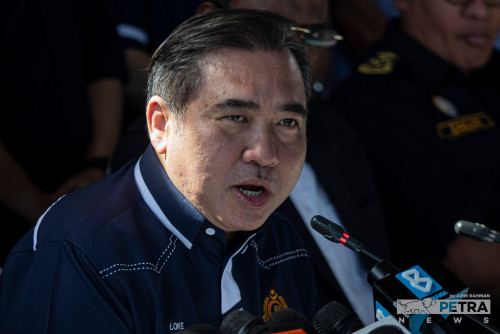
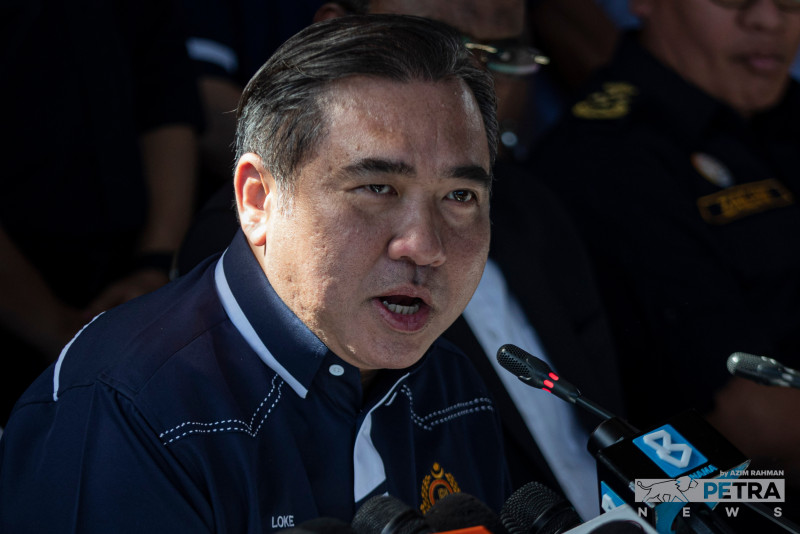
Speaking during the launch of CAAM’s new corporate identity on Wednesday, Transport Minister Anthony Loke Siew Fook said the rapidly evolving sector has strong economic potential, provided there is a clear and practical set of operational guidelines.
“We’re talking about the low-altitude economy — not just drones for photography or video, but for cargo delivery, rescue missions and now even air taxis. This is a new frontier we must explore,” said Loke.
“But for it to thrive, CAAM must create designated operational airspace, establish suitable take-off and landing zones, and implement a flexible yet safety-oriented regulatory structure,” he added.
The low-altitude economy refers to economic activities using airspace below approximately 1,000 metres, encompassing drone light shows, rapid-response emergency services, aerial logistics, and the anticipated deployment of electric vertical take-off and landing (eVTOL) vehicles.
Loke emphasised that while innovation must be encouraged, safety remains paramount.
“Our principle is clear: do not over-regulate to the point it discourages industry players from entering the market,” he said. “At the same time, we cannot compromise on passenger safety or airspace integrity.”
He described the development of a well-defined regulatory framework as vital for enabling the sector to “take off” and contribute meaningfully to government initiatives, such as the smart city agenda.
Loke added that CAAM must remain adaptive and forward-thinking to keep pace with the global aviation industry’s technological transformation.
“The Ministry of Transport (MoT) fully supports CAAM in carrying out this responsibility and in ensuring our aviation sector remains competitive,” he said.
On structural reforms, Loke confirmed that CAAM has now become the sole aviation regulator in Malaysia following its recent merger with the Malaysian Aviation Commission (Mavcom).
“This consolidation ensures all aviation policy and regulation are now centralised under a single authority, making the system more coherent and effective,” he said. “This marks a new chapter for CAAM.”
He said the agency’s new corporate identity symbolises the government’s commitment to strengthening CAAM’s institutional role in line with international aviation bodies.
Loke also announced that several aviation regulations would be reviewed and simplified to align with current industry needs without compromising safety.
“For instance, the renewal of flight licences can now be done digitally without requiring physical presence,” he said.
As part of the restructuring, all confirmed Mavcom staff have been offered positions within the new CAAM setup. A few reportedly declined due to personal circumstances or retirement considerations.
On future appointments, Loke said the selection of a new Deputy Chief Executive Officer to lead the economic regulatory unit will be done in stages.
“We are not rushing the appointment. We want to ensure the candidates selected have the right qualifications and integrity to serve CAAM and the nation,” he said.
Currently, CAAM is led by Chief Executive Officer Datuk Captain Norazman Mahmud, with two deputies: Zainul Abidin Maslan (Operations) and Captain Md Jani Md Dom (Regulation).
Meanwhile, Loke confirmed that a full report on the recent power disruption at KLIA Terminal 2 has been submitted, and remedial action is underway to prevent further occurrences.
“They have submitted the findings, and we have instructed a redesign of the main power supply system to prevent another blackout,” he said.
Malaysia Airports Holdings Bhd (MAHB) previously stated that the incident in August was due to a flashover — a type of electrical fault which can potentially cause fire. - September 17, 2025