
KUALA LUMPUR – The sparse collection of islands in the South China Sea has grown into one of the most important geopolitical flashpoints in the world.
On one side is China flexing its hard and soft power, while its regional neighbours – Vietnam, Philippines, Malaysia, Taiwan – are outmatched and must rely on international law and support.
Add in a waning United States that is trying to rattle sabers, as its rhetoric takes on a more belligerent tone during an election year.
This February, the tit-for-tat between the US and China over the South China Sea escalated when the Pentagon said Chinese drills involving ballistic missile launches threatened regional security.
Beijing then called out the “tyrannical” blacklisting by Washington of two dozen state-owned Chinese companies involved in building China's regional bases, reported by AFP.
Regional standoffs
Aside from regional security, the contesting of the rich fishing areas is also of particular concern to Vietnam and the Philippines. Standoffs between fishing vessels and Chinese coast guard ships are common incidents.
In early April, a Chinese coast guard ship rammed and sank a Vietnamese fishing vessel close to the Paracel Islands.
In the same month, an oil exploration vessel contracted by Malaysia’s national oil firm Petronas had its operations near Sabah disrupted by the Chinese marine survey vessel the Haiyang Dizhi 8 that was backed by China’s maritime assets.
While Malaysia remains non-aggressive in the territorial dispute, Malaysian Foreign Minister Datuk Seri Hishammuddin Hussein in August said: “As a claimant state, Malaysia has always been consistent in our stand, firm in our commitment to safeguard our sovereignty, sovereign rights and interests in the South China Sea. Malaysia’s national interests remain paramount.”
He was referring to the incident where a Chinese survey vessel, the accompanying coast guard and fishing militia were present in Malaysia waters from April to May.
On September 7, Chinese Defence Minister Wei Fenghe, visiting Malaysia, told Prime Minister Tan Sri Muhyiddin Yassin that China is willing to work with Asean countries, “to meet each other halfway” to keep the peace in the South China Sea.
Wei added that safeguarding stability in the South China Sea was a shared responsibility of China and Malaysia.
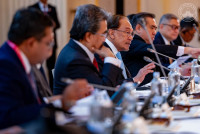
On September 9, Vietnam hosted an Asean virtual summit that was joined by Russia, Japan, Australia, South Korea and India, with the South China Sea dispute being one of the issues on the docket.
During the summit, Chinese Foreign Minister Wang Yi accused the US of driving the militarisation of the region.
He also emphasised cooperation with Asean on anti-Covid-19 measures, such as work on a vaccine, and economic development, helped the region recover from the pandemic.
From coral outcroppings to naval bases
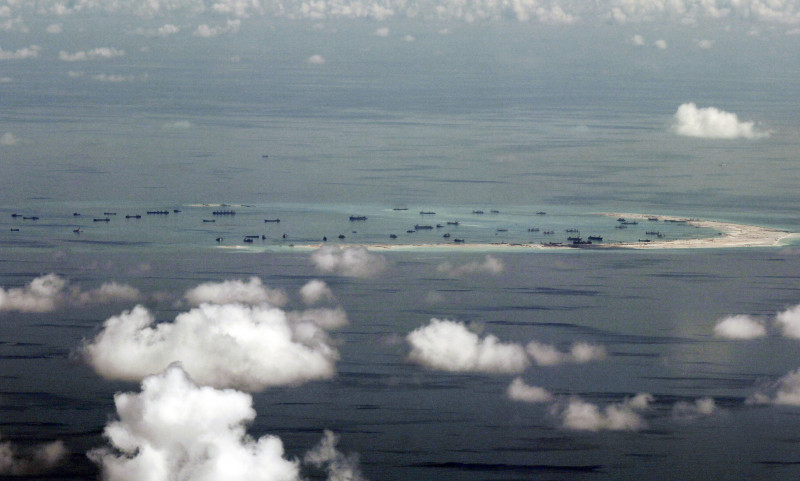
Over the years Beijing has turned the rocky coral outcroppings of the Spratly and Paracel islands into fortified outposts.
Dredging ships laden with sand have dumped their cargo to expand the islands into air bases and supply bases for the Chinese navy.
Satellite imagery has shown the deployment of surface-to-air missile batteries and fighter aircraft.
As its navy carries out sea drills of China’s first indigenously built aircraft carrier, the Shandong, these facilities provide a defensive umbrella and a permanent presence in the region.
The reasoning behind these forward moves are the protection of trade routes and hypothesised vast reserves of oil and natural gas under the surface.
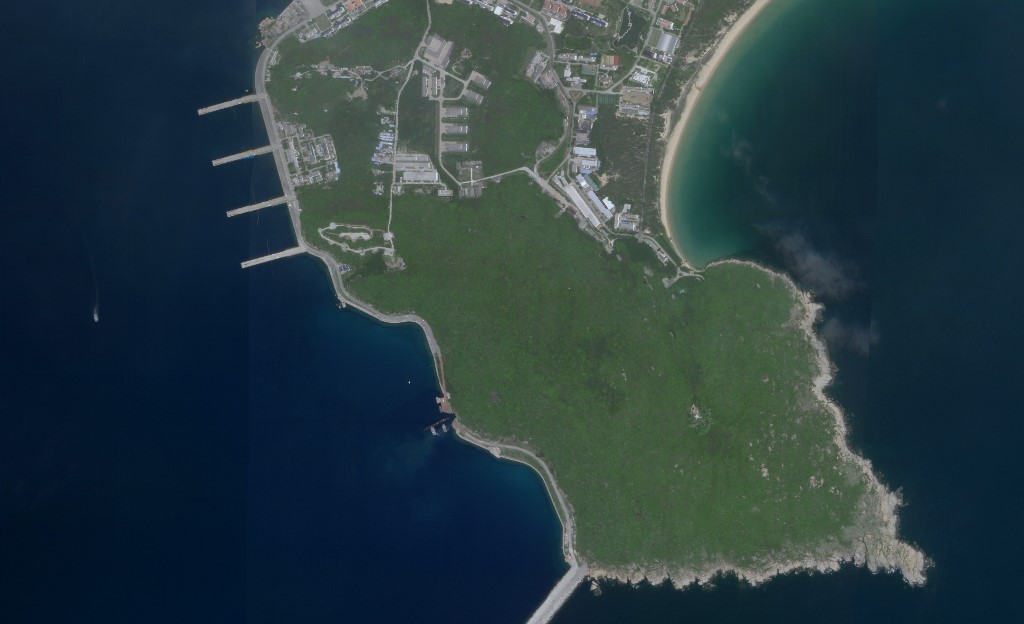
A BBC report in 2016 said the island chains were also meant to be a way to protect China’s nuclear submarine base on Hainan island some 1,270km from Spratly.
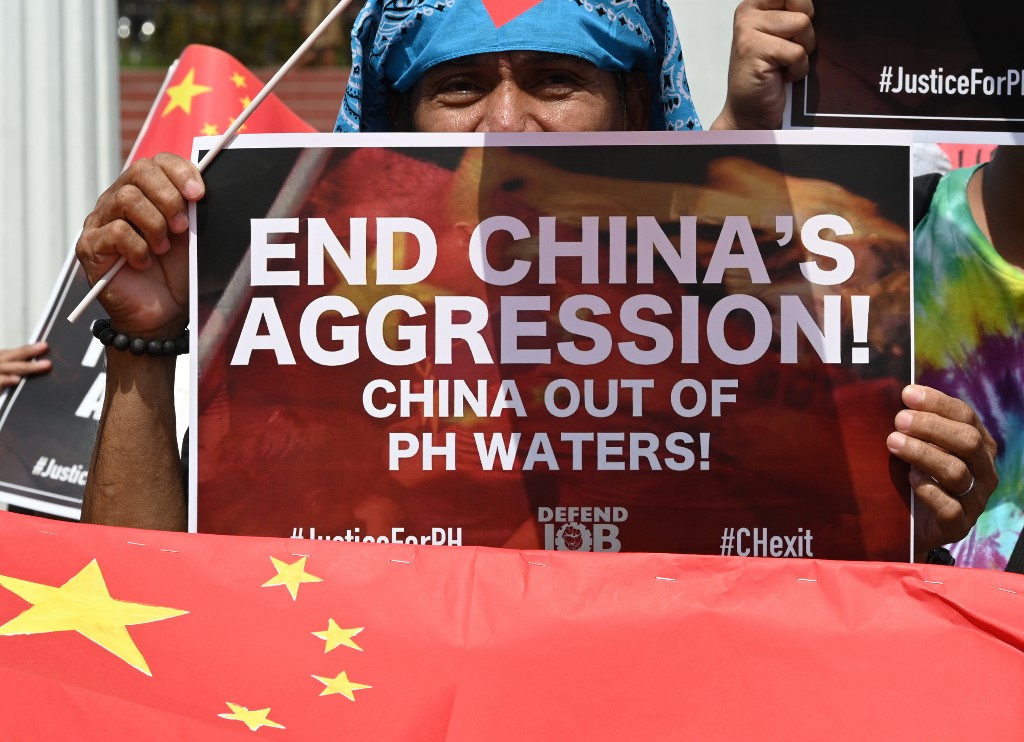
Even though in July 2016 an international tribunal in The Hague, affiliated with the United Nations, ruled that China’s territorial claims were invalid. But that did not stop China’s expansion plans.
“China’s territorial sovereignty and marine rights in the South China Sea will not be affected by the so-called Philippines South China Sea ruling in any way," said Chinese President Xi Jinping in 2016 in response to The Hague’s ruling.
The Asean countries have emphasised the importance of non-militarisation and self-restraint in the conduct of all activities by claimants and other states, including those mentioned in the Declaration on the Conduct of Parties in the South China Sea.
China said its claims are valid as they date back hundreds, if not thousands of years, with references to the islands recorded by the Song, Yuan, Ming and Qing dynasties, though no official claims were made.

Maps from legendary explorer and admiral Zheng He might have referenced Spratly islands, though there were different interpretations of the documents. Early in the last century, the Chinese navy placed flags and markers on some of the islands.
Since then, China has transitioned from a developing country into a superpower. Its navy, once a brown-water navy tasked with territorial defence, now has more capable vessels and travels further afield.
The navy, with the Chinese coast guard, are the muscle with which China pushes back against regional counterclaims.
While the US has over the past year taken a more vocal and direct approach against China, the Trump administration has taken to blaming Beijing for its trade and Covid-19 woes.
This is on top of the US criticising Beijing over its human rights record during the Hong Kong protests, allegations over the abuse of Uighurs in western China, and border clashes with India.
In an example of the dangerous dance between these two powers, on September 9, a US intelligence gathering aircraft used a Malaysian transponder code as it patrolled between Hainan island and the Paracels. The reasoning for this flight is unknown.
Xi has not shown any proclivity for standing down and the notion that he will abandon these South China Sea islands is farfetched.
The region will remain stuck between a hostile US and an ambitious China. – The Vibes, September 19, 2020