MALAYSIA’S federal Budget 2026, to be unveiled in Parliament today by Prime Minister and Finance Minister Datuk Seri Anwar Ibrahim, is expected to reinforce the government’s fiscal reform agenda with an emphasis on enforcement, targeted support and economic resilience – rather than the introduction of broad new taxes.
The budget, the fourth under the Ekonomi MADANI framework and the first aligned with the 13th Malaysia Plan, is likely to continue the government’s expansionary approach, keeping overall expenditure above RM400 billion as in Budget 2025, which stood at RM421 billion.
“This budget is about refining the system, not reinventing it. We do not anticipate brand-new taxes. Instead, the government is likely to focus on making the current system more robust, fair and efficient,” opines KPMG Malaysia Head of Tax Soh Lian Seng.
Despite headwinds from the global economy and tariff pressures from the United States, Malaysia's domestic economy remains comparatively resilient.
The economy posted 4.4 per cent growth in both the first and second quarters of 2025, underpinned by strong domestic consumption, robust investment and a recovering services sector. Inflation is subdued, unemployment has dropped to a decade low, and the ringgit remains steady.
Yet, fiscal pressures persist. Malaysia’s total government debt has reached RM1.3 trillion, or 64 per cent of GDP, edging close to the statutory ceiling of 65 per cent.
The Fiscal Responsibility Act requires this to fall below 60 per cent over the medium term. The country’s fiscal deficit, expected to reach 3.8 per cent of GDP in 2025, remains above the 12th Malaysia Plan’s mid-term target of 3.0–3.5 per cent.
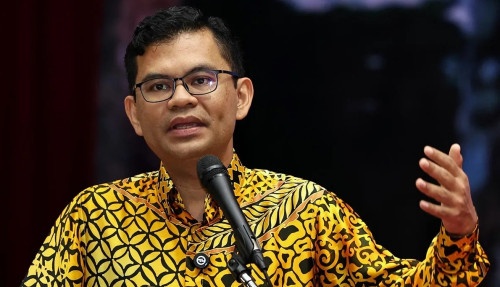
“Improving enforcement on tax compliance will happen, but the higher amount of tax collected will far outweigh the cost,” said Prof Dr Ahmed Razman Abdul Latiff of Putra Business School, adding that improved compliance could be more effective than introducing new taxes.
Key features may include the Sales and Service Tax (SST) coverage to be broadened, alongside greater use of digital tools like mandatory e-invoicing to improve compliance and efficiency.
Subsidy rationalisation, including fuel subsidies under the Budi MADANI and diesel programmes, is expected to generate between RM4 billion and RM6 billion in savings, with much of this redirected into social assistance.
Targeted financial aid such as Sumbangan Tunai Rahmah (STR) cash transfers is likely to be enhanced, with civil servants potentially receiving bonuses for the first time since 2012.
“Excise duties can be a powerful tool for both public health and revenue, but only if paired with enforcement measures such as digital tax stamps and tighter border controls,” said Soh, noting that further hikes in sin taxes are unlikely due to the persistently high share of illicit tobacco in the market – now estimated at nearly 60 per cent.
Carmelo Ferlito, chief executive of the Centre for Market Education, said: “Avoiding new taxes is a wise choice. The government should focus not on boosting revenues but on rationalising spending, which is the best way to promote sustainable and non-inflationary growth.”
While reinstating a broad-based tax such as the Goods and Services Tax (GST) appears off the table, there may be gradual progress on capital gains tax frameworks, environmental levies and taxation targeting the high-income group.
Incentives for tourism development, renewable energy, electric vehicles and high-value manufacturing – particularly semiconductor research and design – are expected to feature prominently, especially with Visit Malaysia 2026 on the horizon.
“Any measures that increase disposable income among lower and middle-income households could support mass-market spending and underpin consumption-driven sectors,” said Kenanga Research.
Looking ahead, experts are calling for a multi-year fiscal and tax reform roadmap that balances sustainability with investor confidence.
KPMG suggests linking tax incentives to tangible outcomes such as job creation, ESG adoption and export performance, while simplifying compliance for SMEs and reducing tax arbitrage across ASEAN.
“If framed and executed well, Malaysia has the opportunity to present itself as a regional convergence story: fiscally disciplined like developed peers, but still offering growth premiums across technology, renewables and consumption,” said one industry observer.
As Budget 2026 is tabled, it is widely seen as a defining moment — a pivot from reform to transformation — under the Ekonomi MADANI vision to elevate Malaysia’s competitiveness and improve the quality of life for its people. - October10, 2025