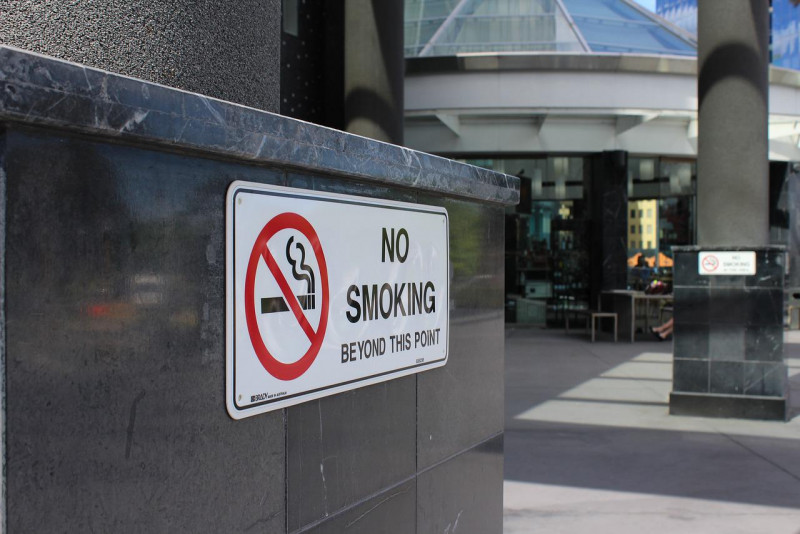
RETAILERS across Malaysia are taking varying approaches to the newly enforced Control of Smoking Products for Public Health Act (Act 852), as uncertainty over specific provisions — particularly those related to proximity to educational institutions — continues to cause confusion.
While the law, which came into force on 1 October, is widely seen as a ban on the public display of smoking products, it goes further to prohibit their sale within 40 metres of any educational institution, including those housed in commercial premises. The legislation also bans sales from temporary stalls.
Despite compliance in many locations, ambiguity remains — especially regarding whether tuition centres fall under the definition of ‘educational institution’.
At one convenience store located roughly a kilometre from the nearest school, cigarettes and vape products have been completely removed, with their display cabinet entirely dismantled. The store’s management chose to cease all related sales around three months ago, according to a storekeeper named Aishah.
“Parents claimed their children were buying cigarettes from us but when we checked our surveillance cameras, we found that was not true,” she told The Star.
“We also share a block with several tuition centres, which puts us in a compromising situation. Our management decided to just scrap it altogether.”
Aishah added that the decision was also influenced by concerns over strict enforcement. “We heard of some outlets which were fined heavily for leaving their blacked-out display cabinet doors slightly ajar,” she said.
Nearby, however, two other convenience stores have continued selling cigarettes and vapes, albeit behind covered cabinets.
“It’s business as usual but we make sure to screen our buyers, especially if they look underage,” said a storekeeper, Raihan. “We’ll stop if there’s a directive.”
A popular mamak restaurant located about a kilometre from another school has also ceased all sales of cigarettes and vape products. Cabinets once used for tobacco products have now been repurposed for storage.
“Students always have lunch or hang out at our restaurant, and parents have complained to local authorities about students buying cigarettes and vapes here,” said cashier K. Jaya.
“We have stopped selling the products here over the past few months. We even enforce the no-smoking rule on our premises even till late night.”
In Petaling Jaya, a sundry shop has taken a similar approach. A worker said they began by covering the smoking products and later stopped sales entirely.
“First we covered everything and then stopped selling completely,” he said. “Some people get upset, but we can’t risk the fines.”
At a convenience store situated just across the road from a primary school, staff have removed all vape products but continue selling cigarettes.
“Our store, although close to a school, is not within the 40m radius spelled out by the law,” said store employee M. Badrol. “However, we removed vapes as our management is afraid students will come to buy the product here.”
Under Act 852, individuals found to be selling or displaying tobacco or smoking products in violation of the law can be fined up to RM20,000 or face up to one year in jail for a first offence. Repeat offences carry penalties of up to RM30,000 or two years' imprisonment.
For companies, the stakes are higher. First offences carry fines of between RM20,000 and RM100,000 or up to two years' jail, while repeat breaches could lead to fines of up to RM300,000 or three years’ imprisonment.
Despite evident efforts at compliance, retailers are calling for greater clarity on specific definitions within the Act — especially around what qualifies as an educational institution — as enforcement tightens. - October 15, 2025