A BORDER landmine explosion that severely injured a Thai soldier in mid-July has reignited tensions between Thailand and Cambodia, with Bangkok accusing Phnom Penh of laying newly planted Soviet-era PMN-2 mines along a disputed frontier. Cambodia denies the allegations and is calling for an independent inquiry.
Reuters reported that the blast on 16 July, which severed the ankle of Second Lieutenant Baramee Sricha during a patrol, marked the beginning of five days of hostilities between the two Southeast Asian neighbours. The skirmish ended only after a U.S.-brokered ceasefire.
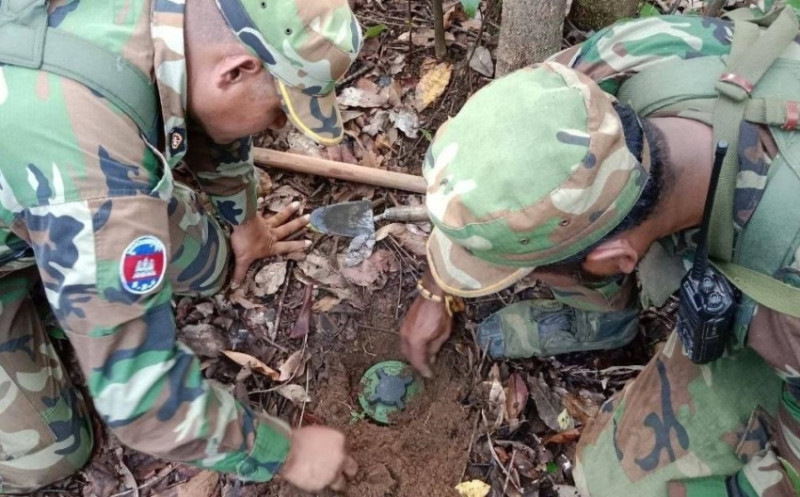
Thailand’s military claims the explosion was caused by a PMN-2 mine recently planted on its side of the border. It provided Reuters with access to images, videos and shrapnel fragments recovered from the scene and nearby areas, asserting the mines were newly laid and had not been buried long.
“The mines were found in new condition, still with clearly visible markings,” said a Thai foreign ministry spokesperson. Bangkok, a signatory to the Ottawa Convention and a long-standing U.S. ally, maintains it has never deployed PMN-2 mines, which were widely used by Soviet-aligned forces during the Cold War.
Cambodia has firmly rejected the accusation, insisting its military holds no stockpiles of live anti-personnel mines.
“Environmental and disturbance factors can make long-buried items appear relatively fresh,” said Ly Thuch, First Vice President of the Cambodian Mine Action and Victim Assistance Authority (CMAA), who reports directly to Prime Minister Hun Manet.
Experts consulted by Reuters, however, found signs suggesting the mines were not long in the ground. Andrew Vian Smith, a UK-based landmine specialist, said the PMN-2s shown lacked the expected wear: “The mines I was shown had nothing in the gaps where dirt typically accumulates. Their condition suggests they had only recently been planted.”
Yeshua Moser-Puangsuwan of Landmine Monitor added that the ordnance displayed few indicators of age, such as cracked casings or overgrown roots. “It is not credible that floodwater could clean these mines and then bury them tidily again,” he said, refuting the theory that flooding might account for their pristine state.
Cambodia, one of the most heavily mined countries in the world due to decades of conflict including the Khmer Rouge era, has spent over USD 1 billion on demining since the 1990s. Yet PMN-2 mines remain prevalent. According to the CMAA, more than 1,800 of the devices have been found and deactivated since September 2023.
Phnom Penh argues that any mines responsible for recent injuries were likely decades-old remnants. It has publicly claimed the device that detonated on 16 July was not a PMN-2, and may have originated from American, Chinese, or Vietnamese stocks.
In response to the continued threat, Thailand has ramped up diplomatic pressure through the Ottawa Convention and has appealed to United Nations Secretary-General António Guterres to initiate a compliance mechanism.
“The Secretary-General will continue to support efforts in that sense and hopes that Thailand and Cambodia will achieve a cooperative resolution,” said UN deputy spokesperson Farhan Haq.
Thailand has also submitted formal complaints to other treaty signatories, alleging Cambodia violated its obligations under the Ottawa Convention by using and potentially stockpiling banned mines, and by declining prior offers for joint demining in contested areas.
The disputed 1,046-kilometre border between Thailand and Cambodia has long been a flashpoint, historically lined with landmines from Cambodia’s civil wars. Despite over 3,200 square kilometres being cleared since a 1991 peace accord, both countries remain vulnerable to the legacy of conflict — and, as recent events suggest, its possible reactivation. - October 16, 2025