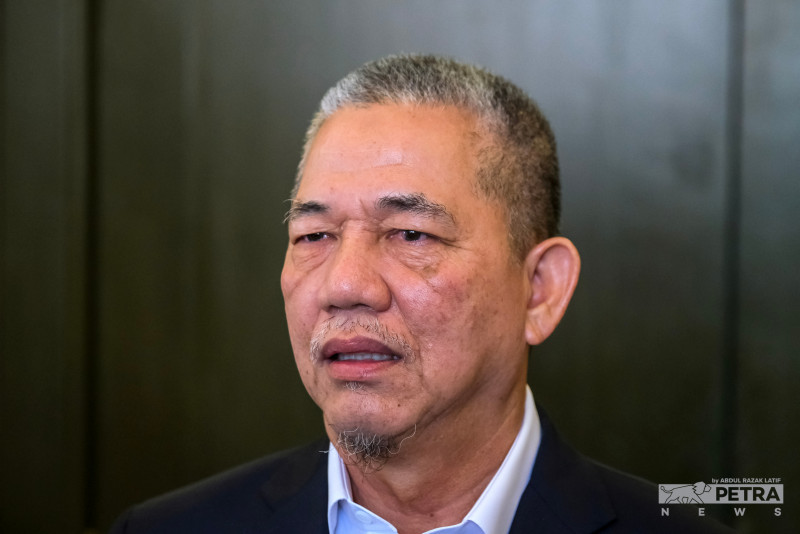
DEPUTY Prime Minister II Datuk Seri Fadillah Yusof today officially closed Muzakarah Waqaf 1.0: Ijtihad & Innovation, organised by Waqaf An-Nur Corporation Berhad at Royale Chulan Kuala Lumpur.
Addressing a distinguished gathering of religious leaders, corporate waqf pioneers, and government representatives, he highlighted the significance of the event and the organisation’s 25-year legacy.
“Alhamdulillah, we gather here with gratitude to Allah SWT for the blessing to participate in Muzakarah Waqaf 1.0,” he said.
“Waqaf An-Nur’s 25-year journey as a pioneer in corporate waqf has not only expanded waqf assets but also delivered meaningful development for the ummah.”
He praised Waqaf An-Nur, the Johor State Islamic Religious Council (MAINJ), and JCorp for their efforts in establishing the first corporate waqf institution in the world, describing it as “a monumental achievement in uplifting both religion and nation.”
In Malaysia, wakaf is an Islamic endowment through which individuals donate assets or property for religious, charitable, or social purposes.
The donated asset remains intact, while the benefits generated are used to support the community. Waqf is governed by Islamic law (Shariah) and administered by state Islamic authorities, known as Majlis Agama Islam Negeri (MAIN).
The purpose of waqaf is to serve society in accordance with Islamic principles. Common applications include funding mosques and religious schools, providing scholarships and educational facilities, supporting the needy—including orphans and vulnerable groups—and financing healthcare, community development, or economic empowerment initiatives.
Reflecting on the vision of the late Al-Marhum Tan Sri Mohd Ali Hasyim, he said, “Waqaf Korporat is a business strategy capable of empowering the economy and restoring the stature of Muslims as economic stewards one day.”
He cited the Quranic principle: “You will never attain complete goodness unless you spend from what you love. And whatever you spend, Allah knows it” (Ali Imran: 92).
The Deputy Prime Minister also emphasised the transformative potential of innovation in waqf, such as transitioning from traditional waqf models to listed shares, which could significantly impact Islamic economic development.
“Through initiatives like waqf-based exchange-traded funds, parallel waqf, waqf sukuk, micro-takaful, and commodity-based waqf banks, we can strengthen the waqf ecosystem and foster sustainable economic growth for the ummah,” he added.
He noted that under the Ekonomi MADANI framework, the government aims to establish waqf as the third pillar of the national economy, contributing 10% to Islamic social finance by 2030.
The National Waqf Master Plan is in its final stages of preparation and will soon guide the country’s waqf development.
“Existing waqf assets must generate new wealth,” he said, “not merely be maintained. The principle is to preserve the origins of waqf while expanding its benefits, ensuring sustainability and barakah.”
He also called for stronger collaboration among Islamic councils, academicians, financial institutions, and nazir organisations to institutionalise waqf through innovative, structured mechanisms.
“A robust waqf system will mitigate the risks of unbridled Western-style capitalism, which widens socio-economic gaps,” he warned.
Highlighting waqf’s broader social impact, the Deputy Prime Minister said it plays a crucial role in education, healthcare, employment, food security, and poverty alleviation, forming a foundation for an inclusive, resilient economy.
He called for continued national collaboration: “Let us collectively raise waqf to the heights once achieved by Islamic civilisation. I recommend Waqaf An-Nur continue hosting this biennial Muzakarah as a platform for sharing knowledge, ideas, and experience for the benefit of all.”
He prayed that all waqf innovation and ijtihad be blessed: “May Allah SWT make waqf close to our hearts and minds, and may all efforts be rewarded with His mercy and grace.” - November 6, 2025