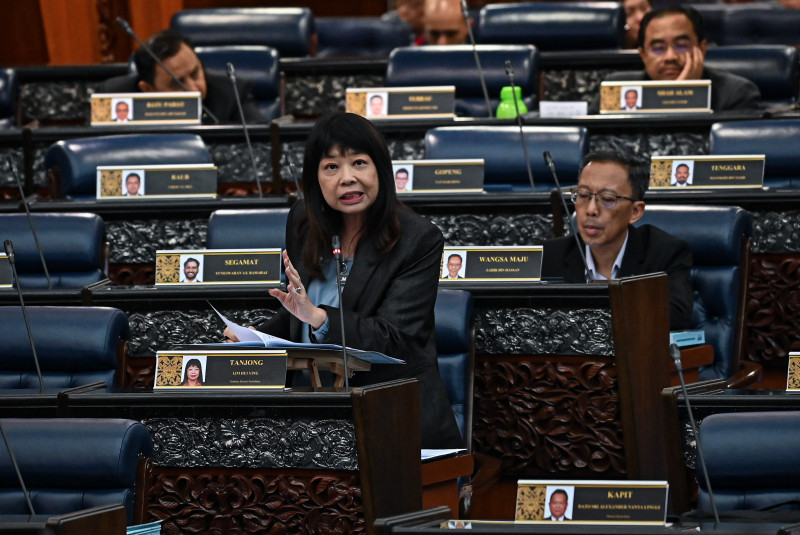
THE government’s gradual implementation of a nationwide e-invoice system has begun to demonstrate tangible gains in tax compliance and the mitigation of revenue leakages; Deputy Finance Minister Lim Hui Ying told the Dewan Negara on Thursday.
Responding to Senator Tan Sri Datuk Low Kian Chuan, the ministry said the initiative is designed to modernise tax administration and underpin the country’s digital economy, in line with the Twelfth Malaysia Plan and continuing into the Thirteenth.
The ministry noted that the programme remains in its early stages, with two additional phases scheduled: the fourth beginning on 1 January 2026 and the fifth on 1 July 2026.
Each phase includes a six-month transition period to allow businesses sufficient preparation time, while traders with annual sales below RM500,000 are currently exempted.
Given this phased approach, the ministry said the full effectiveness of e-invoicing in strengthening tax compliance “will be determined once mandatory implementation is complete”.
Even so, businesses are already benefiting. The initiative has reduced manual processes, minimised errors, streamlined documentation and facilitated the submission of tax returns.
One year into the rollout, the system is now in its third phase, covering taxpayers with annual turnover of RM5 million to RM25 million.
The ministry reported strong uptake: as of 26 November 2025, a total of 742.5 million e-invoices had been issued by 108,579 taxpayers.
Of these, 64,346 were required to participate, comprising 5,528 from the first phase, 13,966 from the second and 44,852 from the third. Another 44,233 taxpayers from the fourth and fifth phases have opted in voluntarily, Lim explained.
The Inland Revenue Board (LHDN) has used these filings to identify non-compliant taxpayers.
According to the Deputy Minster, 5,800 taxpayers who had previously failed to file income tax returns have now come forward and declared backdated income totalling RM484 million, generating an additional RM82 million in tax revenue.
“Government will continue to monitor the effectiveness of e-invoicing in supporting business efficiency and strengthening tax compliance, thereby helping to curb the shadow economy and prevent leakages,” she said.
In a separate response in the Dewan Rakyat, Finance Minister II replied to a question from Ledang MP Syed Ibrahim Syed Noh, saying early feedback from both consumers and businesses has been “overwhelmingly positive”.
Although implementation began only in August 2024, LHDN’s nationwide engagement sessions show that businesses appreciate the improved organisation of their sales and purchasing records, as well as more orderly document storage, all of which support smoother commercial operations.
Lim reiterated the adoption statistics, stating that the scale of participation itself demonstrates strong confidence in the digital system.
However, several early-stage challenges have emerged. These include sellers having difficulty obtaining accurate Tax Identification Numbers (TIN) from buyers; first-time users struggling to access the MyInvois Portal; transitional costs involving system adjustments and staff training; and poor internet connectivity in certain areas.
To address these issues, LHDN has expanded support services, offering TIN verification via MyTax, MyInvois and API access, and allowing individuals to use identity card numbers temporarily.
Free tools such as the MyInvois e-POS system and mobile app are available, accompanied by training and extensive reference materials through the e-Invoice microsite.
In areas with connectivity issues, taxpayers may use e-invoice counters equipped with computers at all LHDN offices, while Rural Community Centres provide additional ICT facilities.
LHDN has also intensified public education efforts, conducting 2,500 engagement sessions, seminars, conferences and webinars nationwide. Dedicated e-invoice counters at its offices assist taxpayers navigating the transition. - December 4, 2025