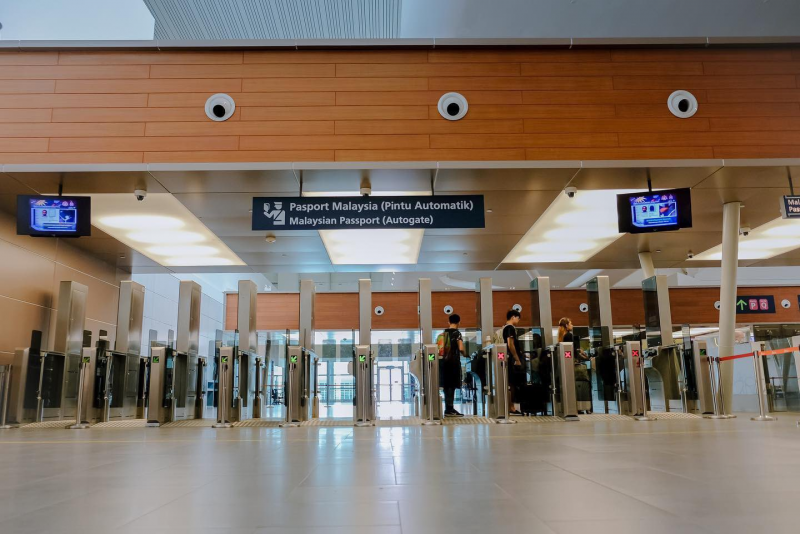
THE Immigration Department is set to enhance border security and streamline procedures with the installation of 635 automated gates at 125 key entry points nationwide by 2028.
The rollout, overseen by the Immigration Department, will target major gateways including Kuala Lumpur International Airport (KLIA) and the Johor Customs, Immigration and Quarantine (CIQ) complexes.
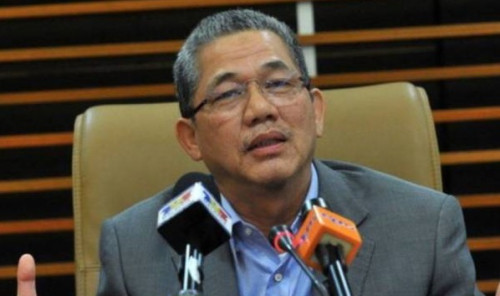
Director-General Datuk Zakaria Shaaban explained that the expansion of autogates now accommodates Malaysian citizens, foreign visitors from 63 low-risk countries, eligible long-term pass holders, and all diplomatic staff in Malaysia along with their immediate family members.
"The installation of new autogates at major entry points is expected to begin in phases from the second quarter of 2026," he told Utusan Malaysia.
In parallel, the Home Ministry is introducing QR code clearance systems to further expedite immigration checks.
"Travellers only need to scan a QR code containing their personal and travel details. This has already been implemented at pedestrian and bus lanes at the Johor CIQ, namely the Sultan Iskandar Complex and the Sultan Abu Bakar Complex, and will be expanded to major airports such as KLIA," Zakaria said.
The nationwide implementation will span from October 2025 to August 2028, beginning at key entry points before being extended across the country.
Currently, 75 autogates are operational, including 36 at Sultan Iskandar Complex, 24 at Sultan Abu Bakar Complex, six at the Sungai Tujoh Immigration Checkpoint, and nine units across KLIA Terminals 1 and 2.
Zakaria highlighted that the cost of the autogate system is incorporated within the overall project allocation, which forms part of the broader National Integrated Immigration System (NIISe).
The system integrates artificial intelligence, advanced software, and specialised equipment to enhance border security.
Among its capabilities, NIISe includes physical document inspection where passport readers scan the Machine-Readable Zone to detect irregular printing, security anomalies, inconsistent fonts, or other manipulation attempts.
"NIISe also uses infrared and ultraviolet light to verify physical security features in passports that cannot be replicated," he said.
The system is capable of reading and verifying e-Passport chips, validating digital signatures, detecting cloned chips, and identifying data intrusion through active and passive authentication technologies.
Biometric verification, including facial recognition and fingerprint matching against passport chip data, is fully integrated.
"If the traveller's facial features or fingerprints do not match the data in the passport chip, the autogate will not open, ensuring stronger border security," Zakaria said.
Additionally, the Immigration Department conducts real-time checks against watchlists, immigration status, travel history, and potential identity misuse.
"The system is also able to detect anomalies such as mismatched age, gender, country of origin and suspicious travel patterns," he added, reinforcing Malaysia’s commitment to secure, efficient, and technologically advanced border control. - December 23, 2025