KOTA KINABALU – This year saw the Warisan-led Sabah government defeated by Gabungan Rakyat Sabah (GRS) in an unprecedented state election after being in power for only 26 months.
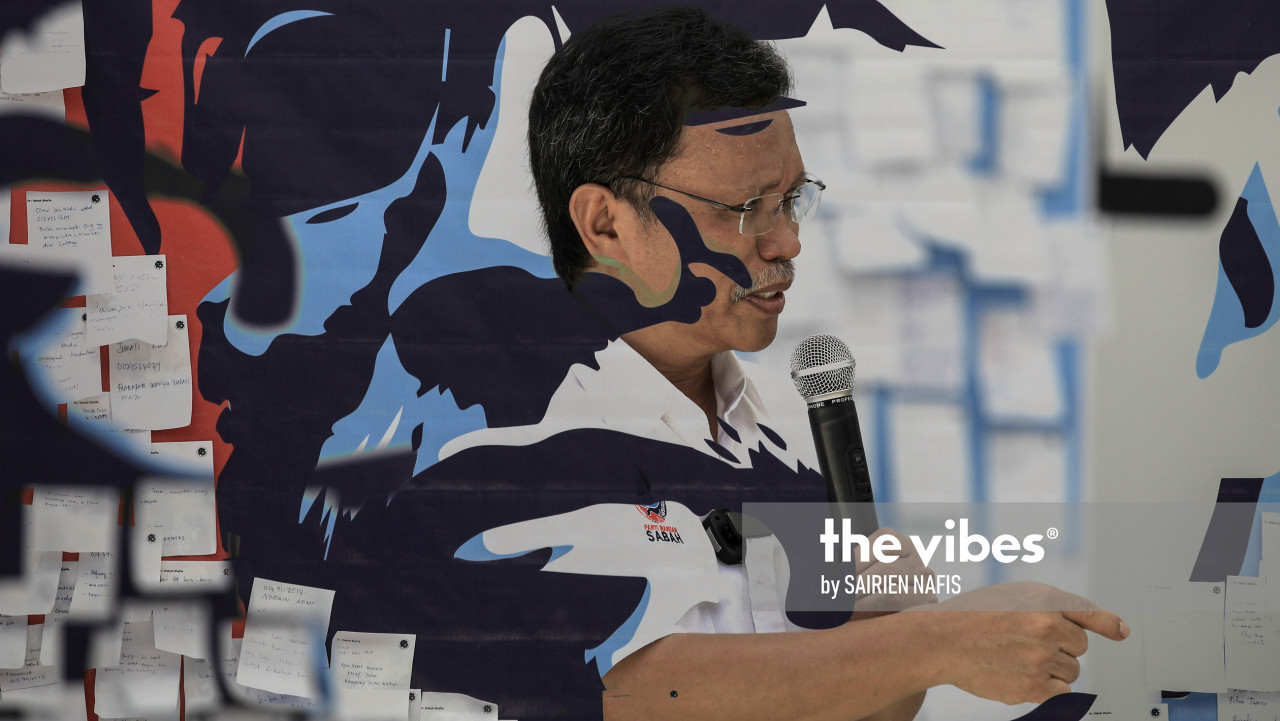
The fall of Warisan, led by former Umno leader Datuk Seri Mohd Shafie Apdal, had been expected by many following the collapse of the Pakatan Harapan (PH) federal government in February.
Shafie’s party is aligned with PH, and when Perikatan Nasional (PN) came to power, the Warisan-led Sabah instantly became an opposition state. However, it was able to sustain being in power for a few more months as the Warisan-PH-United Progressive Kinabalu Organisation (Upko) alliance commanded majority support in the state assembly, holding 47 of its 65 seats.
Just as how Upko abandoned Barisan Nasional (BN) to support Warisan-PH in the 14th general election, the end of Warisan’s reign was caused by crossovers from the Warisan-Upko-PH pact to the opposition.
The loss of the majority forced Shafie to call for the dissolution of the Sabah assembly, paving the way for fresh state polls before the end of the election term in 2022.
The dissolution was done to avoid an undemocratic takeover staged by Shafie’s arch-rival, former chief minister Tan Sri Musa Aman, who allegedly enticed several reps over to his side.
Musa had just lost a legal battle to challenge the legitimacy of Shafie’s appointment as chief minister that took place from 2018 until the end of last year.
Instead of handing over power to Musa, Shafie called for the dissolution.
But, a slew of political horse-trading, attacks, badly promoted policies, corruption cases, and undelivered election promises during Shafie’s tenure also contributed to his downfall.
Kimanis by-election
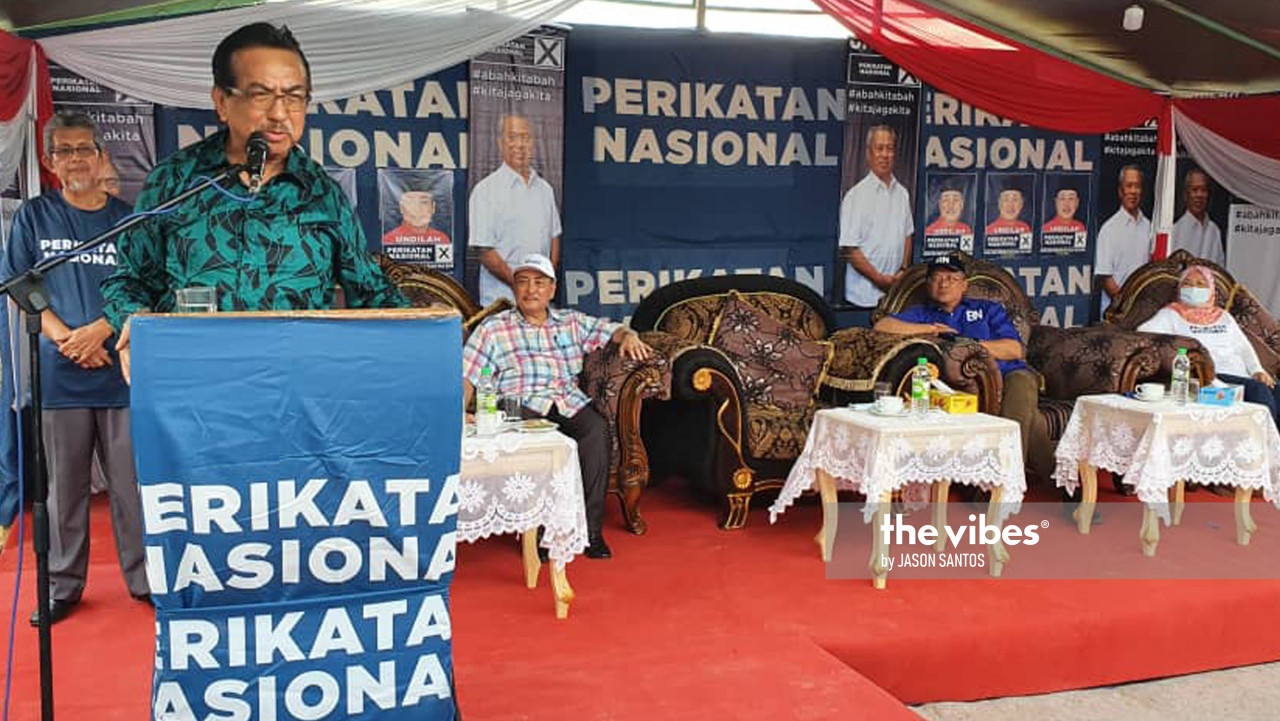
A telltale sign that the Warisan-led Sabah government was on shaky ground was its failure to win the Kimanis by-election in January.
The by-election was held after the election court declared the polling results null and void, after irregularities were discovered in two voting channels for the federal seat.
The court decision automatically saw former foreign minister Datuk Seri Anifah Aman removed as MP. He decided not to defend the seat.
A thorny issue during this by-election was the Sabah Resident Pass, or Pass Sementara Sabah (PSS), which was mooted by the then government but opposed by state opposition figures led by Sabah Star chief Datuk Seri Jeffrey Kitingan and leaders from the Sabah Progressive Party (SAPP), Parti Bersatu Rakyat Sabah (PBRS), Sabah Umno, Parti Bersatu Sabah (PBS) and Sabah Bersatu.
These parties would later form GRS, which beat the Warisan Plus alliance in the 16th state election.
The PSS was one of the technical committee’s recommendations to resolve the illegal immigrant problem in the state, and was established upon the recommendation of a royal commission of inquiry in 2013.
The constant politicising of the PSS issue became a hot topic during the Kimanis by-election campaign.
The opposition said the PSS was an attempt by the Warisan-led state government to grant Malaysian citizenship to the 136,055 migrants residing in Sabah, namely the IMM13, a social visit pass for Filipino refugees who entered the state from late 1972 to 1984 without valid international travel documents.
The opposition argued that a foreigner was allowed to apply for permanent residency after living in Malaysia for 10 years, and subsequently, Malaysian citizenship.
There is no limit to the PSS renewal, and the card is valid for three years.
Despite Warisan’s denial of these allegations, as only the federal government has the power to grant citizenship, Sabah Umno’s Datuk Mohamad Alamin won the by-election, defeating Warisan candidate Datuk Karim Bujang.
As a result, Shafie requested that the federal government scrap the PSS plan.
Sheraton Move
The month-long political crisis that plagued the federal government in February, known as the Sheraton Move, also affected the Sabah political landscape.
Bersatu’s decision to leave PH, and later, form PN with PAS and Umno to oust PH from power escalated the war between Warisan and Sabah Bersatu. A cold war had already existed between the two parties, and this further deteriorated their relationship.
The Sabah Bersatu leadership is made up mostly of former Umno elected reps. Nine out of 10 assemblymen and four out of five MPs from Sabah Umno became state Bersatu leaders after they left the BN lynchpin on December 12, 2018.
Bersatu officially entered Sabah in April last year, with Chief Minister Datuk Seri Hajiji Md Noor as the chapter’s chief. No political appointments were given to the chapter then.
With the fall of the PH government at the federal level, Sabah Bersatu became bolder in going against Warisan, given that it had the backing of Prime Minister and party president Tan Sri Muhyiddin Yassin.
On March 11, the state Bersatu proposed the re-establishment of the Sabah Federal Development Office to cut off federal funds given directly to the Warisan-led government.
The office was introduced after the collapse of the PBS government in 1992, leading to the implementation of the two-year chief minister rotation in Sabah.
The rotation system ended, following a demand from Liberal Democratic Party leader Tan Sri Chong Kah Kiat in early 2000.
This led to Musa becoming chief minister for 15 years, from 2003 until 2018.
The office managed all allocations to Sabah by the BN federal government.
The move was heavily opposed by Warisan.
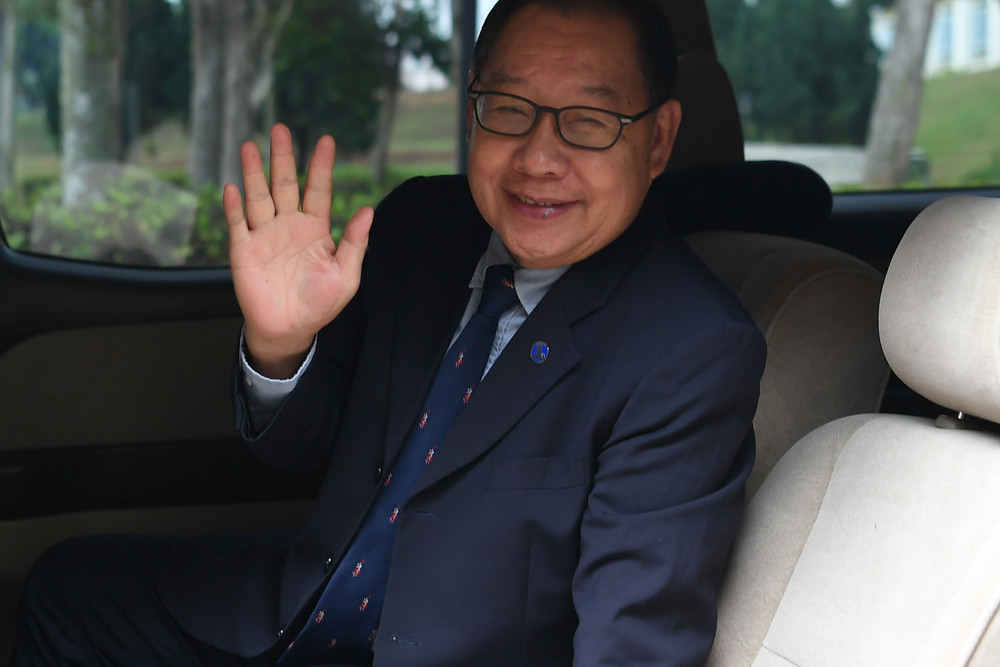
The Sheraton Move also saw Sabah Star’s Jeffrey and PBRS deputy president Arthur Kurup align with PN.
PH’s failure to realise state demands
Despite 17 of the 21 Sabah rights demands being implemented, the Warisan-led state administration failed to realise pertinent rights.
Sabah rights include the 60:40 special annual grant stipulated under the federal constitution.
Although the PH government carried out a review as required under Article 112D of the constitution, it did not follow the method specified under the Malaysia Agreement 1963.
The 60:40 revenue rights comprise 40% of the revenue that the federal government collects from Sabah, which is returned to the state. The 60% collection serves as a payment for services rendered by Putrajaya to the state, namely security, education and health.
The payments are supposed to be made in staggered amounts, with the first starting five years from the formation of Malaysia in 1963.
However, the federal government changed the formula in 1974 by implementing the same revenue rights formula as Sarawak (a fixed amount), with the grant for that year set at RM26 million.
Putrajaya has never made the annual collection from the state public, thus, there is no way the state would have been able to calculate its yearly entitlement.
Compared with the Budget tabled by the PH government last year, the amount was doubled to RM56.2 million under this year’s Budget.
Another of PH’s failed promises was to raise Sabah’s oil royalties to 20% from the current 5%.
The Warisan-led state government had to resort to implementing a sales tax on petroleum products in order to raise revenue, with funds only arriving next year.
Shafie also proposed pursuing some equity in Petronas as a way to increase state revenue, but the move did not materialise even until Warisan Plus was defeated in the state election.
Musa’s coup attempt
After failing his legal bid to reclaim power as chief minister, Musa on July 29 announced that he had clinched a simple majority, claiming to have the support of 32 other assemblymen from Umno, PBS, PKR and DAP, as well as leaders who had either abandoned their parties to join Warisan or were in support of Warisan.
Among them were Sabah DAP nominated assemblyman Ronnie Loh and Inanam rep Kenny Chua of PKR. Chua joined Sabah Star after the state polls.
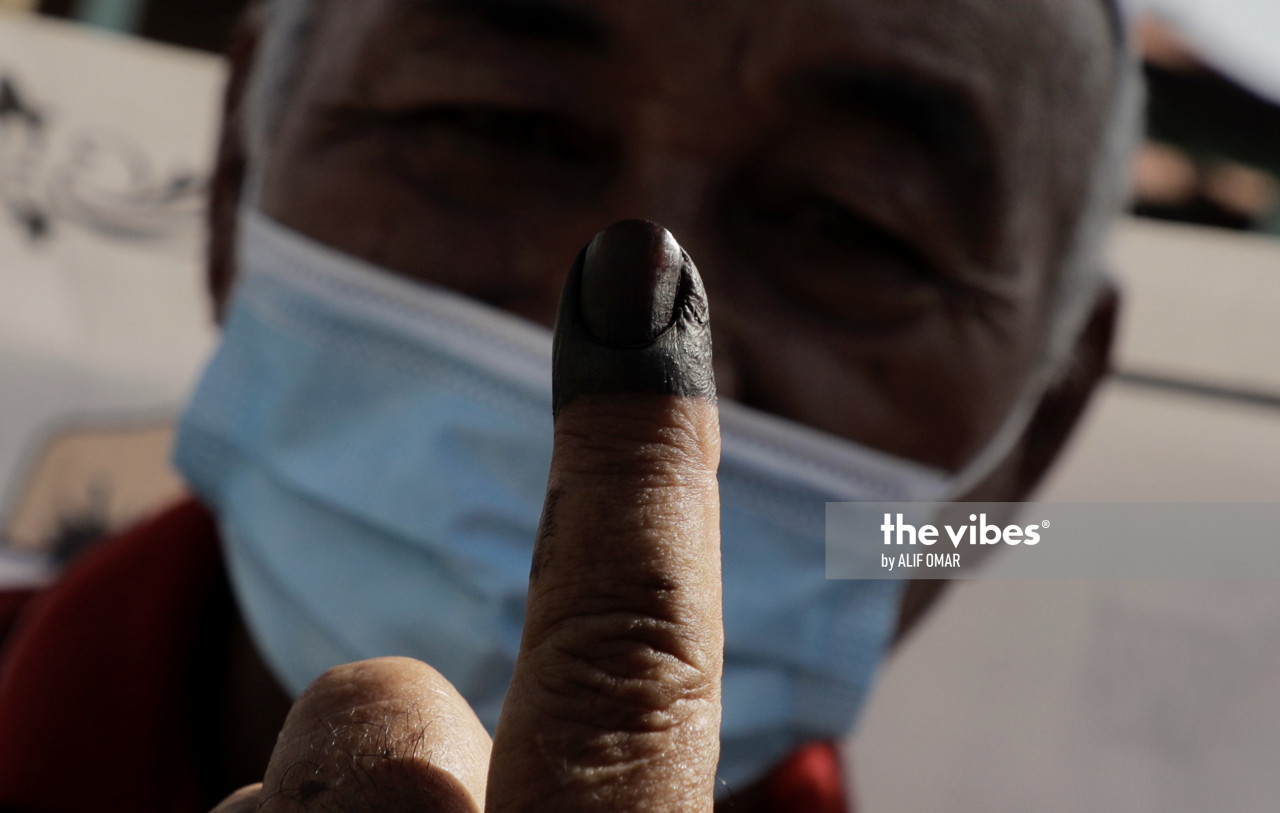
This forced Shafie to dissolve the state assembly, paving the way for the September 26 election, which concluded with GRS’ victory and the formation of the new Sabah government.
GRS was formed ahead of the vote as a united force to defeat Warisan Plus. It was announced by Muhyiddin during the state election campaign, and subsequently launched its election manifesto.
Hajiji led the GRS campaign and was supported by Sabah Umno chief Datuk Seri Bung Moktar Radin, who is now leading an autonomous Umno chapter.
Sabah Umno was granted autonomy at the party’s general assembly last year – a move to give the state chapter more decision-making powers instead of having it rely on Supreme Council leaders.
Political attacks on Warisan
SAPP and Sabah Star constantly attacked the Warisan-led state government, to the extent that SAPP, led by former chief minister Datuk Seri Yong Teck Lee, sued the administration.
Yong and a businessman challenged the appointment of a non-civil servant, Datuk Amarjit Singh, to the post of Sabah Water Department director.
Yong won the case and Amarjit was subsequently told to vacate the post, after which he started working with a company hired by the department.
Appointment of non-experts to GLCs
Shafie’s running of state affairs also came under the microscope after he went back on his word by appointing non-experts to several government-linked companies (GLCs).
Following the collapse of the PH government, he appointed Warisan deputy president Datuk Darell Leiking as chairman of the Institute for Development Studies, and Youth chief Datuk Mohd Azis Jamman as chairman of Warisan Harta.
The appointments came as both Warisan leaders were no longer federal ministers.
Shafie had promised in his election campaign to appoint experts instead of politicians to helm GLCs.
RM300 million to AirAsia
The Warisan administration was also questioned after it saw through a RM300 million loan to AirAsia that was approved by the Sabah Development Bank.
A few leaders from the ruling parties questioned the reason for approving such a massive loan for the budget carrier, saying the funds would be of better use to assist in the state’s battle against Covid-19.
Warisan fighting with PKR
One political issue is the ongoing spat between Warisan and PKR after the former called for a leadership change in the opposition front.
The party sought PKR president Datuk Seri Anwar Ibrahim’s removal as opposition chief during the debate on Budget 2021.
The call not only triggered a fight between followers of both parties, but also caused a rift between Shafie and Anwar.
Shafie did not back Anwar, and has repeatedly said he supports former prime minister Tun Dr Mahathir Mohamad. – The Vibes, December 31, 2020