THE government has intensified its push to strengthen online safety among young people with the launch of a nationwide campaign built on peer-to-peer engagement, aimed at tackling a surge in digital threats ranging from scams to cyberbullying.
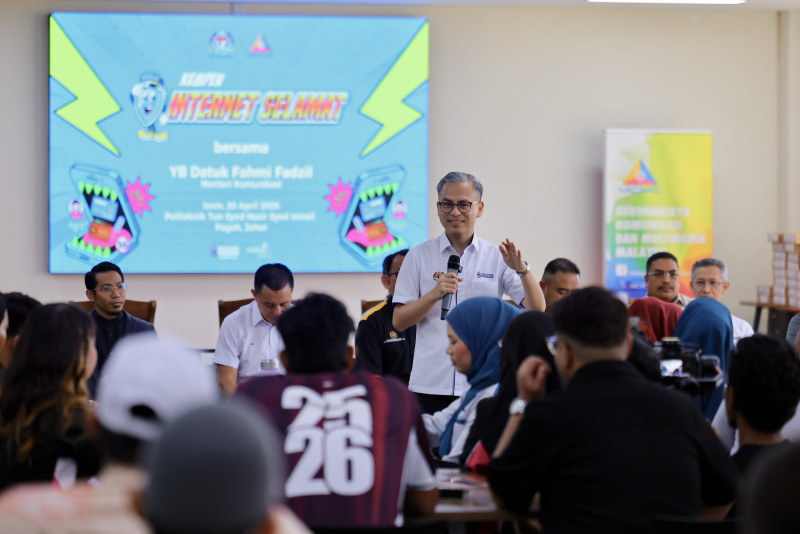
Communications Minister Datuk Fahmi Fadzil officiated the Safe Internet Campaign at the Higher Education Hub Pagoh, describing it as part of a sustained effort to equip youth with the tools to navigate an increasingly risky digital environment.
Organised by the Malaysian Communications and Multimedia Commission, the initiative places students at the centre of outreach efforts, with participants trained to act as advocates who disseminate cyber safety awareness among their peers.
A total of 80 students and 20 facilitators drawn from student representative councils at institutions including International Islamic University Malaysia, Universiti Tun Hussein Onn Malaysia, Universiti Teknologi Malaysia and Politeknik Tun Syed Nasir took part in the programme.
The campaign focuses on raising awareness of online risks such as digital fraud, cyberbullying, the spread of misinformation and the dangers of excessive sharing of personal data, reflecting growing concern over the vulnerability of young internet users.
Interactive elements form a core part of the initiative, including a staged presentation titled “Ops Kantoikan Scammer: Aku Bukan Mangsa Kau!” (“Operation Expose the Scammer: I’m Not Your Victim!”), designed to expose common scam tactics and highlight preventive measures in an accessible and engaging format.
Officials say the peer-led model is intended to improve relatability and effectiveness, enabling messages to resonate more strongly within youth communities while amplifying the campaign’s overall impact.
As of March 31, a total of 47 Safe Internet Campaign programmes have been conducted at higher education institutions nationwide, reaching 23,196 students, underscoring the scale of the government’s outreach effort.
Senior officials present at the launch included Communications Ministry secretary-general Datuk Abdul Halim Hamzah and MCMC managing director Abdul Karim Fakir Ali, signalling continued institutional backing for initiatives aimed at strengthening digital resilience among Malaysia’s youth. - April 20, 2026