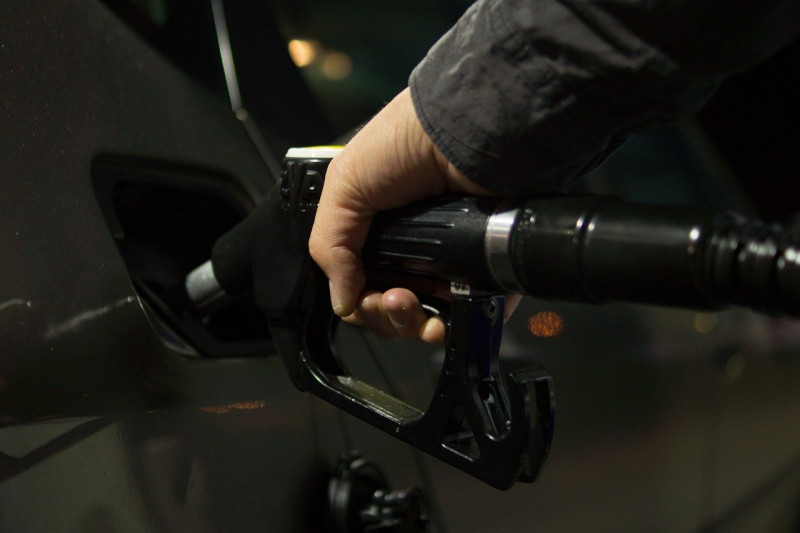
THE government is maintaining its current RON95 fuel subsidy framework despite mounting discussion over whether high-income earners should continue receiving subsidised petrol, reflecting a broader struggle between fiscal reform ambitions and political practicality.
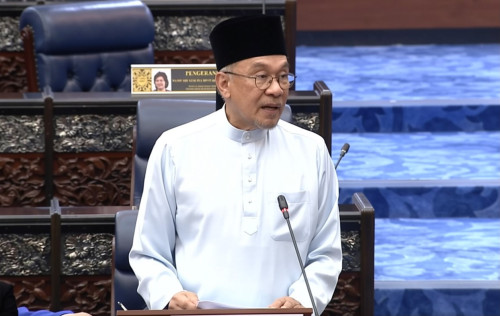
Transport Minister Anthony Loke said Putrajaya would continue using the BUDI95 subsidy mechanism while the government finalises its review of proposed restructuring measures targeting the T20 income group.
His remarks suggest the administration is prioritising administrative simplicity and social stability over aggressive subsidy cuts, even as pressure grows to reduce the state’s long-term subsidy burden.
“The government’s policy principle under BUDI95 is a system that is simplest and most direct for the people. All citizens can enjoy the subsidy through the use of MyKad within a controlled environment with certain quantity limits to prevent leakages.
“The Cabinet has discussed the matter for a long time and agreed that the subsidy mechanism must remain simple in form,” he said after attending the Malaysia Commercial Vehicle Expo 2026 om Thursday.
Loke stressed that no decision had been taken to reduce or alter fuel subsidies for the T20 group, despite speculation surrounding possible reforms.
“There is no decision to cut T20 subsidies at this time,” he said.
The comments underscore the political sensitivity surrounding subsidy rationalisation in Malaysia, where successive governments have struggled to balance public expectations, fiscal sustainability and inflationary pressures.
Although subsidy reform has long been framed as necessary to reduce leakages and improve national finances, policymakers remain wary of introducing complicated systems that could trigger confusion, resentment or implementation failures.
Loke defended the BUDI95 mechanism as the most practical solution currently available, arguing that the use of MyKad-based verification allows subsidies to be distributed in a controlled yet accessible manner.
“We have simplified the entire process. The Cabinet discussed this issue over a long period and most Cabinet members agreed that the system must remain simple.
“BUDI95 is a very simple system because it allows all Malaysians to use MyKad to enjoy subsidies within a controlled environment and quantity so that leakages do not occur. Therefore, we are maintaining the system.
The government’s gradualist approach also reflects concerns about ensuring continued fuel supply stability while avoiding disruption to key economic sectors heavily dependent on subsidised diesel and petrol.
Addressing complaints from some commercial vehicle operators who claimed they had been excluded from subsidy assistance, Loke acknowledged that no subsidy system could fully cover every industry or user group.
“No system can cover 100 per cent of users. Of course, not everything can be fully covered or fully subsidised.
“However, I think most important goods and industries are already covered under the current subsidy system, especially commercial vehicles transporting essential goods and containers. They still enjoy subsidies at subsidised rates and I see the system functioning well over the past two months.
“Most importantly, we are ensuring diesel supply remains stable. In Malaysia, we are not facing supply problems,” he said.
The government has repeatedly maintained that subsidy rationalisation will continue cautiously and in stages to preserve a balance between public welfare and national fiscal health.
For now, however, the administration appears more focused on preserving confidence in the subsidy system than pursuing politically risky reforms that could affect millions of motorists already grappling with rising living costs. - May 14, 2026