THE Government has committed up to RM50 million in fresh funding to accelerate the rollout of Technical and Vocational Education and Training (TVET) 2.0, signalling a major shift towards preparing the nation's workforce for emerging sectors such as artificial intelligence, cryptocurrency technologies and the global energy transition.
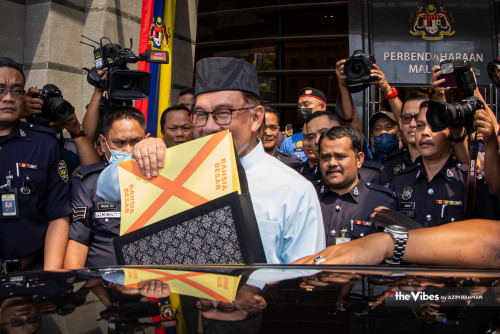
Prime Minister Datuk Seri Anwar Ibrahim announced that the government had agreed to allow the utilisation of funds from the High-Impact Programme under the Skills Development Fund Corporation (PTPK) to strengthen the country's next phase of TVET reform.
However, he stressed that access to the funding would be tied to stronger participation from employers and industry stakeholders to ensure that training programmes remain closely aligned with market needs.
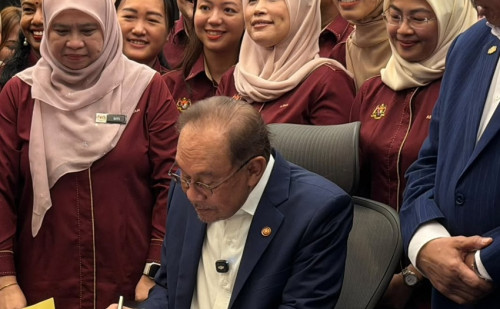
“I reiterate the decision to allow up to RM50 million from the High-Impact Programme fund under PTPK to be utilised for TVET 2.0.
“There are conditions. Employers and industry must cooperate with the government, particularly through the TVET Council, to make it a success so that there is proper coordination. This will also enhance training programmes and exposure opportunities,” Bernama quoted him saying when officiating the National TVET Day 2026 celebration.
The funding commitment comes as the government intensifies efforts to transform vocational education into a key pillar of Malaysia's future economic strategy, with a stronger emphasis on high-technology industries expected to dominate global growth in the coming decades.
Anwar said the decision to overhaul and modernise the TVET ecosystem was driven by profound technological shifts that are reshaping economies worldwide and creating demand for entirely new skill sets.
“We are aware of the new technological changes that have been mentioned, including AI, crypto and the energy transition. All of these demand new areas of expertise that were beyond the imagination and reach of our generation 20 to 30 years ago.
“These are all new technologies, and if we remain confined within the cocoon of outdated thinking, we will not be able to drive the country’s economic growth,” he said.
As part of the transformation agenda, selected TVET students will begin receiving specialised exposure to advanced disciplines including artificial intelligence, cryptocurrency-related technologies and energy transition studies from next month.
Between 50 and 100 students from each participating institution are expected to undergo early-stage specialised training before being attached to research organisations and educational institutions coordinated through the National Science Council, including the Malaysian Agricultural Research and Development Institute (MARDI).
“Beginning next month, all government educational and training bodies are required to make every effort to provide early training opportunities for selected students to master truly new fields such as AI, crypto and energy transition.
“They will be placed either at MARDI (Malaysian Agricultural Research and Development Institute) or at educational bodies coordinated under the National Science Council,” Anwar said.
The Prime Minister also expressed confidence that graduates emerging from the revamped TVET framework would command greater value in the labour market and potentially outperform conventional degree holders in specialised technical fields.
“Selected TVET graduates will, by their own merit, be elevated beyond those holding bachelor’s degrees. Accordingly, their wages and salaries should be ensured to be higher,” he said.
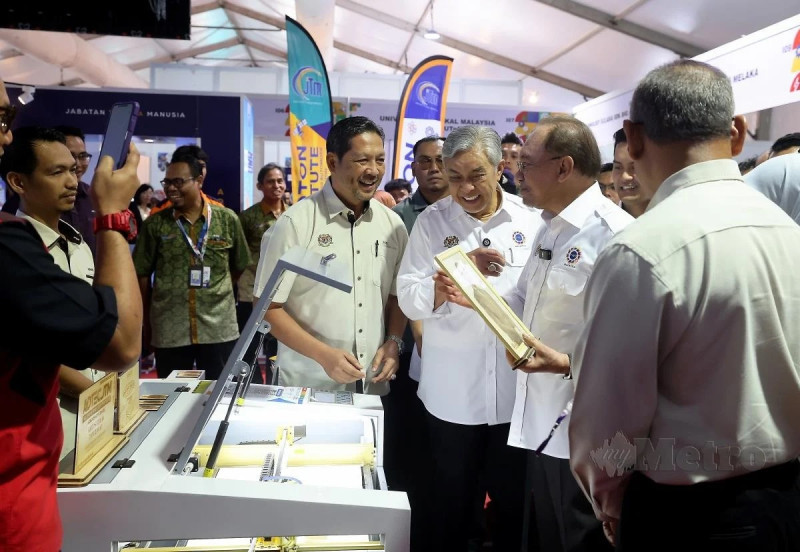
Deputy Prime Minister Datuk Seri Dr Ahmad Zahid Hamidi, who was present at the event alongside Cabinet ministers and senior government officials, described TVET 2.0 as a comprehensive restructuring of the national vocational education framework.
He said the new model would focus heavily on advanced technology sectors and future-facing industries to ensure Malaysia remains competitive amid rapid technological disruption.
Under Budget 2026, a total allocation of RM650 million has been earmarked for PTPK, providing a substantial financial foundation for skills development initiatives as the government seeks to create a highly skilled workforce capable of supporting the country's digital and green economic ambitions.
Anwar stressed that the success of TVET 2.0 would ultimately depend on sustained commitment from the private sector, government-linked companies and industry partners, arguing that stronger collaboration between education providers and employers is essential to producing graduates equipped for the demands of tomorrow's economy. - June 6, 2026