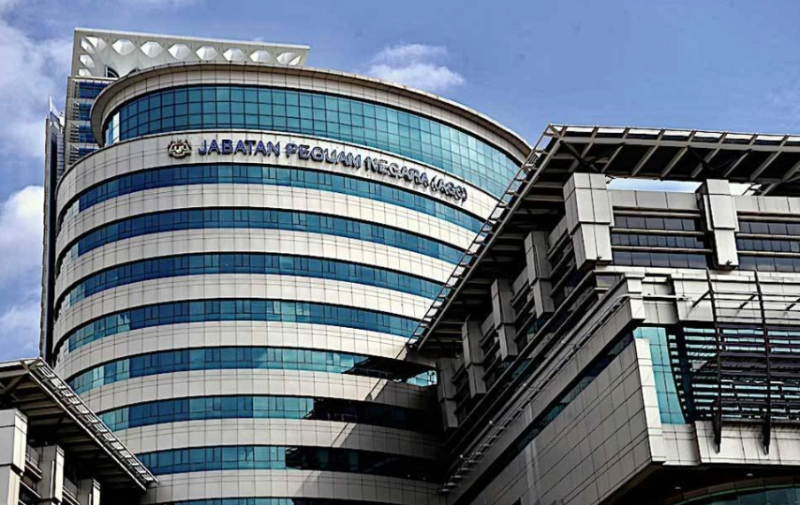
THE Attorney General's Chambers (AGC) has defended its use of compound settlements and the withdrawal of charges in selected high-profile corruption cases, stressing that such mechanisms are exceptional legal measures designed to protect the public interest rather than provide an avenue for accused persons to evade justice.
Attorney General Tan Sri Mohd Dusuki Mokhtar said decisions to discontinue prosecutions or offer compound settlements were governed by strict legal requirements and multilayered assessments, adding that neither option amounted to an automatic acquittal or an easy escape from criminal liability.
"There is no fixed rule or specific formula in determining whether a corruption case is suitable for a compound settlement.
"Instead, every case must undergo a comprehensive assessment of the evidence and discussions with the investigating team to determine whether prosecution or forfeiture proceedings can still be pursued before a compound is considered.
"If a representation letter is submitted on behalf of a suspect or accused person, a thorough further investigation must be conducted into the reasons put forward to verify their authenticity," he told the New Straits Times.
His remarks come in response to concerns raised by Transparency International Malaysia (TI-M) over what it described as an increasing reliance on compound settlements in corruption-related cases.
Mohd Dusuki explained that compound settlements under the Anti-Money Laundering, Anti-Terrorism Financing and Proceeds of Unlawful Activities Act 2001 (AMLATFPUAA) are only available where unlawful proceeds have been generated, making the mechanism inapplicable to offences where no illicit gains exist.
As an example, he said the AGC could not offer a compound settlement in a case involving an attempted bribe if the suspect had not obtained any unlawful proceeds.
"Furthermore, the amount of the compound is fixed at a level substantially higher than the value of the actual bribe to ensure that the punitive element remains effective, prevents offenders from profiting, creates a strong financial deterrent and maximises the recovery of public assets.
"Other factors considered include whether the government has suffered direct losses, weaknesses in the available evidence, the death or disappearance of key witnesses and situations where witnesses no longer support the prosecution.
"This also includes difficulties in obtaining material documents, prosecution costs that are disproportionate to the value of the bribe, complex legal obstacles, as well as humanitarian and broader considerations of justice," he said.
On the withdrawal of corruption charges, Mohd Dusuki stressed that prosecutors would only seek to discontinue proceedings when significant developments made it impossible to satisfy the criminal standard of proof required by the courts.
Although prosecutors ensure that every charge is supported by at least a prima facie case before it is filed, he said corruption trials frequently involve multiple parties with competing interests and concealed dealings, making the outcome of proceedings inherently unpredictable.
"New developments such as previously unknown evidence, changes in witness testimony or unforeseen events may arise during the course of a trial.
"When subsequent developments alter the evidential landscape so significantly that the prosecution can no longer reasonably meet the high criminal standard of proof, the prosecution must act responsibly, objectively and fairly in accordance with the law by applying for the charges to be withdrawn," he said.
Mohd Dusuki emphasised that no decision to withdraw charges is made unilaterally.
Instead, every recommendation is subjected to an extensive review process involving close collaboration between the Malaysian Anti-Corruption Commission's (MACC) investigation and prosecution divisions and the relevant specialist units within the AGC.
Investigators must first examine and address issues raised by the defence before any recommendation is submitted, after which the AGC reviews the investigation papers and receives detailed briefings from the Deputy Public Prosecutor handling the case, together with the investigating officer before reaching a final decision.
"The decision will then be communicated to the MACC, and any interested party who is dissatisfied may submit a complaint to the AGC for further review," he said.
On proposals to strengthen formal guidelines governing compound settlements and the withdrawal of charges, Mohd Dusuki said there was no pressing need to revise the existing framework as current legal provisions were functioning effectively.
Nevertheless, he said the AGC remained open to reviewing the framework in future, in close consultation with the MACC and other relevant institutions, should circumstances require changes to safeguard the integrity of Malaysia's criminal justice system. - June 20, 2026