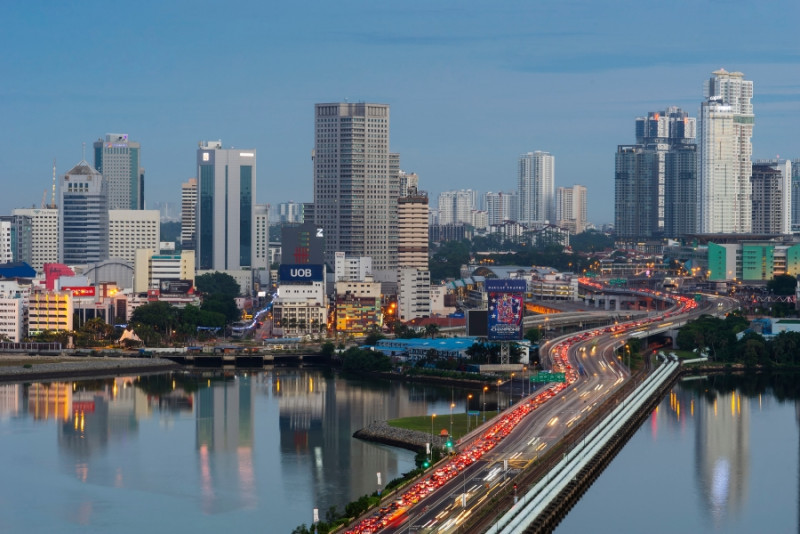
THE Johor–Singapore Special Economic Zone (JS-SEZ) has been framed as a pivotal economic platform linking Southeast Asia’s industrial and financial strengths with Europe’s expanding investment interests in the region, as more than 250 policymakers, investors and business leaders convened at the JS-SEZ Executive Forum 2026 in Kuala Lumpur.
Held under the theme “Unlocking the Malaysia-Singapore Advantage: Your Gateway to ASEAN Growth,” the forum was officiated by Economy Minister Akmal Nasrullah Mohd Nasir and organised by the Iskandar Regional Development Authority (IRDA) as a central facilitation body for the cross-border economic initiative.
In his keynote address, Akmal described the JS-SEZ as a practical step towards deeper regional economic integration, combining Malaysia’s industrial base with Singapore’s global connectivity to create a unified investment platform.
“JS-SEZ is not merely about geography, nor is it only about moving people and goods more efficiently across borders. It is about bringing together Malaysia’s industrial scale and Singapore’s global connectivity into one competitive platform for investors,” he said.
He said the initiative comes at a time when global companies are reassessing supply chains and seeking resilient, long-term production hubs, adding that ASEAN’s growing economic weight strengthens its appeal to international investors.
“ASEAN is becoming more connected, more investable and more central to global business strategy. With 684.1 million people, USD230.8 billion in foreign direct investment and USD3.844 trillion in goods trade recorded in 2024, the region offers a strong growth base for European companies. JS-SEZ provides a focused platform for investors to access these opportunities through the Malaysia-Singapore advantage,” he said.
The Minister also outlined the complementary strengths of both countries as central to the JS-SEZ framework, with Malaysia providing industrial capacity, manufacturing ecosystems and talent, while Singapore contributes financial services and global connectivity.
“Malaysia brings industrial capacity, deep supply chains, competitive manufacturing ecosystems, strategic infrastructure and a talented workforce. Singapore brings financial depth, global connectivity and advanced services. Together, this creates an ecosystem where capital, technology, talent and businesses can grow with greater confidence,” he said.
He stressed that success would be measured not only through investment announcements but through tangible economic outcomes, including skilled employment, technology transfer and opportunities for local firms.
“The real test is whether we can convert policy into execution, investment into skilled jobs, and cross-border cooperation into shared prosperity. The JS-SEZ target of 50 high-value projects and 20,000 skilled jobs within five years must translate into real opportunities for Johor, Malaysian companies and our young talent,” he said.
The Federal Government reiterated its commitment to supporting the initiative through coordinated policy measures and institutional facilitation, including the Invest Malaysia Facilitation Centre Johor (IMFC-J), designed as a one-stop platform for investment approvals, expatriate processing and post-investment coordination.
Agencies including IRDA, Invest Johor and the Malaysian Investment Development Authority (MIDA) were highlighted as central actors in translating the JS-SEZ framework into operational economic outcomes by connecting investors with regulatory and industrial ecosystems.
Malaysia’s improving global competitiveness was also cited as strengthening the corridor’s investment appeal, with the country rising eight places to 15th position among 70 economies in the IMD World Competitiveness Ranking 2026. - July 1, 2026