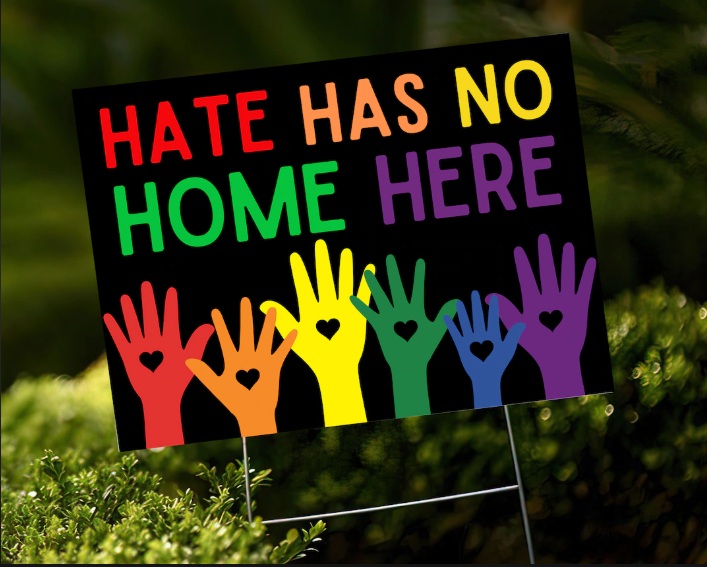
THERE was a time when politics was about winning hearts.
Today, too often, it is about hijacking minds.
An undercover investigation by The Fourth has exposed something many Malaysians have long suspected but struggled to prove: outrage has become an industry. Hate has become a product. And our divisions have become someone else’s business model.
That should concern every Malaysian, regardless of political party, race or religion.
Because this is no longer about who supports which politician. It is about whether we are allowing our democracy to be quietly replaced by an economy that profits from keeping Malaysians angry at one another.
The investigation paints a disturbing picture. Agencies are allegedly offering campaigns designed around racial tension and religious sensitivities. Influencers are prepared to sell narratives to the highest bidder. Networks of anonymous accounts are manufacturing the illusion of public opinion. Algorithms reward the loudest voices rather than the wisest ones.
If true, this is not campaigning.
It is social engineering.
And perhaps the most disturbing part is that the hatred itself is not the objective.
Profit is.
Political influence is.
Power is.
Hatred is simply the delivery mechanism.
This should force us to ask a difficult question.
When did we become so easy to manipulate?

Malaysia was never built on uniformity. We are one of the world’s most remarkable social experiments—a nation of different races, religions, cultures and languages that chose coexistence over conflict. That does not just live together but thrives together.
We have certainly had our disagreements. We have made mistakes. But our greatest achievements have always come when we remembered that our diversity was our competitive advantage, not our greatest weakness.
Yet today, every disagreement seems to be deliberately transformed into an existential crisis.
Every policy becomes a racial issue.
Every appointment becomes a religious issue.
Every election becomes a battle for survival.
Every social media post becomes another opportunity to convince Malaysians that their neighbour is somehow their enemy.
Someone is making extraordinary money from convincing ordinary Malaysians to hate one another.
And we keep giving them exactly what they want.
The investigation describes how outrage is carefully engineered.
A provocative opening.
An emotional trigger.
A carefully edited narrative.
Coordinated comments.
Artificial amplification.
Then the algorithms take over.
It is no accident.
It is re-engineering.
What many people still fail to appreciate is that today’s attention economy rewards emotional reaction over objective truth.
The platforms are not asking whether something is true.
They are asking whether people will stop scrolling.
Anger performs. Fear performs. Resentment performs.
Nuance does not. Moderation does not. Truth often does not.
That creates a dangerous incentive structure. The people who seek to unite Malaysians become almost invisible. The people who divide us become celebrities.
And we wonder why our politics feels increasingly toxic.
Artificial intelligence now threatens to accelerate this crisis beyond anything we have previously imagined.

The cybertrooper farms of yesterday required hundreds of people.
Tomorrow, a handful of operators armed with AI will be able to generate thousands of convincing videos, cloned voices, fake interviews and personalised propaganda around the clock.
The cost of manufacturing outrage is collapsing. Its reach is exploding. The danger is not simply misinformation. It is that we eventually lose confidence in information itself.
Once people no longer know what to believe, they stop trusting institutions.
They stop trusting journalists.
They stop trusting elections.
Eventually they stop trusting each other.
That is how democracies begin to weaken—not necessarily through coups or revolutions, but through the slow corrosion of public trust.
Malaysia cannot afford that.
We are living through one of the most strategically important periods in our nation’s modern history. As ASEAN continues to rise, global supply chains shift, artificial intelligence transforms industries and geopolitical competition intensifies, Malaysia has an extraordinary opportunity to lead.
But leadership is impossible if we remain trapped in perpetual outrage.
No investor chooses instability.
No innovator thrives in division.
No great nation is built on permanent resentment.
The strongest economies are built on trust.
The strongest societies are built on trust.
The strongest democracies are built on trust.
Trust cannot survive where hatred has become an industry. This is not a challenge government alone can solve.
Technology companies must accept greater responsibility for algorithms that monetise division.
Political leadership must reject campaigns that rely on manufactured hatred.
Media organisations must resist becoming distributors of outrage simply because it generates clicks.
Businesses should refuse to finance campaigns that poison the very society in which they operate and profit in.
And perhaps most importantly, every Malaysian must become a little more difficult to manipulate.
Before we share. Before we comment. Before we react. We should ask a simple question:
Who benefits if I become angry?
Because increasingly, someone does.
Malaysia has overcome far greater challenges than anonymous trolls, coordinated disinformation and digital manipulation.
We have built a nation from diversity.
We have weathered economic crises.
We have endured political upheaval.
We have repeatedly proven that when Malaysians refuse to let others define us by our differences, we are capable of extraordinary things.
The greatest threat to our future is not that we disagree.
It is that someone has discovered they can profit from ensuring we never stop disagreeing.
The hate economy only survives if we continue to invest in it.
Perhaps the most powerful act of patriotism in modern Malaysia is no longer waving the Jalur Gemilang.
Perhaps it is refusing to let anyone convince us that another Malaysian is our enemy simply because it serves their political strategy or their business model.
Because a nation built on outrage will never reach its potential.
But a nation built on trust can achieve almost anything. – July 4, 2026
The Mouse that Roared and The Vibes Team








.jpg)