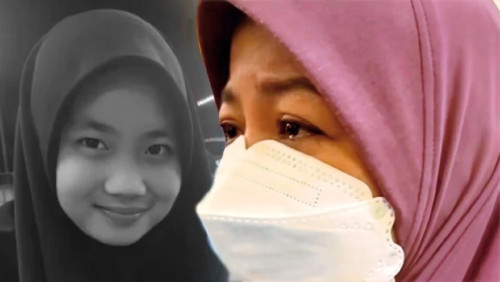
A CHILD and adolescent psychiatric expert who prepared a psychological assessment report on Zara Qairina Mahathir has told the Kota Kinabalu Coroner’s Court that she was not registered as a child clinical psychologist under the Allied Health Professions Act 2016, but maintained that she was qualified to conduct the assessment through her registration with the Counsellors Board and extensive clinical experience.
Dr Noor Aishah Rosli, the 76th witness in the inquest into Zara Qairina’s death, said she had two professional backgrounds — as a registered counsellor and as a practitioner with academic and clinical qualifications in child psychology.
She was responding to questions from conducting officer Nahrah Dollah during proceedings at the Coroner’s Court on Tuesday on whether she was aware of the Allied Health Professions Act 2016.
“The Act is still quite new, but because I have a licence as a registered counsellor, I can practise and also conduct analysis involving children and adolescents,” she said.
Nahrah then highlighted that, based on the proceedings so far, no evidence had been presented showing that Dr Noor Aishah was a registered child clinical psychologist under the Act.
“But confirm that you are not a child psychologist registered under that Act,” Nahrah asked.
Dr Noor Aishah replied that she practised using her registration under the Counsellors Board.
“I am not registered under that, but I use my registration with the Counsellors Board,” she said.
She further explained that the preparation of Zara Qairina’s psychological report was not based solely on her status as a registered counsellor, but also on her extensive clinical experience and professional practice.
“To prepare this report, being a registered counsellor alone is not enough. My experience from the perspective of clinical work is more than 23,000 hours.
“So, with my experience, my academic background, I produced this report, as well as based on my experience as a practitioner,” she said.
Dr Noor Aishah also confirmed that the number displayed on her professional stamp referred to her membership number in a psychology association and was not a registration number issued under the Allied Health Professions Act 2016.
Nahrah later referred to another case report that showed an example of a registration number belonging to a clinical psychologist registered under the Act, suggesting that the title “child clinical psychologist” required registration under the legislation.
“Child clinical psychologist is my area of expertise and I have the certificate for it,” Dr Noor Aishah responded.
During the proceedings, lawyer Shahlan Jufri intervened, arguing that whether the witness had committed any offence under the Act was a legal issue and should not be determined through the witness’s testimony.
However, Nahrah maintained that the matter involved the credibility and qualifications of the witness, which should be assessed by the court before Coroner Amir Shah Amir Hassan directed proceedings to continue with other questions.
Dr Noor Aishah also explained her methodology in selecting sources of information for Zara Qairina’s psychological assessment, saying she chose individuals who could provide relevant details about the teenager’s background and circumstances.
“When I knew this case was about identifying whether Zara had an intention to commit suicide.
“So, I planned the selection of sources or individuals who could provide me with a lot of information about Zara.
“I started with the family, I looked at her friends, I looked at the school, teachers and neighbours,” she said.
She rejected suggestions that her assessment was affected by selection bias, explaining that information gathered from various sources was compared and cross-checked before being included in the report.
“I emphasise that I was not biased when obtaining information and this was proven because all the informants’ accounts obtained were almost consistent,” she said.
On the possibility of informant bias, Dr Noor Aishah said she met Zara Qairina’s friends separately at school and they were not informed of the actual purpose of the meetings.
“They did not know what questions I would ask and I met them separately, not at the same place, and nobody heard my conversations with them,” she said.
She also told the court that she did not use the post-mortem report or medical clinical reports in her psychological analysis because such matters were outside her area of expertise.
“My task was to identify Zara’s life history, determine whether Zara had any mental health issues or not, examine the relationship between Zara and her mother, and subsequently identify whether Zara had the intention to jump from the third floor. That is all,” she said.
Dr Noor Aishah agreed that a person’s overall assessment should take into account biopsychosocial factors, but stressed that her report focused specifically on psychological aspects within the scope of her expertise. - July 14, 2026