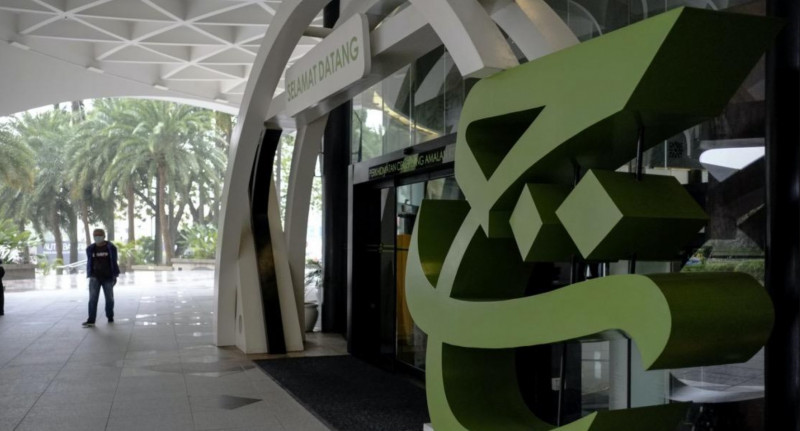
STRENGTHENING governance at Lembaga Tabung Haji (TH) is essential to ensuring that the interests of more than 9.8 million depositors are protected and that those entrusted with managing their savings are held to the highest standards of accountability, Economy Minister Akmal Nasrullah Mohd Nasir said.
He said the follow-up to the Royal Commission of Inquiry (RCI) report into TH’s management and operations between 2014 and 2020 must be viewed not simply as an institutional reform exercise, but as part of a wider effort to restore and strengthen public confidence in an institution entrusted with billions of ringgit in depositors’ funds.
"The Government respects the ongoing investigation process and any action arising from it must be carried out in accordance with the law and left to the relevant authorities," he said in a statement on Monday.
Akmal said the scale of TH’s responsibilities made governance particularly important, with the institution managing the trust and savings of more than 9.8 million depositors and holding investments worth more than RM96 billion.
"With investments exceeding RM96 billion, the governance of Tabung Haji has wider implications for confidence in institutions and the domestic market. The priority is to ensure investment management, financial discipline and risk management continue to be strengthened so that depositors' interests are protected sustainably."
The emphasis on protecting depositors comes as the Government works to ensure that institutional failures or weaknesses identified in the past are addressed through stronger oversight, clearer accountability and more disciplined financial management.
As of early August 2026, TH said it had implemented more than 75 per cent of the RCI’s recommendations, with work on the remaining recommendations continuing.
Akmal said the implementation of the recommendations should form part of a broader effort to ensure that public institutions operate transparently, responsibly and in the long-term interests of those they serve.
For depositors, he said, institutional reform must ultimately translate into stronger protection of their savings and greater confidence that TH’s investments and finances are being managed responsibly.
The reforms are also significant for Malaysia’s wider economy because TH is a major institutional investor, meaning the quality of its governance can have implications beyond its depositors and into the domestic investment market.
Akmal said the Government’s focus on institutional strengthening was consistent with the Ekonomi MADANI framework and the implementation of the 13th Malaysia Plan (RMK13), 2026-2030.
RMK13, themed "Redesigning Development", seeks to raise Malaysia’s economic growth ceiling, improve living standards and strengthen good governance.
He said strong institutions were particularly important at a time when Malaysia was experiencing solid economic growth.
The economy expanded by 6.0 per cent in the second quarter of 2026, while first-half growth reached 5.7 per cent, compared with 4.5 per cent during the corresponding period last year.
"This momentum needs to be supported by well-functioning institutions, policy certainty and consistent implementation of reforms to maintain business and investor confidence and strengthen the resilience of the national economy," he said.
Akmal said the Economy Ministry would continue focusing on RMK13 priorities, including raising productivity and competitiveness, accelerating quality investments and creating high-value employment.
Ultimately, he added, stronger institutions must ensure that economic growth is translated into tangible improvements in incomes and living standards.
For TH, that principle places the interests of its millions of depositors at the centre of the reform agenda, with governance, accountability and responsible investment management essential to ensuring that public trust is not merely restored but sustained. - August 24, 2026