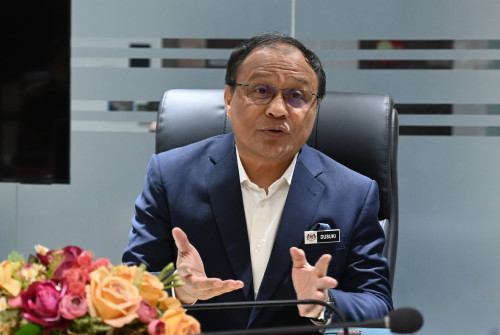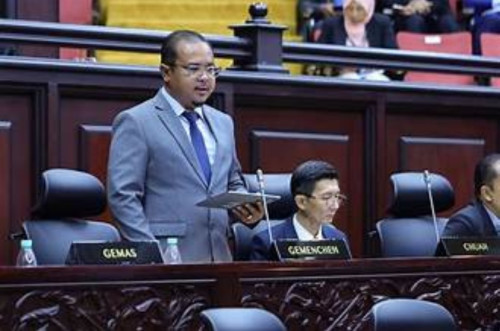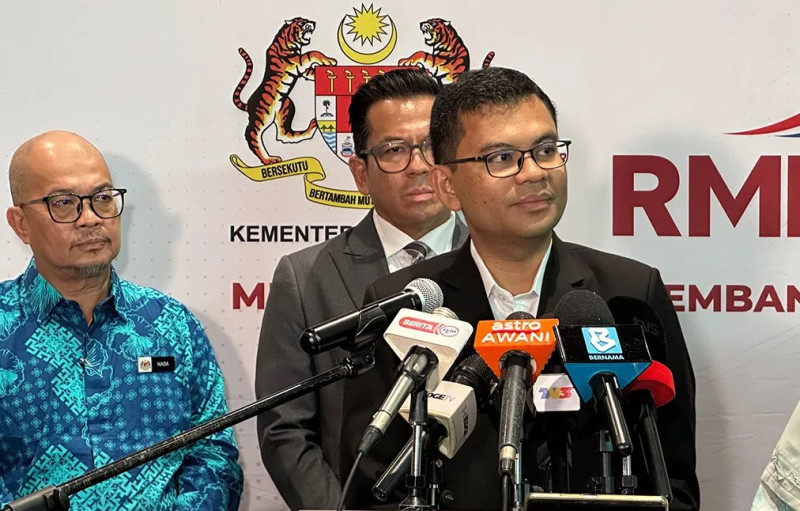
MALAYSIA’S development spending under Budget 2027 will proceed as planned despite pressure from higher global oil prices on subsidies and the Government’s fiscal space, Economy Minister Akmal Nasrullah Mohd Nasir said today.
He said the Economy Ministry had received a commitment that development allocations for next year would be maintained, stressing that short-term pressures from oil prices should not undermine longer-term development priorities.
“At the Economy Ministry level, we have received a commitment that in terms of the figures, the commitment to development will continue next year.
“We see that although managing oil prices is an urgent or short-term matter, the long-term commitment must still be maintained,” he said after the Economy Ministry’s monthly assembly in Putrajaya today.
Akmal said global oil prices remained highly uncertain, with movements in Brent crude subject to several factors that could trigger significant changes.
“In terms of the range of the increase, uncertainty remains and is very significant because if we look at the movement in Brent prices, for example, changes can occur due to several factors that remain uncertain,” he said.
He said managing the impact on fiscal space would be a matter for the Finance Ministry, adding that there was still room to manage the burden of higher global oil prices on the public without affecting development plans.
“There is still room for us to ensure that the burden borne by the people due to higher global oil prices can be managed as well as possible.
“Of course, in terms of fiscal space, as the Prime Minister (Datuk Seri Anwar Ibrahim) or the Finance Ministry has explained, it is a matter of how this is absorbed into our fiscal position, but it will not disrupt the development plans under the Economy Ministry,” he said.
Akmal said oil prices were a significant issue for Malaysia, particularly because of the amount spent on subsidies and the need to balance efforts to protect the public from supply disruptions with the resulting fiscal burden.
He said the Economy Ministry’s priorities under Budget 2027 would include ensuring productive firms continued to expand and strengthening vendors’ capabilities in technology and innovation.
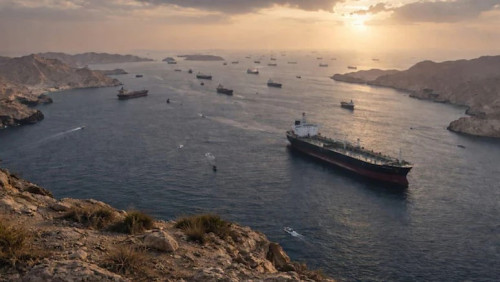
Global oil prices are trading in an uncertain energy market amid geopolitical developments in the Middle East, with Brent crude around US$100 a barrel.
Budget 2027, the fifth MADANI Budget, is scheduled to be tabled in Parliament on Oct 9, with the Government expected to focus on growth, high-value employment, competitiveness and higher-value economic development.
Govt Will Continue To Review Minimum Wage Periodically
Separately, Akmal said the government will continue to review the minimum wage periodically in line with economic growth, inflation and the Government’s commitments under the 13th Malaysia Plan (RMK13).
He said regular reviews were necessary to ensure workers’ incomes kept pace with economic developments, while inflation and the cost of living also needed to be considered so that wage gains were not eroded by higher living costs.
“The commitment in terms of implementing the minimum wage is that the review is carried out periodically, and certainly the available space exists when economic growth is performing well. At the same time, we have to move in line with the commitments stated under RMK13,” he said.
Akmal said wage growth should be assessed alongside inflation to provide a clearer picture of workers’ real income gains. “If the median wage is around RM2,940, we certainly have to look at that figure together with the cost of living, including inflation.
“Statistically, we can produce a figure known as real wages, which still shows an increase of about 3.3 per cent to RM2,104,” he said.
He said uncontrolled inflation could erode the benefits of higher wages received by workers. “We still adhere to the target stated by Bank Negara for 2026, where inflation is expected to be around 1.5 to 2.5 per cent,” he said.
Bank Negara Malaysia previously reported that inflation rose to 1.9 per cent in August from 1.8 per cent in July, with the consumer price index at 137.5 compared with 134.9 in August.
Akmal added minimum-wage policy needed to be considered alongside efforts to reduce Malaysia’s dependence on foreign workers. “These matters need to come together, including reducing foreign workers.”
However, he said any decision on the minimum wage would involve the whole Government and would be considered collectively by the Cabinet. “When we talk about the minimum wage, it is a whole-of-government approach, and this matter will certainly be considered collectively by the entire Cabinet. But the process moves periodically.” - September 22, 2026


.JPG)