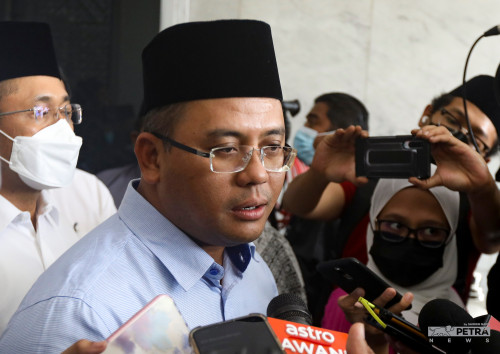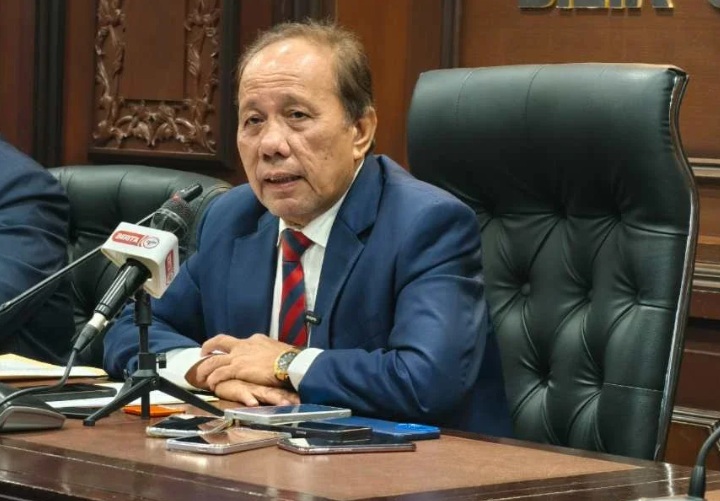
THE Negeri Sembilan government has suspended state secretary Datuk Mohd Zafir Ibrahim and state legal adviser Datuk Muzalmah Mustapha Kamal with immediate effect, adding to the growing constitutional dispute between the state administration and the palace.
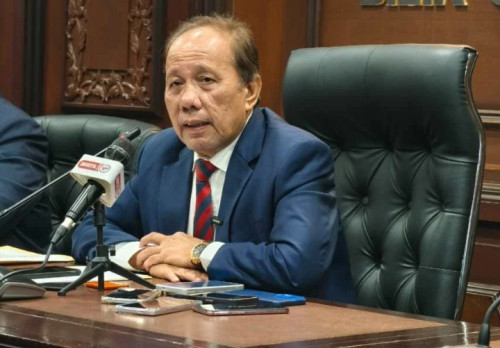
Menteri Besar Datuk Ismail Lasim said the decision was made unanimously at a special meeting of the state executive council (MMKN) today.
State financial officer Datuk Masri Razali will assume the duties of state secretary until a successor is appointed by the Chief Secretary to the Government.
Lawyer Fahmi Adilah will meanwhile provide legal advice to the state government until a new state legal adviser is appointed by the Attorney General’s Chambers.
Ismail said notice of Zafir’s suspension would be sent to the Chief Secretary to the Government and the Public Service Department, while Muzalmah’s suspension would be communicated to the Attorney General’s Chambers.
MB cannot suspend the state secretary or state legal adviser
A source revealed that the state secretary and state legal adviser are members of the state administration specifically mentioned in the State Constitution, along with the state financial officer.
The state secretary comes under the supervisory jurisdiction of the KSN, and the state legal adviser under the supervisory jurisdiction of the AG.
“They can’t be suspended or dismissed by the Menteri Besar. The MB can merely request them to be replaced by the KSN and AG,” said the source.
Under Article 132 of the Federal Constitution, which defines the public services, the state secretary and state financial officer are classified under the general federal public service (Administrative and Diplomatic Service/PTD), while the state legal adviser is classified under the Judicial and Legal Service.
Article 135(1) of the Federal Constitution is the primary safeguard protecting civil servants from political interference.
It states that no public servant can be "dismissed or reduced in rank by an authority subordinate to that which, at the time of the dismissal or reduction, has power to appoint a member of that service of equal rank".
Articles 138 and 139 of the Federal Constitution establish the Judicial and Legal Service Commission (JLSC) and the Public Services Commission (PSC).
Because the PSC is the appointing authority for the state secretary and the JLSC is the appointing authority for the state legal adviser, only these federal commissions have the legal jurisdiction to execute disciplinary action, suspend, or terminate these officers.
Because the Menteri Besar and the state EXCO are legally "subordinate" (or entirely external) to these federal commissions regarding employment jurisdiction, their attempts to unilaterally issue suspension notices carry no administrative weight under Article 135.
Meanwhile, Ismail also said all state executive councillors remained in office.
“The Negeri Sembilan government administration will continue to function as usual, and its responsibilities to the people will continue to be carried out to the best of its ability,” he said.
The move comes amid a dispute over the status of the state executive council and the respective powers of the palace and the state government.
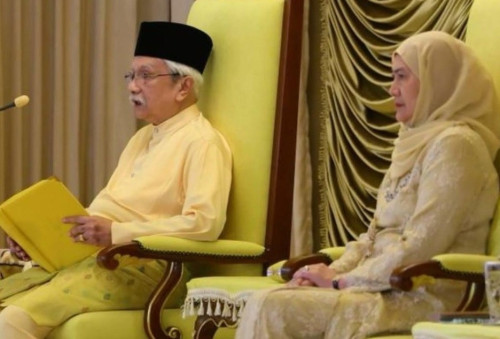
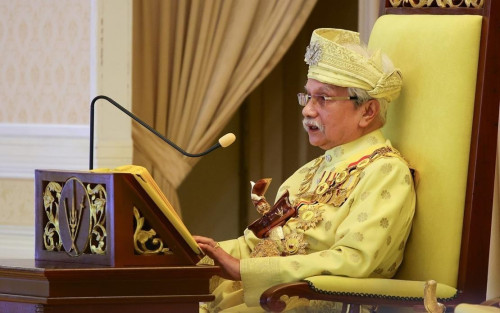
On Sunday, the Yang di-Pertuan Besar of Negeri Sembilan, Tuanku Muhriz Tuanku Munawir, revoked the appointments of the state executive councillors with immediate effect.
The palace said the decision followed actions and statements made by the exco members on Sept 15, which were found to have breached their oath of office.
Ismail has rejected the move, maintaining that the exco members remain in office.
He has also argued that any attempt to remove or terminate an exco member without the advice or request of the Menteri Besar would be a legal error and have no legal force.
The dispute has now extended to the state’s top administrative and legal offices, with the suspension of Zafir and Muzalmah.
The developments leave the state administration facing competing positions over the validity of decisions involving the palace, the executive council and the state’s constitutional machinery. – September 22, 2026


.JPG)

.jpeg)