MALAYSIA’S strategic relationship with China has gained fresh economic momentum, with Prime Minister Datuk Seri Anwar Ibrahim’s three-day working visit yielding potential investments worth RM28.6 billion, prospective exports of RM8.2 billion and a proposal to extend the East Coast Rail Link (ECRL) to Rantau Panjang, Kelantan.
Anwar, who is also Finance Minister, said the proposed ECRL extension could stimulate economic activity in Kelantan’s interior while establishing a direct transport link with Thailand.
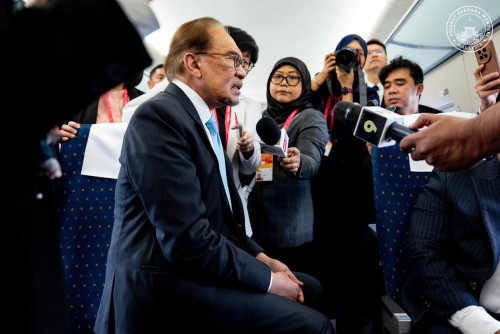
“Further discussions on the ECRL proposal will be held with all stakeholders before it is brought to the Cabinet for consideration,” he told Malaysian media after concluding his working visit to China today.
The proposal also received positive feedback from Thai Prime Minister Anutin Charnvirakul, Anwar said.
The 665-kilometre ECRL currently links Kota Bharu with Port Klang, with 20 stations along the route comprising passenger, freight and mixed-service stations.
The proposed extension comes amid a broader push to expand Malaysia-China economic cooperation, with the RM28.6 billion in potential investments concentrated in high-impact sectors including semiconductors, artificial intelligence (AI), robotics, electric vehicles (EVs), battery materials, advanced optics, biotechnology and advanced manufacturing.
Potential exports to China are estimated at RM8.2 billion over the next one to three years.
Anwar said the visit also addressed concerns among Malaysian micro, small and medium enterprises (MSMEs) facing growing competition from foreign e-commerce platforms.
The issue was raised directly with China’s top leadership and during business meetings throughout the visit, he said.
“I give an assurance to affected traders that the MADANI Government is finalising follow-up measures to address this issue comprehensively, and this will be among the priorities at the upcoming Cabinet meeting,” he said in a social media post.
Anwar said he welcomed Chinese Premier Li Qiang’s commitment to identify the best ways to ensure Malaysian MSMEs were protected and did not continue to be adversely affected.
He said the position was also backed by assurances from major Chinese companies, including Alibaba.
The Prime Minister also highlighted Malaysia’s role as a potential base for Chinese and global companies seeking to expand their strategic partnerships in the region.
He said Malaysia offered a stable, well-connected and business-friendly environment, supported by an increasingly mature technology ecosystem, supportive government policies and a growing network of technology-based enterprises.
“I welcome the export strategy of the Malaysia External Trade Development Corporation (MATRADE) to diversify markets in China and the offering of products encompassing high-technology goods and solutions.
“I am also pleased to see that they have the capacity to compete globally and move forward in exploring China’s vast digital economy market,” he said in a post on X.
Anwar’s bilateral meeting with Li also covered strategic issues affecting Malaysia, China and ASEAN, including developments involving the United States and China.
On US tariff restrictions and trade pressure, Anwar said Malaysia remained neutral and would continue direct dialogue with Washington, adding that China was aware of Malaysia’s position.
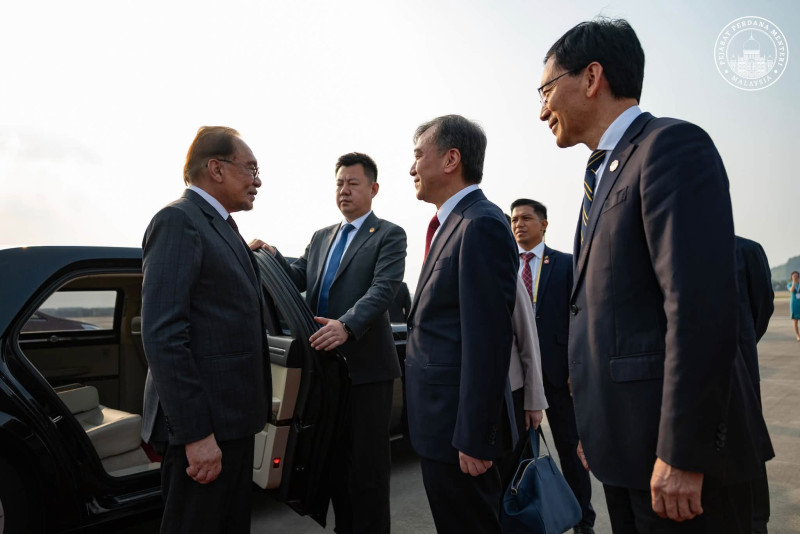
Anwar departed for Kuala Lumpur yesterday afternoon after concluding his three-day working visit to Shanghai and Hangzhou. - September 25, 2026