MALAYSIA and Singapore have established a new bilateral workgroup to strengthen supply chain resilience and coordinate responses to future disruptions affecting the cross-border movement of essential goods and workers.
The Malaysia-Singapore Supply Chain Cooperation Workgroup (SCWG) was endorsed at the Third Annual Ministerial Dialogue between the two countries’ investment, trade and industry ministries in Kuala Lumpur today.
The mechanism will facilitate regular information-sharing and joint planning, strengthen crisis coordination and explore practical arrangements to maintain cross-border flows during severe connectivity or supply disruptions.
The workgroup will operate in accordance with the respective domestic laws, policies and priorities of Malaysia and Singapore.
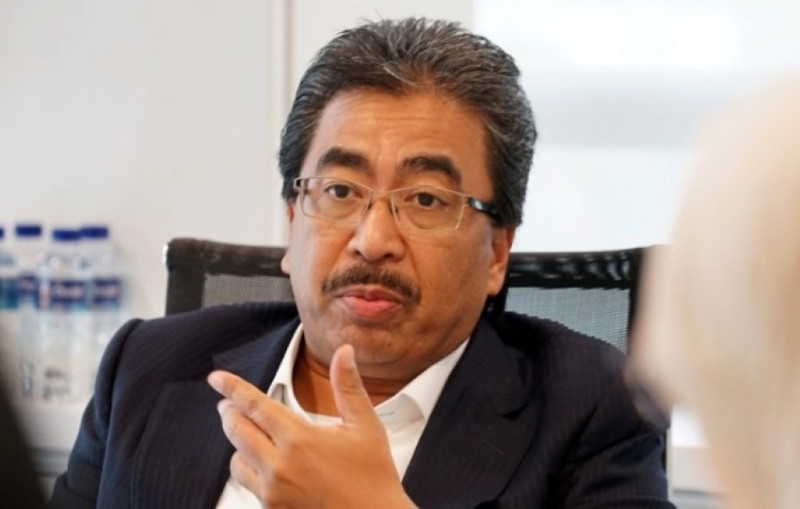
Investment, Trade and Industry Minister Datuk Seri Johari Abdul Ghani and Singapore Deputy Prime Minister and Minister for Energy, Trade and Industry (Trade) Gan Kim Yong co-chaired the dialogue.
The ministers said the new mechanism reflected their shared commitment to strengthening supply chain resilience amid an increasingly complex global economic environment.
The move comes as bilateral economic ties continue to expand, with Malaysia-Singapore total trade reaching a record US$94.07 billion in 2025, an 8.5 per cent increase from 2024.
Singapore is Malaysia’s second-largest trading partner and an important source of foreign direct investment, while Malaysia is Singapore’s third-largest trading partner.
The ministers also agreed to explore deeper cooperation in the halal economy, including food processing, halal ingredients, alternative proteins, cosmetics and cold-chain logistics.
Singapore was Malaysia’s second-largest halal export destination in 2025, with exports valued at RM7.1 billion.
Both sides also encouraged stronger links between Singapore-based enterprises and HALMAS-certified halal parks in Malaysia, as well as greater cooperation in capacity building, technology and knowledge exchange.
Meanwhile, the ministers welcomed the successful conclusion of the three-year Digital Economy and Green Economy Frameworks of Cooperation, which had produced initiatives including the Authorised Economic Operator Mutual Recognition Arrangement, the DuitNow-NETS QR payment linkage, PayNow-DuitNow real-time account transfers and cross-border e-invoicing cooperation.
Under the green economy pillar, the two countries had also advanced cooperation on carbon markets and cross-border carbon capture and storage.
The ministers said the momentum would be carried forward through sectoral agency cooperation and regional platforms, including the Johor-Singapore Special Economic Zone and the ASEAN Digital Economy Framework Agreement.
They also welcomed progress under the Malaysia-Singapore Third Country Business Development Fund, which enables companies from both countries to jointly explore opportunities in third markets.
The two sides reaffirmed their commitment to strengthening economic security, resilience and competitiveness amid heightened trade disruptions and geopolitical uncertainties, while supporting an open, rules-based multilateral trading system. - October 1, 2026