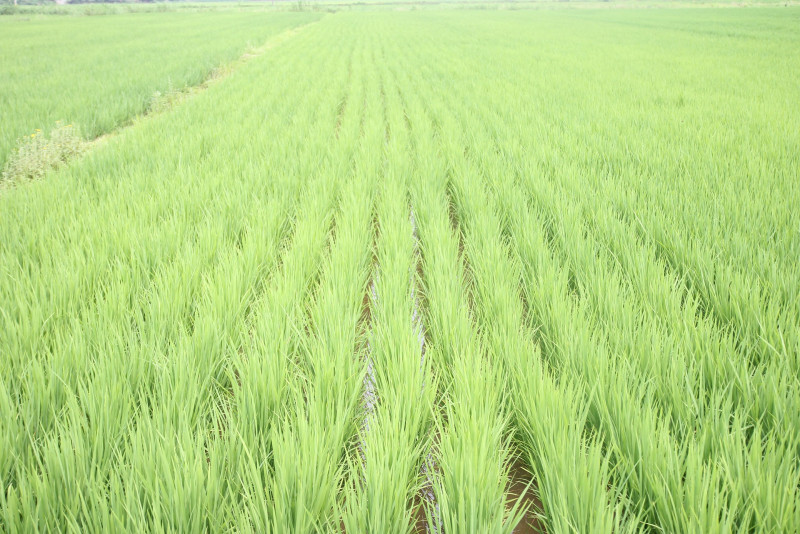
THE government will allocate RM2.62 billion in assistance for paddy farmers and raise the rubber production incentive to RM3.30 per kilogram under Budget 2027, as it steps up efforts to strengthen food security and support agricultural commodity producers.
Paddy farmers will receive assistance worth about RM4,300 per hectare, covering items including seed, fertiliser and pesticide subsidies, ploughing costs and paddy price support.
The paddy harvesting incentive will double from RM50 to RM100 per hectare per season, while the ploughing incentive, already raised to RM300, will be maintained and extended to farmers in Sabah and Sarawak.
A further RM20 million will be provided for foliar fertiliser to restore and improve soil fertility across more than 10,000 hectares of paddy fields.
The government is also pressing ahead with the five-season-in-two-years paddy cultivation programme to strengthen domestic rice supplies. Irrigation upgrades across 15 paddy blocks are progressing according to schedule, while rehabilitation of the Pedu Dam is expected to be completed by the end of 2027.
Federal-state cooperation on community-level food production projects will receive RM300 million. Successful initiatives include red tilapia farming in Batang Ai, Sarawak, which supports annual production of 7.2 million fish fry and benefits 200 small-scale farmers, and a dairy project in Mersing, Johor, targeted to contribute half of the state's milk production by 2030.
For fishermen, the number of recipients under the special boat licence scheme will increase from 17,000 to 20,000, supported by RM30 million. Grants will also be provided for aquaculture projects, including biofloc systems for tilapia farming, while Agrobank will offer RM40 million in financing for aquaculture.
Eligible fishermen will continue to receive subsidised diesel at RM1.65 a litre. Another RM178 million will support initiatives including catch incentives and cost-of-living allowances of up to RM300 a month.
Agricultural entrepreneurs will have access to more than RM1 billion in financing through Agrobank, Bank Rakyat and the Malaysian Co-operative Societies Commission to boost farm output, including through technology adoption.
More than RM40 million will support the development of higher-value products using modern technology, including premium bean-to-bar chocolate, essential oils and agarwood aromatherapy products.
Support for smallholders will also be expanded. Funding for farm road repairs will double to RM100 million from RM50 million.
A RM100 million hybrid financing scheme will help 4,500 smallholders replant their oil palm estates, with recipients required to repay only half of the financing.
A separate RM200 million low-cost financing facility will support replanting on holdings of up to 40 hectares. Repayments will be deferred for four years while trees mature, with smallholders paying interest of two per cent and the government covering the remainder.
The rubber production incentive will rise for the third time, from RM3.00 to RM3.30 per kilogram, benefiting more than 300,000 smallholders. The rate stood at RM2.50 per kilogram in 2022.
As of September, 290,000 smallholders had received RM400 a month in subsidy assistance. Beneficiaries include farmers, livestock breeders and smallholders in the oil palm, rubber, cocoa, pepper and kenaf sectors.
The government will also provide RM30 million to combat crop diseases and pests, including Ganoderma, bagworms and mealybugs affecting oil palm, as well as diseases affecting cocoa and pepper.
For FELDA, the government has approved RM1.26 billion for 2027 to strengthen its finances, maintain roads and support housing for the next generation of settlers.
The government said 109,000 settlers now hold land titles, while average monthly net income among settlers has risen from RM2,272 in 2023 to RM3,800 this year. The delisting of FGV is also intended to strengthen FELDA's finances and support settlers' welfare. - October 9, 2026