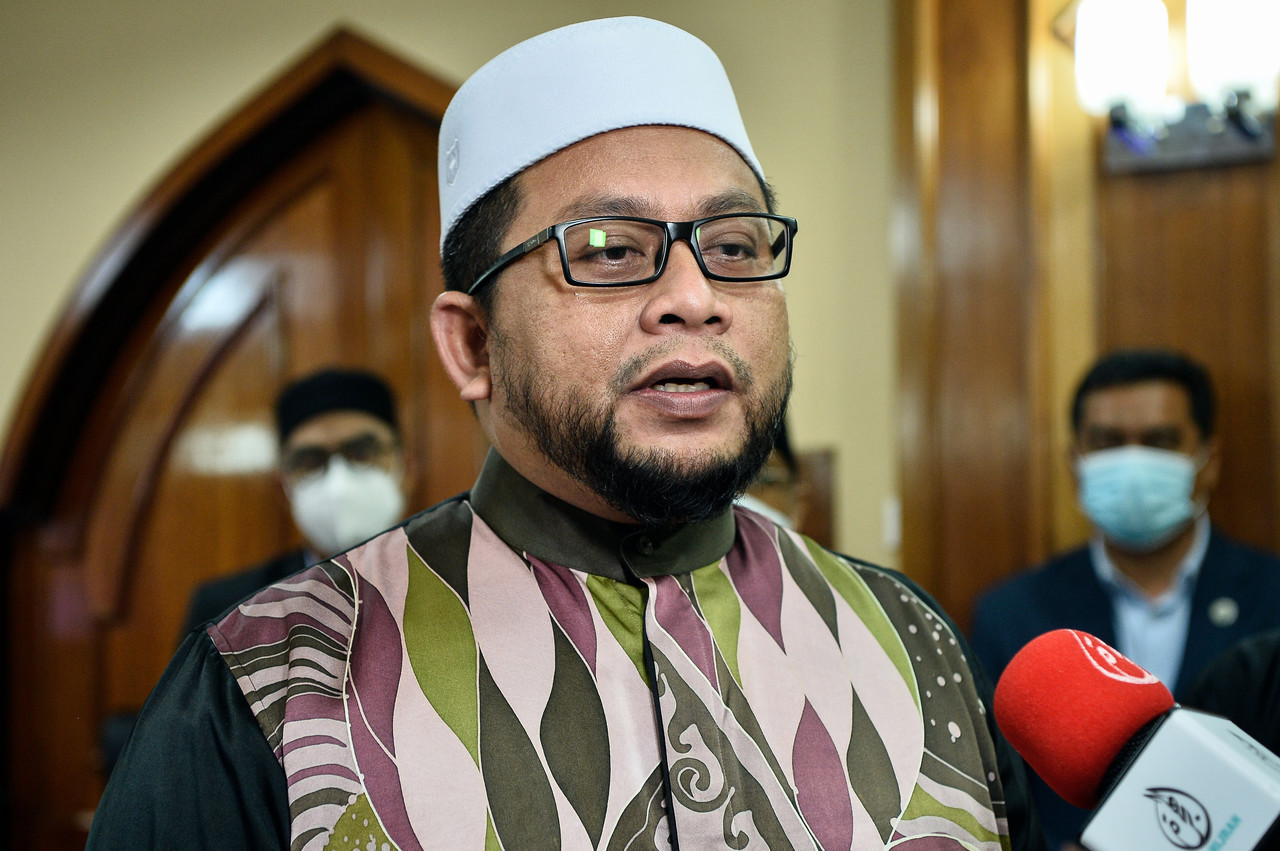
KUALA LUMPUR – The recent Federal Court decision declaring the Selangor enactment on unnatural sex as unconstitutional could open the doors to more individuals challenging the legitimacy of shariah law, said the deputy minister in charge of religious affairs.
Datuk Ahmad Marzuk Shaary said while he respects the court’s ruling, the decision will have a lingering effect on state religious laws.
As such, he said the ministry is reviewing further action that can be taken following the last week’s ruling, “to protect these shariah laws that have been formulated by the states with and consented to by the sultans”.
“We are worried that those who commit offences against Islamic teachings and are charged in a shariah court will take advantage and challenge the validity of Islamic laws that have been enacted by the respective state legislatures.
“If we allow more people to challenge existing laws, it could reach a point where the state legislatures will seem to have no power to make shariah criminal laws, subsequently eroding the powers of the sultan,” he said in a statement last night.
Last Thursday, the Federal Court declared that Section 28 of the Shariah Criminal Offences (Selangor) Enactment 1995, which criminalises unnatural sex, is inconsistent with the federal constitution and is, therefore, void.
This followed a motion was brought by a Malaysian Muslim man contesting the state’s shariah law provision on sexual intercourse against the order of nature.
Chief Justice Tun Tengku Maimun Tuan Mat had, in reading out the judgement summary, said the criminalisation of unnatural sex is one that only Parliament is empowered to enact laws on.
However, this does not make the act legal, as Section 377 and 377A of the Penal Code still recognises the action as an offence.
Marzuk said the Islamic Development Department’s (Jakim) Islamic and Civil Law Technical Committee has already been instructed to meet and discuss ways to empower shariah law, especially those concerning criminal offences.
He also noted that, up to 2025, the government plans to enact four new acts and make amendments to seven existing ones.
“On the issue of amendments to the Shariah Courts (Criminal Jurisdiction) Act 1965 (RUU 355) for instance, the government is committed to making the amendments in an orderly manner.
“At the moment, we are at the negotiation stage with the respective states, which is expected to be completed by June.” – The Vibes, March 2, 2021