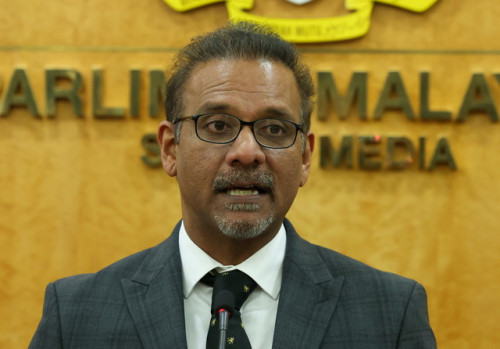
KUALA LUMPUR – Some 5.7 million premises have been approved for fiberisation in the second stage of phase one of the National Digital Network (Jendela) as at March 31, with 4G coverage at 93.51%, said the Malaysian Communications and Multimedia Commission (MCMC).
Its chairman Fadhlullah Suhaimi Abdul Malek said 292,826 premises have been passed for fixed broadband, while 29 new mobile broadband sites and 3,278 upgraded mobile broadband sites were completed during the January-March period.
“We are on track. From the key performance indicator standpoint in premises passed for fixed broadband, we hit 132% of the target in the first quarter of 2021.
“For new commercial mobile broadband sites, we managed to get 116% achievement, and 101.7% success for the upgrading of mobile broadband sites,” he said during the Jendela second quarterly report briefing today.
Fadhlullah said the shutdown of the 3G network sunset was also on track, as service providers have successfully migrated 629,018 customers, while 20,492 3G carriers were switched off as at February 28.
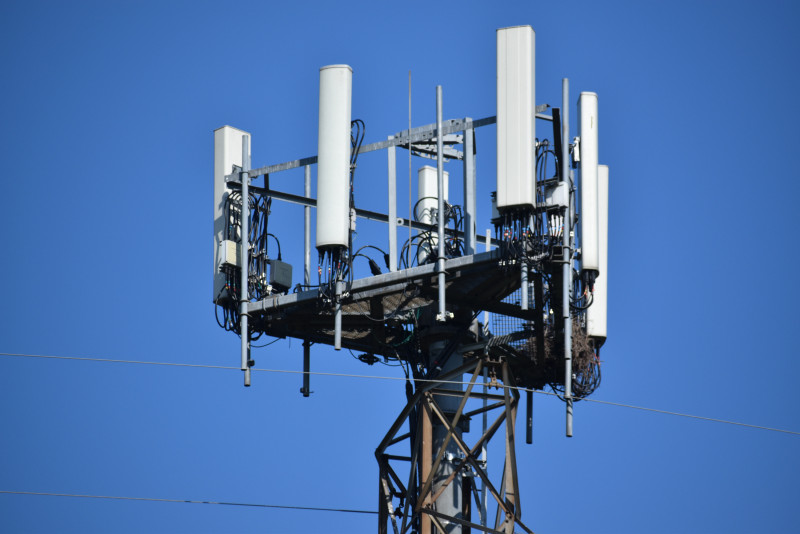
He said that MCMC will continue to work and discuss with state authorities to standardise the cost of deployment for new network towers and rooftop structures, as they are currently on different levels between regions.
Data shared by MCMC showed that the cost to deploy a new network tower in Sarawak is the highest at RM37,000 for the first year, and RM2,880 for subsequent renewal of existing towers for the first five years.
Johor, on the other hand recorded the highest total cost to maintain a network tower over the span of six years at RM116,750, with the cost for a new tower at RM26,750 and RM18,000 to renew an existing tower for five years.
Six states and regions with lower costs of tower deployment of less than RM10,000 are Perak (RM9,925), Kuala Lumpur (RM9,800), Selangor (RM8,600), Sabah (RM8,500), Pahang (RM7,150), and Labuan (RM2,065).
“We will get them to lower their respective charges for new tower deployments by getting them to see the importance of facilitating business, given that telecommunication is set to be the third utility in the future,” said Fadhlullah.
He said the commission had recorded an increase in the number of overall network complaints in Q1 2021 to 54,538 complaints from 28,577 complaints in the previous quarter.
“The rise in network complaints was mainly due to the enforcement of the movement control order 2.0, since many people spent time at home experiencing connectivity problems,” he added. – Bernama, April 7, 2021