
KUALA LUMPUR – The government should set up an independent committee made up of historians from various races to review and make corrections to the latest edition of history textbooks for secondary schools.
Federation of Chinese Associations Malaysia (Huazong) president Tan Sri T. C. Goh said this will ensure the textbooks are accurate and unbiased and provide the true context of the country's multiracial and multicultural makeup.
“Being a multiracial country that upholds democracy, it is absolutely important that we must instill in our young generation the right historical narrative of our nation,” he said, as quoted by BorneoNews.Net.
Goh said all races in the country, including the Chinese who make up the second-largest ethnic group, should receive fair treatment and be recognised.
He noted it was important to educate Malaysia’s young generation on the struggles of Malaysians of various races, and this will counter and would ultimately eliminate toxic and destructive extremism in the country.
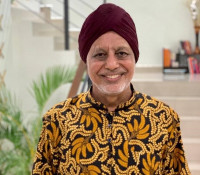
Goh was echoing the calls of historian Ranjit Singh Malhi, who recently urged the government to take action on the secondary school history textbooks over alleged bias and inaccuracies.
According to Free Malaysia Today earlier this week, Ranjit said the textbooks which were used for Form 1 to Form 5 students were centred around Malays and Islam and had excluded key facts pertaining to nation-building, adding some facts were distorted and exaggerated.
Ranjit, an adjunct professor at Asia Pacific University of Technology and Innovation, said as most of the writers involved in the textbooks are Malay, the students were learning about Malaysia and the world from the point of view of one ethnic group.
“The glaring defects in the current history textbooks only confirm the bias of the writers. They do not provide an adequate, balanced and fair account of the emergence and growth of Malaysia’s plural society,” he was quoted as saying.
Ranjit said with the current textbooks, the youths were not being taught the “real” and “inclusive” history of Malaysia, but rather a narrative that was consciously selected and which was skewed towards establishing Islamic and Malay dominance based on the divisive “Ketuanan Melayu” concept.
“For example, unlike earlier textbooks, the current history textbooks downplay the important roles and contributions of the Malaysian Chinese and Indian communities in the economic and infrastructure development of the nation,” he said.
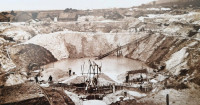
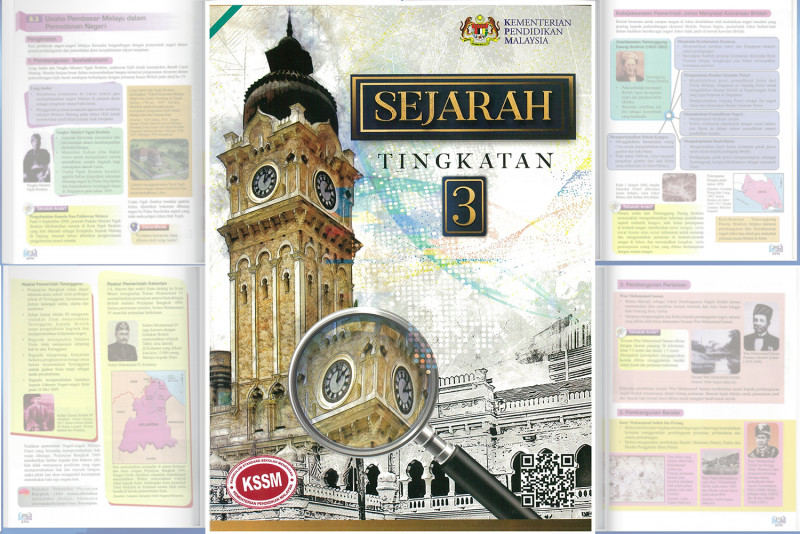
Ranjit said the role of Indians in developing the rubber industry and the Chinese in the tin mining boom had been reduced to merely two to three sentences in the Form 3 history textbook.
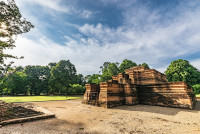
He added the impact of Hindu-Buddhist civilisation on Malay culture, language, literature, and government, had also been largely ignored in the syllabus. – The Vibes, April 15, 2021

_Malayan_Communist_Party_figures_Chin_Peng-Abdullah_C.D.-Rashid_Maidin_at_signing_of_Hat_Yai_Peace_Agreement_on_Dec_2_1989-馬姥_slash_wikimedia_commons.jpg)