
Malaysia

Part 4: How men and movements pushed for reform from the streets

Malaysia is no stranger to rallies and uprisings, as the Reformasi and Bersih campaigns show

Updated 5 years ago · Published on 25 Jun 2021 4:00PM

Part 4: How men and movements pushed for reform from the streets
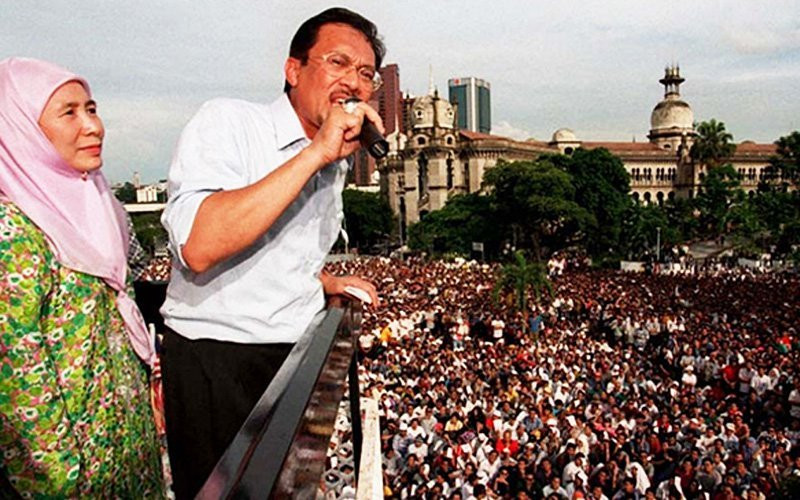
Datuk Seri Anwar Ibrahim and his wife, Datuk Seri Wan Azizah Wan Ismail, at a rally in Kuala Lumpur during the height of the Reformasi movement in 1998, proving that, sometimes, it only takes one man to change a country’s entire direction. – File pic, June 25, 2021

by Zaidatul Syreen Abdul Rashid

KUALA LUMPUR – In the aftermath of the Reformasi movement in 1998, many of Datuk Seri Anwar Ibrahim’s supporters were left bloodied in street clashes with the authorities. 

While it wasn’t Anwar’s first call for street rallies, the public had taken to the streets in the capital here in a show of anger after he was sacked as deputy prime minister by his boss, Tun Dr Mahathir Mohamad. 

As a student activist in 1974, Anwar was often credited as one of those who rallied the crowds to take to the streets in Baling, Kedah, to champion the fate of tappers following the fall of global rubber prices.

It didn’t help that, months prior to Malaysia’s Reformasi, Indonesia had witnessed its own watershed moment – Era Reformasi was triggered by the collapse of the Indonesian economy, and riots in its cities ended with the resignation of president Suharto.

The two Reformasi movements were proof that just one man can be a catalyst for political upheaval, uniting groups and factions under a single cause.

It would take another nine years before Malaysia witnessed another mass rally. This time, it was to protest against allegations of corruption in the country’s election system.

Starting out as the Joint Action Committee for Electoral Reform in July 2005, Bersih (the Coalition of Free and Fair Elections) was formalised in November 2006 as an umbrella movement for 84 civil society groups. The coalition was spearheaded by Maria Chin Abdullah from the Women’s Development Collective (WDC).

It galvanised opposition political leaders and civil society representatives, and they urged Malaysians to gather at Dataran Merdeka here on November 10, 2007. Protesters were told to don yellow T-shirts, and it was estimated between 30,000 and 40,000 people took part, despite tear gas and water cannon deployed by the government.
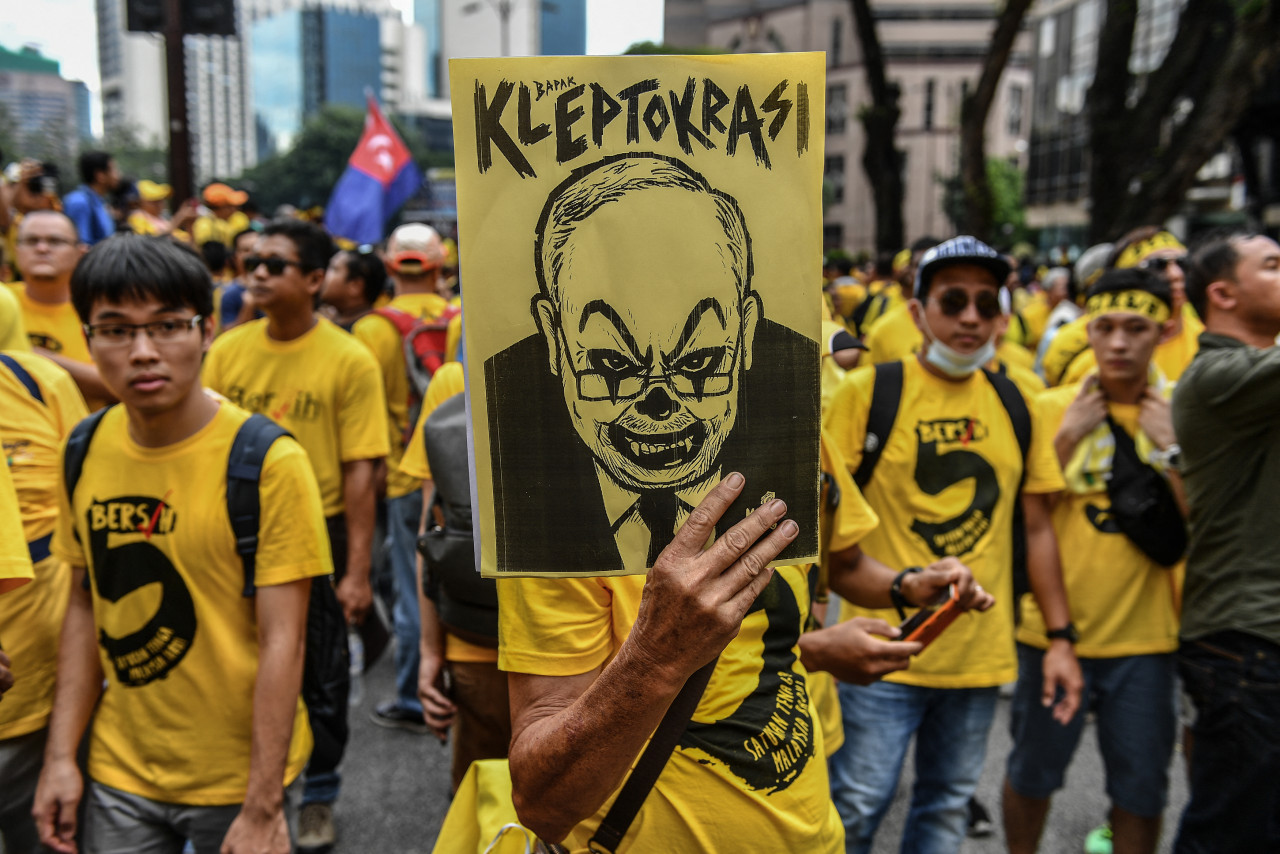
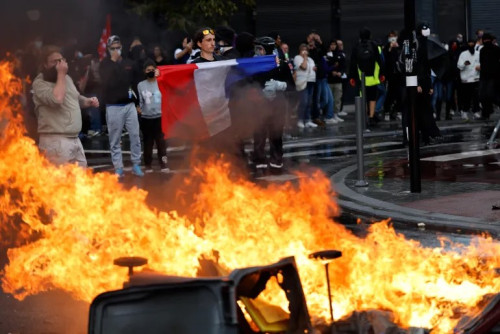
Protesters at a rally organised by Bersih calling for the resignation of prime minister Datuk Seri Najib Razak in Kuala Lumpur on November 19, 2016. Bersih’s series of rallies have given Malaysians an outlet to vent their frustrations at the government of the day. – AFP pic, June 25, 2021

Many demonstrators and opposition leaders were arrested in the crackdown after.

The move was later credited as the cause behind the political shift in the 2008 general election, when Barisan Nasional, under the leadership of Datuk Seri Najib Razak, failed to secure a two-thirds majority for the first time since 1969.

Bersih had since called for rallies in 2011, 2012, 2015 and 2016, with the recent rallies being less violent and seen as a show of solidarity for certain causes.

This brings us to the fourth of a six-part series in collaboration with Fat Bidin Media, which is on a campaign to counter and prevent violent extremism. 

The Vibes intends to answer this pertinent question, “Are politicians the catalyst for extreme violence in Malaysia?”, by speaking to personalities, politicians, activists and prominent thinkers, in a series that runs every Friday at 4pm. – The Vibes, June 25, 2021

Read the previous parts here:

Part 3: Rakyat have come a long way in navigating political turbulence  

Part 2: Why the things politicians say matter  

Part 1: Are politicians’ vindictive, race-based tactics weakening nation’s foundation? 

Preview: Are politicians the catalyst for extreme violence in Malaysia? 

 

Related News

Opinion / 2w

Why Bersama is not Malaysia’s best hope

Malaysia / 3w

Johor PRN: Anwar urges PH members to stay clear of hate politics during campaign

Malaysia / 1mth

‘Our struggle has never been just about winning elections’ – PM Anwar

Malaysia / 1mth

PM Anwar issues stern warning against race-based politics

Opinion / 1mth

The tragedy of Zaid Ibrahim

Malaysia / 1mth

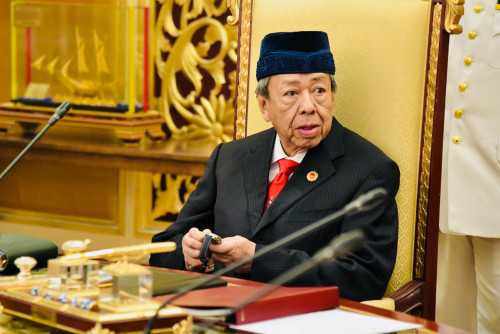
King: Politicians must watch their words, not misuse freedom of speech

Spotlight

Malaysia

After Johor, the uncomfortable question for Anwar’s critics: Were we too impatient?

By The Vibes Says

Malaysia

Network School's business licences revoked, to cease operations tomorrow

Opinion

Orang Asli in Pahang: Token gestures or genuine recognition?

Malaysia

Tuition teacher sentenced to 105 years in prison and 70 lashes for raping daughter

Malaysia

Azam Baki denies involvement in RM178.29 million contract linked to brother’s company

Malaysia

Aminuddin urges NS voters to weigh manifesto promising benefits for M40 and B40 groups

Malaysia

No need to resign, PM has absolute power if there is doubt – Ahmad Zahid

World

Gaza’s water crisis deepens as families face thirst, disease and collapsing sanitation systems

You may be interested

Malaysia

Anwar: Malaysia’s debt ratio is falling, but legacy debt payments remain a heavy burden

Malaysia

BN-PH ties strained by grassroots reality, not Putrajaya pact, says analyst

By Alfian Z.M. Tahir

Malaysia

eFishery loss will not jeopardise KWAP’s finances or pension payments - Tengku Zafrul

Malaysia

Sabah does not agree to 200-litre diesel quota, forms special committee - Masidi

Malaysia

AI Governance Bill to be tabled in Parliament after ministry, agency consultations

Malaysia

Aminuddin urges NS voters to weigh manifesto promising benefits for M40 and B40 groups

Malaysia

Malaysia faces record heat risk in 2027 as El Niño expected to intensify

Malaysia

Activist charged over alleged desecration of Hindu sacred object at Langkawi temple site