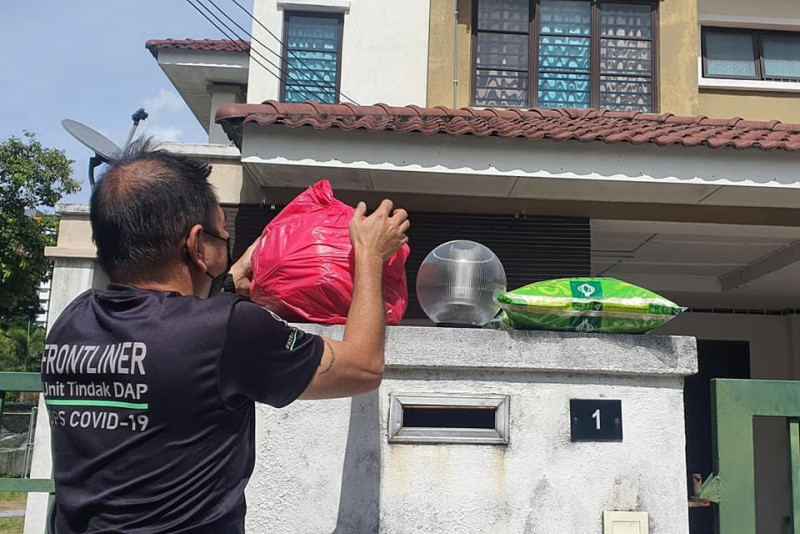

KUALA LUMPUR – The majority of poor families living in highly populated constituencies are not expected to benefit from the RM300,000 food basket initiative by the government, as MPs nationwide begin their distribution.
On June 28, Prime Minister Tan Sri Muhyiddin Yassin announced that the amount will be given to each parliamentarian to provide essential goods to affected constituents, as the country continues to grapple with the impact of Covid-19.
With equal funding handed out to each constituency, concerns have been raised that most low-income households in densely populated districts will not receive the much-needed aid.
Going by government guidelines for the food basket initiative, each box should cost RM100 and contain 13 types of goods, meaning the aid will reach only 3,000 affected families.
While this may be enough for constituencies with smaller populations like Igan in Sarawak, which has only 19,592 registered voters, it is a meagre sum for more populated districts like those in the Klang Valley.
Bangi, for example, has the highest number of registered voters in the country as of the last elections at 178,790, followed by Damansara (164,322) and Klang (149,348).
Going by these figures alone, the RM300,000 government aid already seems paltry, especially for opposition MPs, whose RM100,000 allocation a year pales in comparison to government lawmakers’ funding of more than RM3 million.
Today, opposition MPs are forced to raise their own funds and work with other parties to help the poor.
Cooperating with NGOs, private companies for assistance
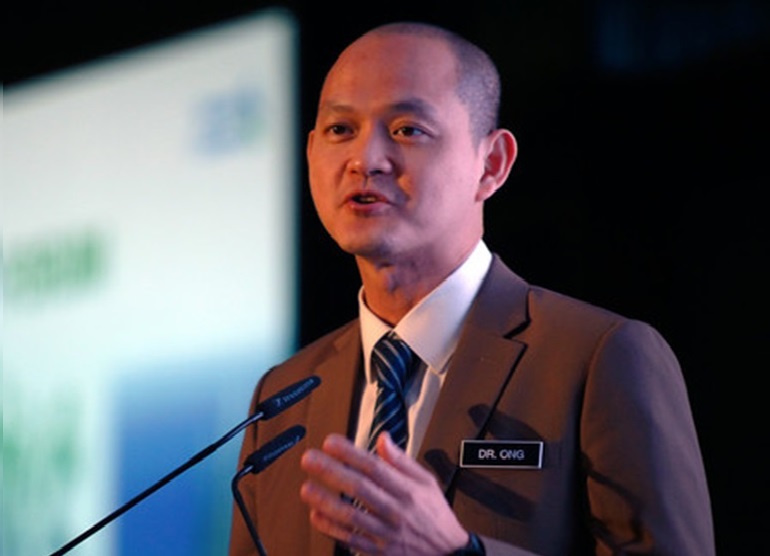
Bangi MP Ong Kian Ming is not dwelling on the insufficient allocation, saying he is already working with non-governmental organisations and private companies to increase the number of food baskets in his constituency.
“I have been collecting names for this purpose for the past two weeks, even before the RM300,000 (allocation) announcement was made,” he told The Vibes.
“I am working with my team to prioritise areas and places that need them most. We have already started distributing the baskets.”
However, he pointed out the need for opposition MPs to receive allocation to pay their employees who are helping to coordinate the food basket programme.
This includes receiving calls, compiling name lists, reaching out to companies for assistance and transporting goods, he said.
“I would like the prime minister to allocate opposition MPs an extra RM300,000 just for staffing and operation costs for the next six months.
“This will include hiring more temporary staff to help with aid and relief.”
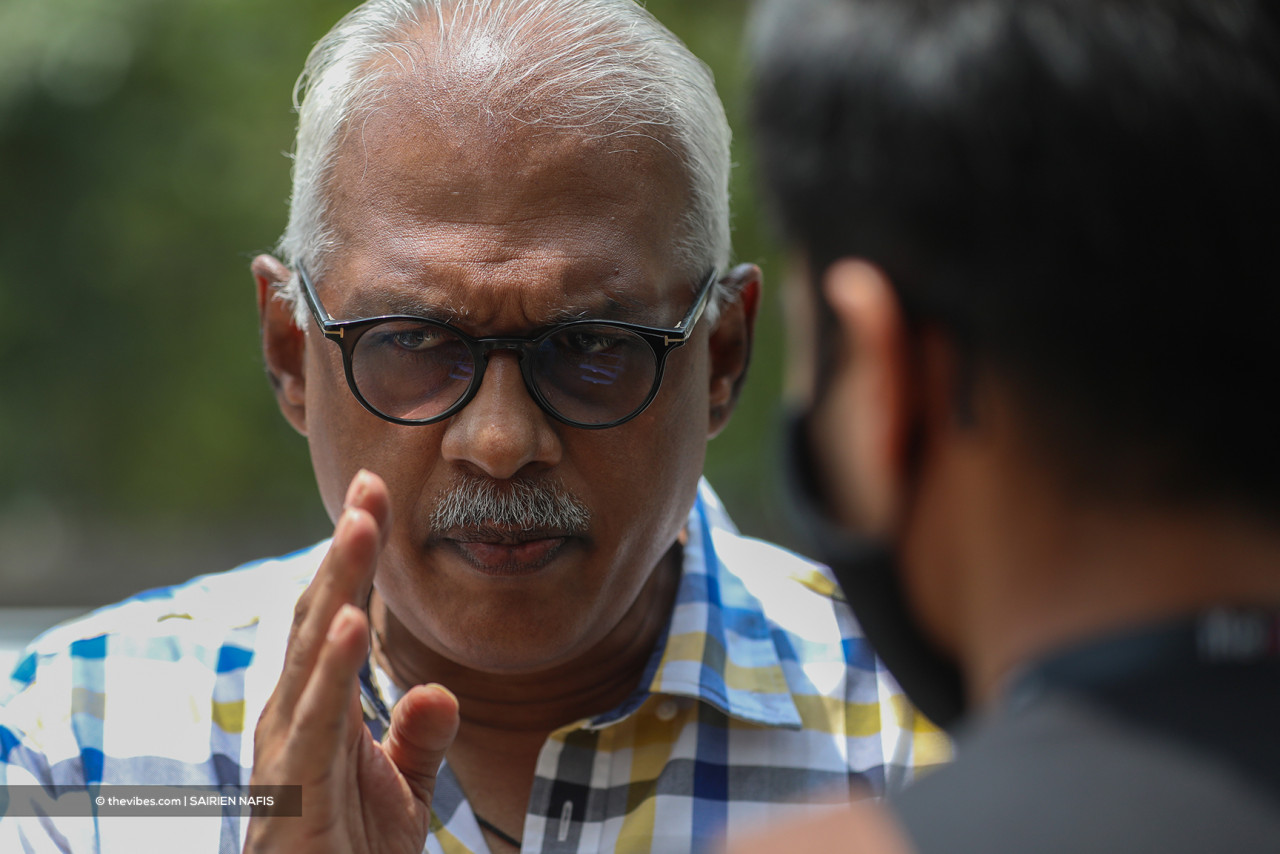
Klang MP Charles Santiago said the “one-size-fits-all” food basket allocation proves that the government is not very smart in planning its assistance.
The allocation should have been distributed based on the size of the constituency and its population, he argued.
“You cannot compare Klang with Putrajaya, for example. The number of constituents there completely differs. They (the government) have to use some common sense,” he said when contacted.
“To be honest, under the current circumstances, any support is welcomed. But aid for only 3,000 families is definitely not enough.”
Santiago said apart from the government assistance, he will continue with his own initiative to aid poor families, which he has been carrying out since the start of the pandemic last year, with help from individuals and private firms.
Other than the essential goods listed by the government, he will add other food items, such as fish and vegetables, noting the lack of nutritious food included in the baskets. – The Vibes, July 8, 2021