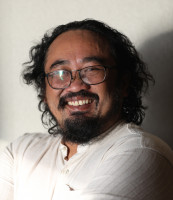
KOTA KINABALU – A former federal minister has lamented the direction of the country’s politics, criticising politicians who want newly minted Prime Minister Datuk Seri Ismail Sabri Yaakob to form a regular cabinet.
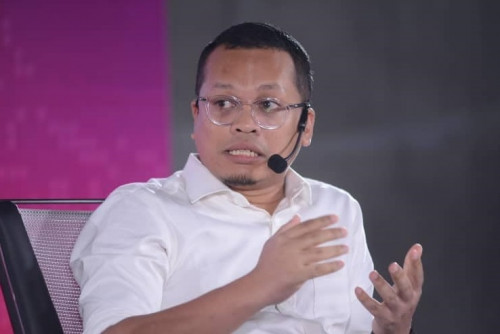
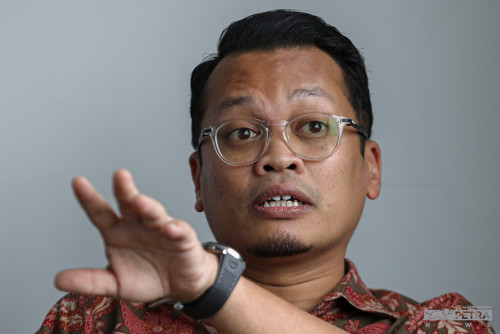
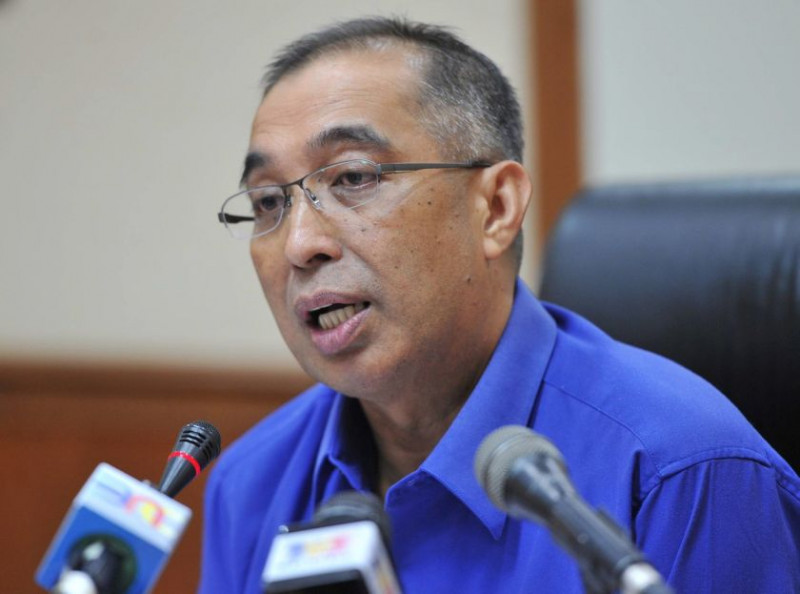
Former communications and multimedia minister Datuk Seri Salleh Said Keruak said the situation calls for the government to set up a small cabinet to deal with Covid-19 and get Malaysia’s economy back on track.
Speaking at a live forum titled “Umno: Time to Reform”, he said once the cabinet has completed its duty and if the situation permits, the mandate should be returned to the people in a general election.
“I think what the Yang Di-Pertuan Agong has said is more important, that is, for us to have some sort of a united and bipartisan approach.
“This government should look into Covid-19, but if you look at what has been reported by the media, they are talking about long-term politics.
Actually, this cabinet is supposed to look at how to complete the work (of battling the pandemic and reviving the country’s economic recovery). But it looks as if this government will go on for the next two or three years.”
He stressed that Putrajaya must not form a regular cabinet, but a crisis cabinet to deal with the ongoing issues plaguing the nation.
Previously, Tan Sri Muhyiddin Yassin formed a bloated cabinet of around 70 ministers and deputy ministers, while his predecessor Tun Dr Mahathir Mohamad’s Pakatan Harapan cabinet comprised 55 ministers and deputies.
Salleh also scoffed at suggestions by politicians that the deputy prime minister should come from East Malaysia or for Putrajaya to fulfil its commitments to Malaysia Agreement 1963, saying such recommendations will not help improve the Covid-19 situation in the country.
“We are talking about coming out from this mess, but what we see in the media is politicking. The people want the government to do their work,” said Salleh.
The Umno veteran said a crisis cabinet should ideally be limited to 15 members, with its primary focus on foreign affairs, defence, home affairs, economy, and health.
Furthermore, he said, the cabinet should not only be slim but also non-partisan, including experts who may not be part of the ruling political coalition.
What about PM’s confidence vote?
Touching on attempts by various political parties demanding a vote of confidence to ensure Ismail Sabri’s majority, the former federal minister said that all parliamentarians must understand that a crisis cabinet is set to end the Covid-19 threat.
Furthermore, he added that any political power plays should only be contested in the next polls, seeing that the current situation is far too dangerous for the public to go out voting.
Recalling how Muhyiddin was ousted from power after the pull-out by 15 Umno lawmakers, Salleh noted that his party comrade Ismail Sabri faces a similar situation, where confidence in his majority can still be questioned.
However, the answer could lie in the Bera MP’s approach in appealing to the opposition and convincing them that he is forming a crisis cabinet.
At the moment, political parties from both sides of the divide have come under the impression that the Umno vice-president plans on establishing a regular cabinet.
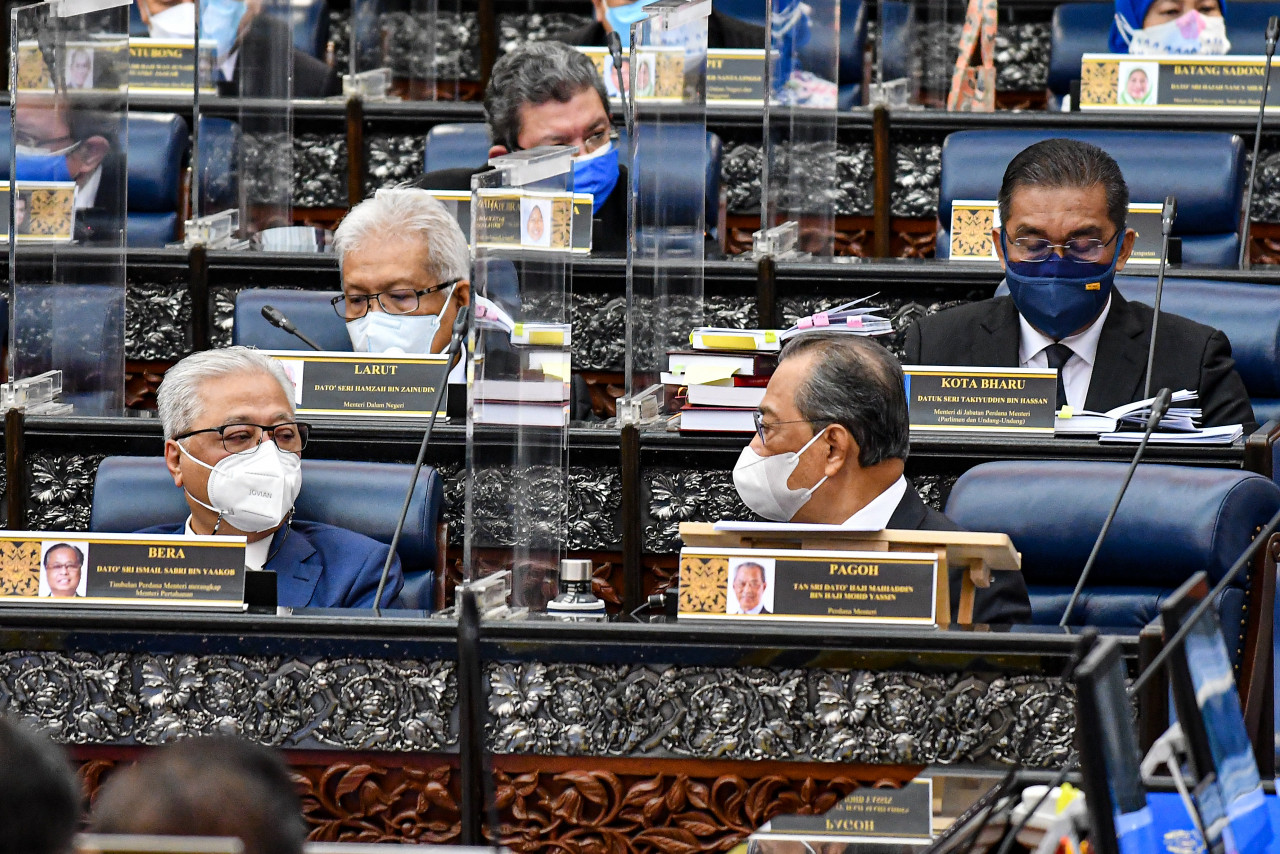
However, unlike his predecessor, one of Ismail Sabri’s messages in his inaugural speech was an invitation to opposition leaders to help solve the predicament facing the nation under the National Recovery Council.
So far, his conciliatory stance has received a positive response from the Pakatan Harapan coalition and other opposition figures, even though he confirmed yesterday that he will not include opposition leaders in his cabinet.
Three-month crisis cabinet then snap elections
Further elaborating on his proposal, Salleh said that Ismail Sabri’s crisis cabinet should only last for around three months at the most, after which a general election should be called.
He added that the current Umno-led administration would still have another 60 days after Parliament’s dissolution to work in a caretaker role until fresh polls are held.
“It can’t be too long. It can’t be a year. If you talk of a crisis cabinet, it can be within six to seven months. In this case, once you reach 80% of the population fully vaccinated (against Covid-19) and achieve herd immunity by October, then you can call for election next year.
“If you go beyond that, like July next year, then you have to start thinking about party polls already,” he said.
Umno was supposed to hold its own party elections earlier this year, but the National Security Council and Health Ministry had advised the Malay-based party to postpone it due to the pandemic.
Unite with opposition for country’s sake
Saying that unity is required to rescue Malaysia from the brink of disaster, Salleh advised the new prime minister to continue engaging the opposition to assist the executive with their ideas and grant backing to the ruling coalition.
“Give them the opportunity and the platform to share their views. Doing so, there will be no reasons for them to oppose.
If they do oppose, the people will condemn them. Look at their tone; they might not agree with Ismail Sabri, but they are quite cooperative when it comes to helping Malaysia to get out of this mess.”
He said that politicians should stop trying to score political points with their constituents in the midst of a pandemic.
Similarly, he reminded his fellow lawmakers to stop assuming that His Majesty’s opposition are enemies of the ruling administration, adding that politics is not a zero-sum game.
Salleh also observed that the rakyat are sick and tired of the political posturing taken by their elected reps.
He recalled that when he was Sabah chief minister during the rotation system, he had 13 bills to go through the state assembly.
To ensure that the bills were passed, Salleh engaged with then opposition leader Parti Bersatu Sabah president Tan Sri Joseph Pairin Kitingan for backing.
“I had engaged with Pairin and discussed with them. He had given his support. They agreed to work together and we passed the bill easily. It can be done.
“They are humans, you know, and they also want to solve problems. They also want to score points.
“But in this situation, we should not score points. We can do so in the next election, with our manifestos,” he said. – The Vibes, August 24, 2021