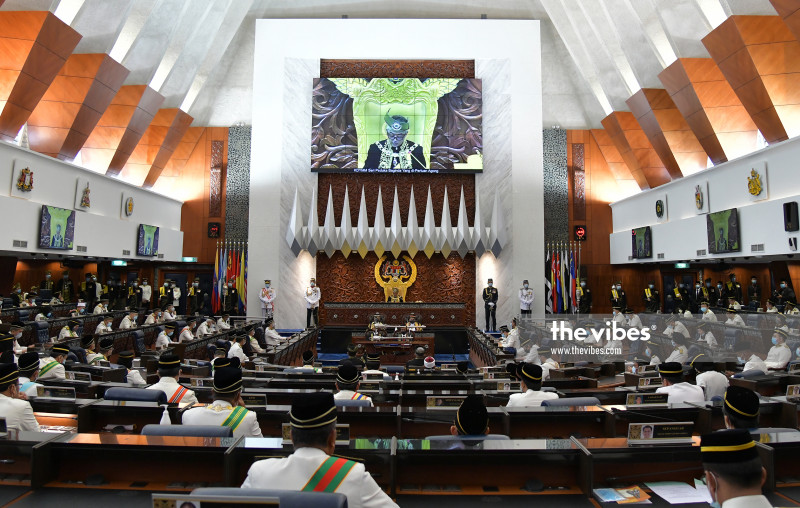

KUALA LUMPUR – Prime Minister Tan Sri Muhyiddin Yassin may have to strike a confidence and supply agreement (CSA) with the opposition to allay fears of a prolonged political crisis, observers say.
Parliamentary affairs analyst Ooi Heng told The Vibes that a CSA may be the norm given the current political uncertainty.
“Even at this point, if Muhyiddin resigns, the new prime minister may not be forming a stable government. So, whoever is in power would have to consider a CSA or unity government, otherwise, Parliament would have to be dissolved that may not be feasible at this time.”
A CSA makes clear that the support party or parties must back the government on explicit confidence votes, and votes on budgets and supply, or government spending. Typically, support parties are then given government support for specific policy priorities.
Such an arrangement, constitutional lawyer Lim Wei Jiet argued, could provide “temporary” relief depending on the agreed terms.
“For the opposition to say we won’t vote down this government, if for example, the government provides equal constituency funding to all MPs in exchange, this will provide temporary political stability.”
But he expressed concern over the viability of the CSA, saying while it is among available options, “I think a fair share of opposition parties are willing to agree to this, but not all.”
Activists and think-tanks such as Bersih 2.0 and Ideas recently mooted a CSA as a means to stave off a budget bill defeat, which is tantamount to a no-confidence vote, as Muhyiddin only commands a razor-thin majority in the Dewan Rakyat.
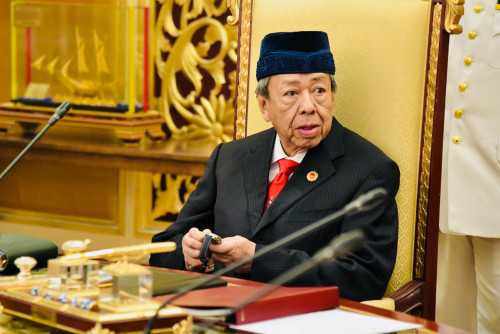
It is believed that the lack of a strong majority pushed the prime minister to seek emergency powers but his request was turned down by the Yang di-Pertuan Agong on Sunday.
On fears of a lack of check and balance, Ooi said if a CSA came into play, the opposition could still play its role by scrutinising the budget.
“The opposition’s role will still be played, and its MPs will still be able to scrutinise, criticise and propose amendments to the budget. It’s just that when there’s a CSA in play, they would have to say yes during the voting stage.”
Lim, too, argued that CSA does not weaken parliamentary oversight, especially with regard to preventing the opposition from holding the government accountable.
“It has worked before in many countries. Of course, it is often the last resort as an alternative to worse outcomes.” – The Vibes, October 27, 2020














.jpeg)