
KOTA KINABALU – Getting an agreement from Petronas to distribute granulated urea domestically may reduce the prices of vegetables for local consumers for a long time to come.
This statement may seem illogical, but there is an explanation for it based on how the national oil and gas company is linked to agricultural products.
It is especially true for Sabah, which presents an interesting case study for this scenario.
According to sources, many local industries have been affected during the pandemic, contributing to their lowering their demand for imported products from China.
Naturally, this has in turn led to a reduction in the number of containers transported on ships from China to Malaysia. However, while the shipping cost remains the same, the transportation fee for essential goods imported from China has been raised.
These essential goods include fertiliser needed by farmers in Sabah. With the increase in transportation fees, the higher cost is passed on to the farmers who have to pay more to grow our agricultural products such as vegetables.
Sources say this problem would not exist if Sabah was not so dependent on China’s fertiliser. In fact, the issue could have been averted if Sabah produced its own fertilisers.
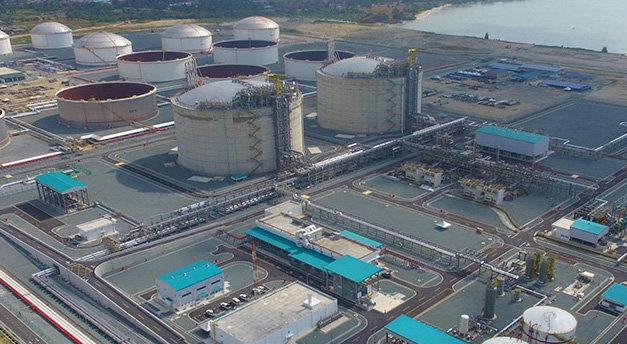
There is already a company in Sabah that produces granulated urea – the raw material used to manufacture fertiliser – and it is now known as one of the largest commercial urea producers in Southeast Asia. This company is Petronas, and its urea plant, Sabah Ammonia Urea Project (Samur), is located at the Sipitang Oil and Gas Industrial Park (Sogip) in southwestern Sabah.
Samur can produce up to 1.2 million tonnes of granulated urea per annum. Incidentally, Petronas also produces 1.4 million tonnes per annum of granulated urea from its plants in Gurun, Kedah, and Bintulu, Sarawak.
Operational since 2016, Samur is a Sabah government initiative. It features an ammonia, urea, and granulation plant, as well as utilities and jetty facilities.
It was approved in 2011, but until today, Samur remains the only operating plant in Sogip. This is despite various efforts and plans from the government to attract investors to the industrial park, which was originally expected to attract RM12 billion worth of investments.
So why does Sabah still need to import fertiliser from China if it has Samur? Unfortunately, all production in Samur is for export only, leaving neither granulated urea nor feedstock to the state.
Enough gas to have own urea plant
According to sources, Sabah still has a shot at having its own urea plant because it has enough gas to run such a facility.
Reportedly, Samur uses 90 million metric standard cubic feet of gas per day (mmscfd), and there is still another 90 mmscfd of gas remaining and left unused.
There is no publicly available information on how this remaining gas is handled.
In 2019, Datuk Johan Arriffin Samad, then chief executive officer of Institute for Development Studies Sabah, had urged Petronas to explain the availability of the remaining 90 mmscfd of gas, and said that resources should not be left unused when Sabah can utilise them in downstream oil and gas development.
Petronas could have said yes to sharing some of its granulated urea production or feedstock with Sabah, but it is understood that it has not. Will Petronas now agree to develop a second urea plant with the remaining gas?
Second ammonia and urea project
With 90 million mmscfd gas of available and unused in Sogip, Sabah still has hope in developing its own urea plant to produce its own fertiliser – by developing a second ammonia and urea project, similar to Samur.
Petronas has actually initiated a plan for this, first codenamed Markisa and now renamed to Saffron. However, there is limited information on the progress of Saffron, and the current situation shows that the plan may not progress anytime soon.
The Sabah government, however, has said that it is still attentive to this problem. In March this year, Chief Minister Datuk Seri Hajiji Mohd Noor said the state government is committed to developing Sogip’s full potential as a premier petrochemical gas and petroleum downstream activity hub.
However, while the next step is to attract investors to Sogip, Hajiji cited lack of ready land and infrastructure as the main problems. He said the state government is providing funds under the Hala Tuju Sabah Maju programme and from the federal government’s 12th Malaysia Plan to address these issues.
Hajiji said he also hopes the Sabah Oil and Gas Development Corporation, tasked with promoting Sogip to investors, will work hard to achieve the target of developing Sabah’s gas and petroleum downstream activity.
But even if investors say yes to investing in Sogip – like many have done in past years – will Petronas also say yes to giving Sabah the feedstock it needs for downstream activities in Sogip? – The Vibes, October 5, 2021