
KUALA LUMPUR – “Unnecessary” is what many believe the Umno Supreme Council meeting on Thursday to be, and the apparent repetition of a message that the party stated after similar talks on Monday seems to suggest so.
But was the meeting truly redundant and a waste of time? On the surface, yes. However, those familiar with Umno politics would notice its gravity, as Supreme Council members conventionally meet only once a week.
Why Umno reiterated the political ceasefire it had already announced previously, while also slipping in a stern remark that it will take action against anyone who “challenges” the party’s resolve to uphold the Agong’s no-emergency decree, is a no-brainer.
The bid to push the supposed need for a nationwide emergency is still echoing, albeit softly.
And, the narrative that the Agong was in no place to reject Tan Sri Muhyiddin Yassin’s advice on declaring an emergency was first pushed by a senior member of none other than the prime minister’s party, Bersatu.
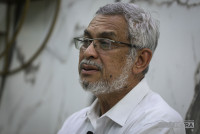
“Very good advice, Tuanku. However, it has violated Article 40(1A) of the federal constitution. Why didn’t the attorney-general raise the fact that such a provision has been sidelined? Isn’t this the pillar of constitutional monarchy?” tweed Negri Sembilan Bersatu chairman Tan Sri Rais Yatim.
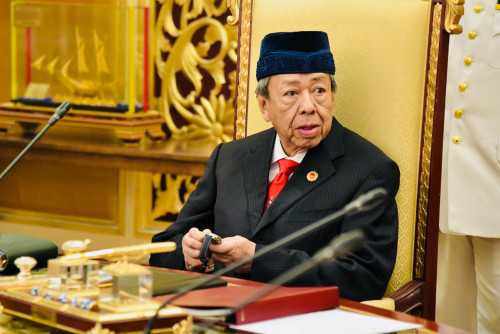
Article 40(1A) essentially states that the king needs to accept and act on the advice of the cabinet or prime minister. However, the Agong’s role in matters concerning an emergency declaration is explicitly stated in Article 150(1): “If the Yang di-Pertuan Agong is satisfied that a grave emergency exists, whereby the security, or the economic life, or public order in the Federation or any part thereof is threatened, he may issue a proclamation of emergency, making therein a declaration to that effect.”
For Umno to take action against Rais, who is a member of a different party, is nonsensical.
Unless, the warning issued was aimed at its own members and leaders, particularly those who president Datuk Seri Ahmad Zahid Hamidi believe are susceptible to being sympathetic to the pro-emergency group’s narrative.
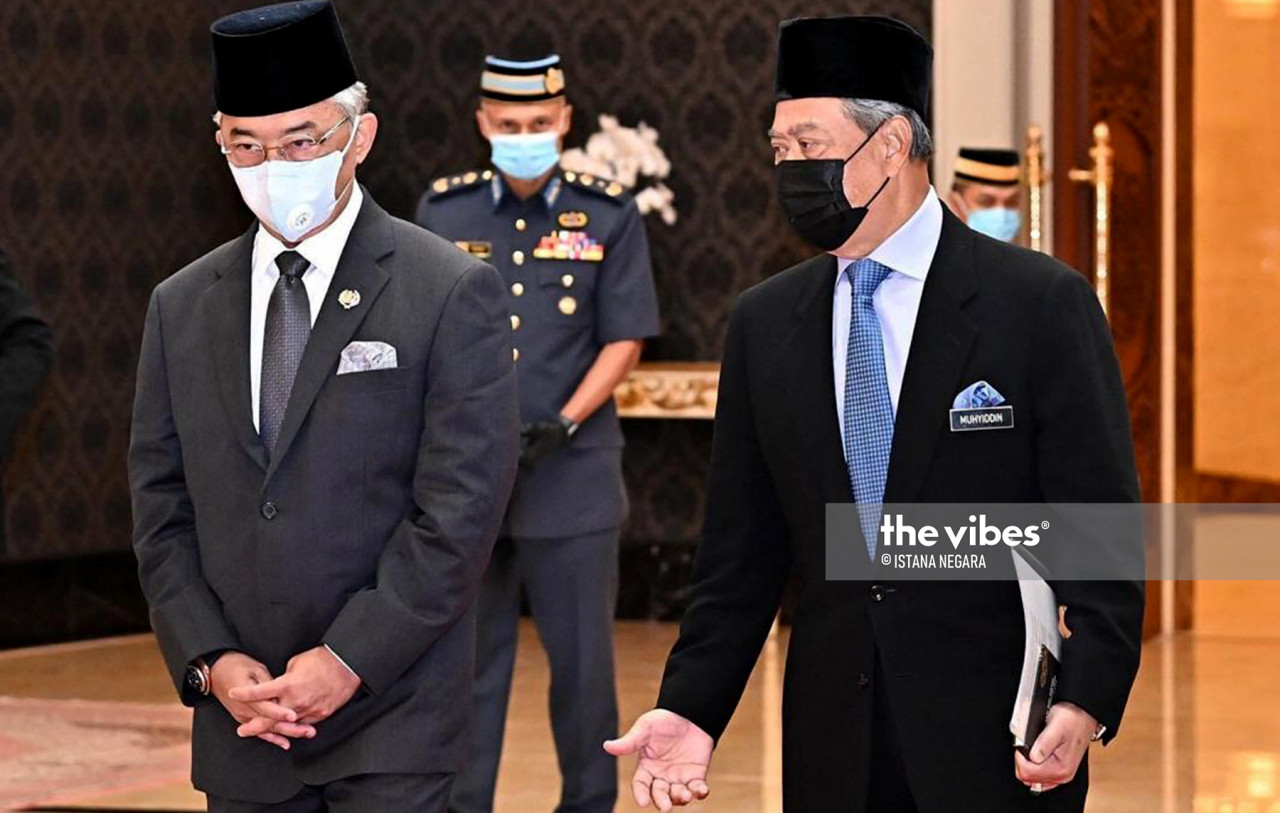
Umno’s strong objection to Muhyiddin’s bid for emergency rule is understandable, as the manner in which the latter’s administration tried to implement it was dubious.
In fact, a source from Istana Negara said it was akin to an ambush.
Apparently, Muhyiddin did not brief the Agong – at the Wednesday pre-cabinet meeting on October 21 – that a plan to impose a nationwide emergency would be discussed at the cabinet meet two days later.
The king only knew about the plan that Friday night, when Muhyiddin, along with several ministers and key government officials, travelled all the way from Putrajaya to the palace in Indera Mahkota, Pahang, to convince the Agong to sign off on an emergency proclamation that the prime minister himself had yet to sign.
While talk of Muhyiddin’s “emergency plan” was already rife and widely discussed on the ground, it was only after the Malay rulers met and decided to reject his attempt on October 25 that Malaysians knew for certain that their prime minister had indeed tried to impose a nationwide emergency.
Why the Muhyiddin administration did not at least inform the public of such a plan before meeting the Agong is anybody’s guess. Seriously, even British Prime Minister Boris Johnson addressed his people before meeting Queen Elizabeth II to declare a national emergency.
What made the plan sound like an oxymoron is the fact that the emergency was supposedly direly needed because of the country’s Covid-19 situation, which is inconsistent with the government’s repeated assurance that the pandemic is “under control”.
On Friday, lawyer Syed Iskandar Syed Jaafar filed a suit against the Agong for rejecting Muhyiddin’s request for an emergency declaration, citing similar reasons mooted by Rais, and talk has it that Syed Iskandar has close ties with high-ranking individuals in another Malay party.
It is a clear sign that the pro-emergency group has not given up hope despite the teary eyes in Bukit Damansara on the night of the Agong’s decree that there is no need for a state of emergency.
The irony of this hullabaloo is that unlike all the non-Malay parties, including DAP and multiracial PKR, which have pledged to uphold the royal decree for political stability, some Malay parties are being perceived as doing just the opposite. – The Vibes, November 1, 2020