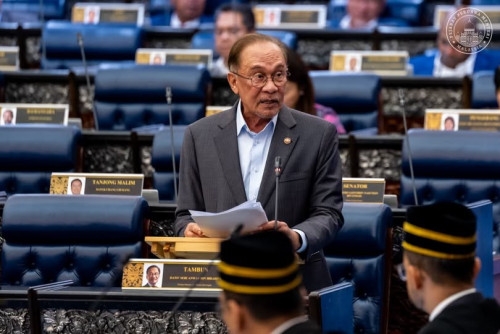

KUALA LUMPUR - The government must expedite prison reforms and decriminalise drug-related offences to reduce the high rates of Covid-19 transmissions in the correctional facilities, said Permatang Pauh MP Nurul Izzah Anwar.
Nurul Izzah, a long-time advocate of the reforms, said the country's prisons were currently facing a “chronic” problem of overcrowding which contributed to the rising numbers of infections.
The risks, she said, can be reduced if the government made a swift move to release prisoners convicted of minor offences, and introduced other correctional measures such as community service for the offenders and rehabilitation treatment for drug users struggling with addiction.
“What's happening in our prisons is terrible, but what’s even worse is the knowledge that all the suffering could have been prevented,” she said.
“Our prisons system has been a ticking time bomb for years now and with poor health services, infrastructure, overcrowded and unsanitary conditions, coupled with inadequate health personnel it is unsurprising on how quickly we're seeing the virus spread behind bars, and eventually into the community.”
Nurul Izzah said this during a pre-recorded speech aired on ‘Speaking for the unspoken Part 1: The Vulnerable Population and Covid-19 webinar’ this afternoon.
The webinar, organised by the Medico-Legal Society of Malaysia (MLSM), also touched on a host of vulnerable communities including the homeless, indigenous groups, refugees, and migrants.
On suggestions for alternative punishments, Nurrul Izzah said laws can be amended for minor offenders to be required to be put under a proposed mandatory attendance order which would require them to conduct community services such as cleaning houses of worship and providing care in old folks' homes.
The order is part of the existing compulsory attendance act 1954 and was first proposed by the Prisons Department in 2010, she said, adding the department was also looking to amend laws to allow alternative punishments such as house arrest.
Currently, some two-thirds of the prison population comprised those sentenced for drug-related offences.
“Of course, if you commit a crime, you have to do the time, but these individuals should also be given rehabilitative treatment in dedicated centres outside or inside prisons, depending on the severity of the crime,” she said.
Nurul Izzah said sections 38B and 39 of Dangerous Drugs Act 1952, may also be amended to provide an opportunity for offenders to undergo harm reduction treatment and alternative sentences, replacing a minimum two-year prison sentence.
In the last parliamentary sitting, the home minister had reiterated the commitment to pursue the new policy of decriminalisation, she pointed out.
“But for the sake of our vulnerable prison population, I think it must come into fruition now rather than later,” she added.
“We've already accepted it, but we need to move mountains and ensure the sufficient political will to work on something that's very important as it is a matter of life and death.”
Additionally, Nurul Izzah said authorities must also cease sending violators of the conditional movement control order (CMCO) to detention centres as this works against the government strategy to combat Covid-19.
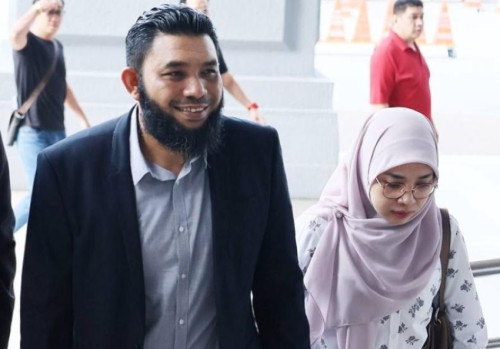
Also present at the webinar was Abdul Rashid Ismail, an advocate lawyer from a boutique law firm, who noted that as of October 29, 2018, the country's prisons were housing 60,490 prisoners.
The maximum capacity of the prisons was 45,712, and 36,313 of the inmates were serving time for drug-related offences.
“The overcrowding of detainees in confined spaces makes it hard for any SOPs (standard operating procedures) to be effective (in tackling Covid-19),” he said. - The Vibes, October 31, 2020