KUALA LUMPUR – The government should look into increasing wages and income support under its poverty eradication programme that is due to begin in March next year, said opposition figures who are focused on the B40 group.
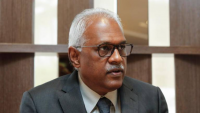
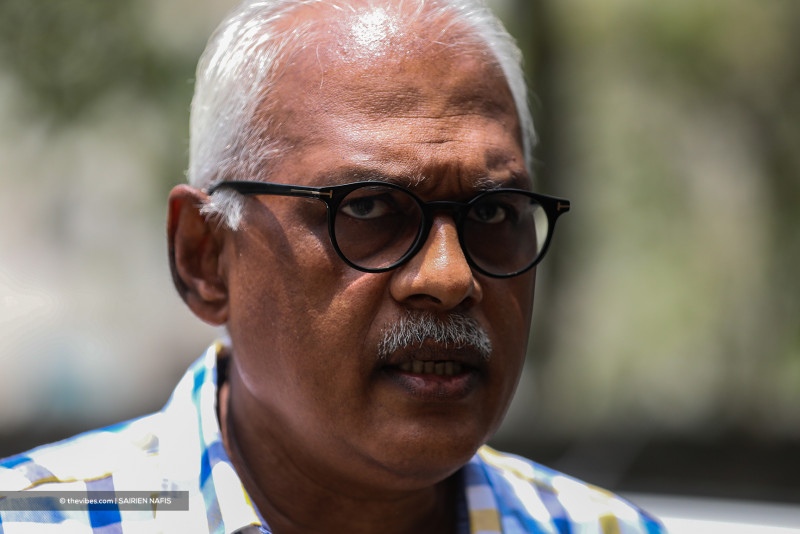
Klang MP Charles Santiago said Malaysian wages have been stagnant for the past 20 years and that the wealth enjoyed by the rich was often gained at the expense of the workers.
“If you want to address poverty, you need to close the gap between the rich and poor,” he told The Vibes recently.
“The Covid-19 pandemic over the last two years has made the situation even worse for those in the B40 groups.”
Santiago, whose constituency stands among the poorest in the country’s urban areas, said this in response to a new government programme that is aimed at alleviating the plight of the country’s impoverished groups.
Last Tuesday, Minister in the Prime Minister’s Department (Economy) Datuk Seri Mustapa Mohamed said the Implementation and Coordination Unit will identify 50 localities by mid-December for the first phase of the poverty eradication programme using the whole-of-nation approach.
Mustapa said each locality will be verified with the cooperation of state governments at the end of the year – before programmes and strategies are formulated based on needs, according to the suitability of each locality, in January next year.
The minister added that the first phase of the programme will be presented to the cabinet in February, before the programme’s implementation in 50 localities, expected to commence in March next year.
“This new approach will be reviewed every three months to ensure effective intervention if the achievement is found to be unsatisfactory,” he said in the Dewan Rakyat.
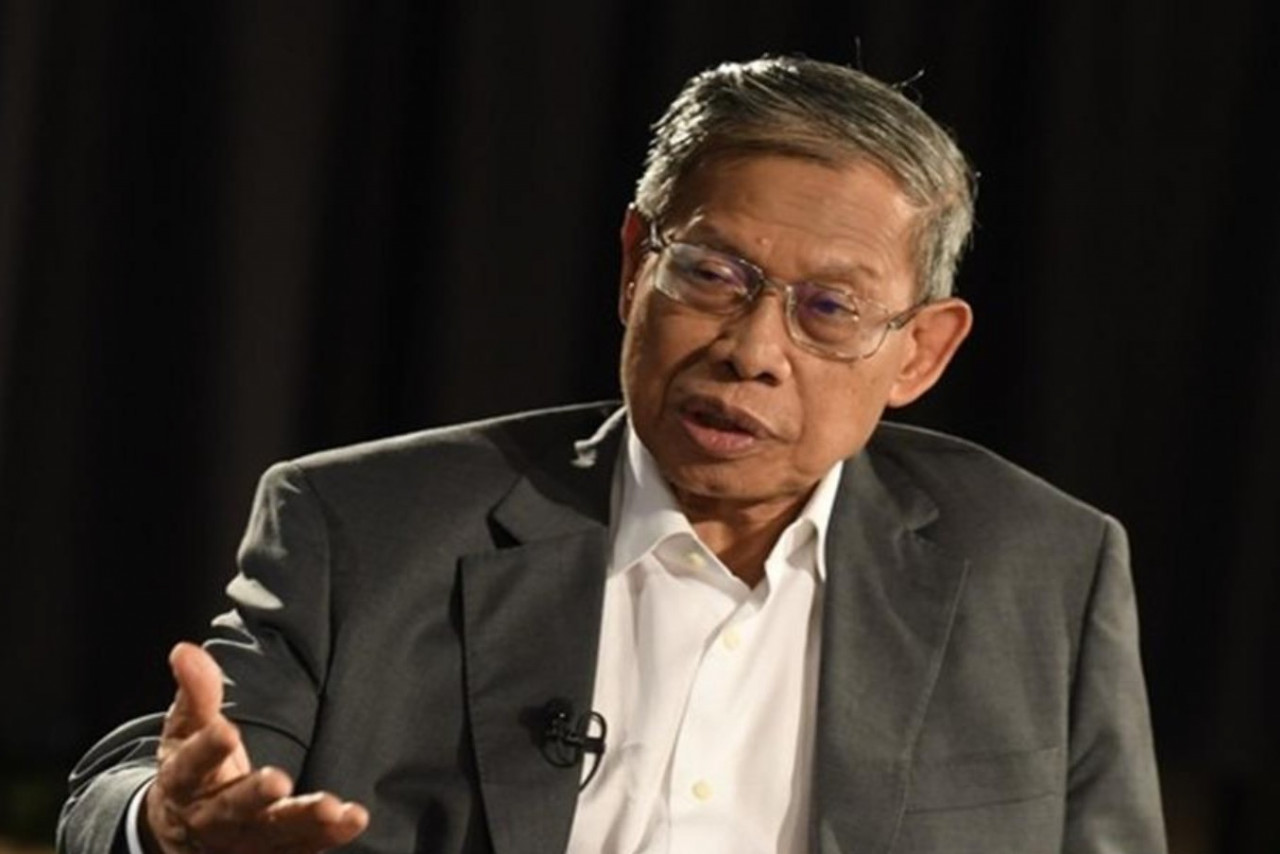
Mustapa was replying to a question from Tg Malim MP Chang Lih Kang on the strategies and actions taken by the government to achieve the target of zero hardcore poor by 2025, as stated in the 12th Malaysia Plan.
The hardcore poor are defined as households earning RM1,169 per month and below, based on the cost of purchasing basic food for households with four family members.
Meanwhile, Santiago said the government has yet to reveal detailed plans of the programme, but said it should also look into equipping the B40 group with skills and “meaningful” education that emphasises the quality of training.
He added that the government should look into increasing productivity in the rural areas, especially in agriculture.
“When it comes to food, for example, we are highly dependent on other countries and spend billions in bringing food items from other countries.
“The government has to ensure food sufficiency and food sovereignty, and keep prices of food to a minimum.”
Santiago said due to the pandemic, many individuals resorted to eating only one meal a day. Moreover, studies have shown that Malaysians did not have more than one month’s worth of savings.
“For now, it is not clear to me how the government plans to overcome these issues by identifying 50 localities,” he said, adding that the target B40 group needed to be broken down into different segments due to their varying employment and skills backgrounds.
“You need a national strategy involving wages, agriculture, industrial development, and upskilling of B40 people who can embrace technology.
“There needs to be more granular information to make the programmes more targeted as a ride-hailing driver’s circumstances are different from those of a factory worker.”
Similarly, Parti Sosialis Malaysia (PSM) secretary-general Sivarajan Arumugam said there should be income support that is crafted according to decile group and income class.
“There needs to be a targeted development policy based on decile groups.
“The poor should not all be lumped under a single B40 group. The government should not provide the same standard programmes as there are relative differentials within the decile groups with respect to not only income level, but employment, housing, health, and social security.”
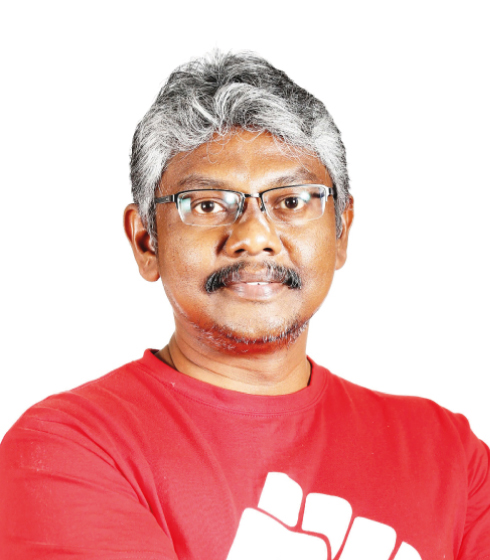
He suggested that the government also do poverty mapping according to administrative districts.
He said the current welfare system, known as e-Kasih, is based on voluntary registration, and this needs to be revamped and developed into one standard database to be a reliable common reference point for all government departments.
“Currently, the poor are identified along political lines, as those aligned or have contacts with politicians get these regular handouts.”
He added that the one-off cash assistance as announced in Budget 2022 “does not go far” as there is a need to ensure decent living where basic needs are met on a daily basis.
So, he said, PSM proposed an RM500 per month allocation to be distributed on a monthly basis to all B20 households, based on the 50% food Poverty Line Income level of RM1,169 a month.
“There is a lack of information on what programmes there are and how these programmes will be different from the previous poverty eradication measures.”
“Targeted approach is important, but that alone isn’t enough. PSM feels that too much emphasis is given to the B40 group, while there is a need to dissect this group further.”
He said PSM’s policy research team has found that there is a need for a more nuanced decile group classification within the B40 group to address targeted poverty eradication programmes.
Sivarajan added that more attention needs to be given to the B20 group, which can be further broken up, ranging from B1 and B10, which are all earning below RM2,500 a month.
He said the Statistics Department’s Household Income Survey in 2019 found that 84% of the B10 group lived below the absolute poverty line income of RM2,208. – The Vibes, December 6, 2021