KOTA KINABALU – The Sabah Scrap Metals Recycle Association (SSMRA) has urged the Sabah government to lift the ban on scrap iron exports imposed in June.
Its president Edwin Chen said the restriction has allowed the sole steel mill in Sabah, Unimekar, to monopolise the market and earn big profits while SSMRA members suffer.
“The Sabah government had banned the export of scrap iron to Peninsular Malaysia mainly because Unimekar complained of insufficient raw material (scrap iron), which is not true.
“We (SSMRA) have informed the Sabah’s trade and industry minister Datuk Joachim Gunsalam that Unimekar is unable to consume the entire collection of scrap iron in Sabah, but the state government blindly favoured the steel mill and did not listen to us,” Chen said in a statement today.
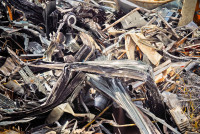
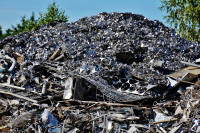
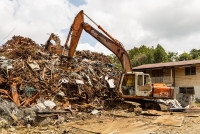
He said due to the export ban, SSMRA members now have had their accumulated scrap iron increased from 26,000 metric tonnes to over 30,000 metric tonnes.
“Unimekar’s agents have stopped quoting prices and purchasing scrap from our members.
“Our members are now facing difficulties with cash flow, bank commitments, and customers’ payments.
“The purchase price from Unimekar agents has dropped from RM1,750 per metric tonne to around RM1,500.
They are buying RM300 to RM400 per metric tonne below the market price from local scrap iron dealers; this proves that Unimekar is monopolising the market to make huge profits.
“If Sabah can produce 15,000 metric tonnes of scrap iron every month, that would be a difference between RM4.5 million to RM6 million per month compared with the prices in Peninsular Malaysia,” he said.
He also explained that the export ban cannot help to stabilise the price of steel rebar in Sabah, as the result from the past six months has proven.
“The price of steel rebar in Sabah did not fall because the price was determined by the import price of international steel bars.
“It could not be determined by a single factory, and the prohibition of exports of scrap iron could not depress the steel price, because iron steel is an international commodity, which follows the trend of the international market,” he said.
On December 20, Sabah Federation of Malaysian Manufacturers (FMM) chairman James Ha Haw Yew had in a statement claimed that a few dominant players in Sabah’s scrap metal market have been practising the “buy low-hold-sell high” tactic, which is detrimental to a normally functioning market.
Ha claimed that some players even hold more than 80,000 tonnes of scrap metal as their stock in trade.
Ha’s statement was issued when he represented Sabah FMM in supporting the state government’s decision to ban the export of scrap metal.
Chen denied Ha’s claim and said SSMRA has never held a one-time inventory of 80,000 tonnes of scrap iron, which is worth over RM100 million in today’s market price.
“Before the local steel mill was in operation, our business method was to accumulate enough scrap iron and ship it to steel mills within Malaysia.
Merchants are stocking their own scrap iron according to their own financial and operational capabilities. They also need to evaluate the risks of price dropping as the international market is fluctuating.
“On the other hand, it is wrong to use a monopolisation of trade to make money and to oppress other competitors in order to obtain huge profits,” Chen said.
He then welcomed Sabah FMM to contact SSMRA to understand the association’s situation.
Chen reiterated that SSMRA members have been in the business for 20 to 30 years, and are willing to help any iron melting plant in Sabah that lacks scrap metal.
“The scrap metal recycling industry is an important upstream industry in the iron and steel industry.
“We will never allow anyone to monopolise our recycling industry for any reasons, oppress the free and fair business of Sabah people, and suppress prices to make huge profits.
“We hope the Sabah government can understand our difficulties and immediately lift the ban on scrap iron export; let free trade be implemented, and bring success and prosperity to all Sabah people in a fair and just manner,” he added. – The Vibes, December 27, 2021