
KOTA KINABALU – After lifting the scrap metal export ban in Sabah, the state government has now been urged to temporarily suspend the export tax that was imposed on the materials beginning February 1 this year.
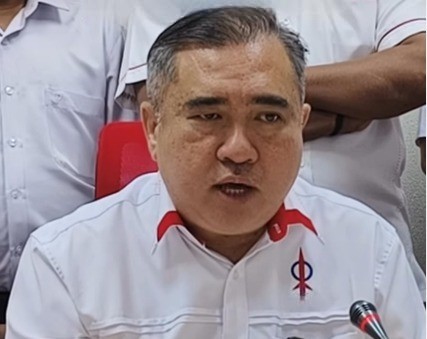
Despite the lifting of the export ban, Kota Kinabalu MP Chan Foong Hin said local scrap yard owners and collectors will still need to pay an export tax of RM200 per tonne of scrap metal which is too high for them.
“It is equivalent to a 15% sales tax, far higher than the 7.5% Crude Palm Oil (CPO) state sales tax, and the 5% seafood export state sales tax!
“Most of Sabah Scrap Metals Recycle Association (SSMRA) members are currently facing a dire issue with difficulties in cash flow, in bank commitments, not only due to the Covid-19 pandemic but also after 8 months of export ban,” the DAP MP said in a statement today.
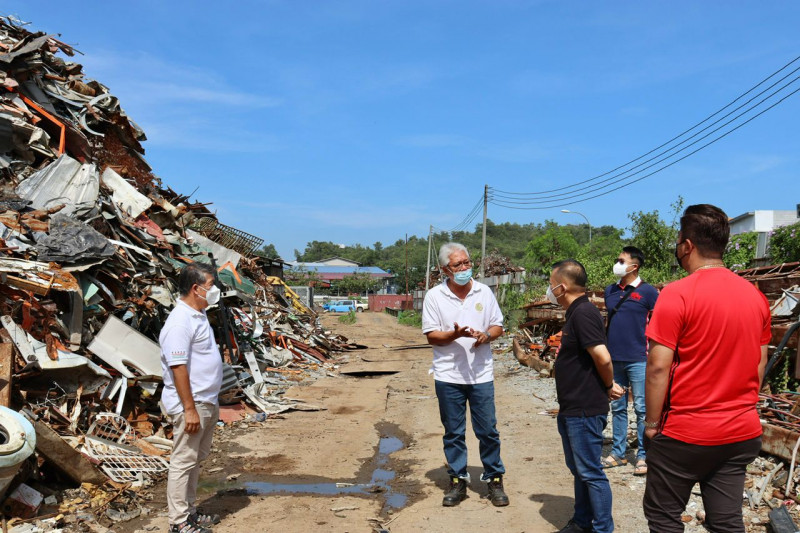
Chan said that following the export ban and now the export tax, there are some 40,000 tonnes of scrap metal piling up in Sabah.
He said he understands the state government’s intention when it decided to impose the tax – to discourage the export of scrap metal out of Sabah, thus increasing local supply for the development of downstream industries within the state.
However, he said that not only is the tax is too high for local scrapyard owners to afford, but there is also Unimekar Sdn Bhd, the ultimate purchaser of scrap metal in Sabah, monopolising the market which resulted in stockpiles in most players’ yards.
“They (SSMRA members) are stuck with the stockpiles; even if they were to export them out of Sabah, with the hefty export sales tax, they would still make nearly no profit.
“With Unimekar’s monopoly, they have no reason to offer a higher price to scrap metal sellers, and this is clearly not healthy,” he said.
Chan said the Sabah government should encourage the formation of more companies or factories with the capability to recycle scrap metals in Sabah to create a more competitive market and economy.
“Hence, I call upon the suspension of the export sales tax of scrap metal temporarily to allow SSMRA’s members to recover their cash flow first. The GRS state government must allow these industry players to survive first before talking about further development of the downstream economy,” he added.
Sabah’s scrap metal has been piling up following the export ban imposed in June last year.
While SSMRA’s members blamed Unimekar’s monopoly, Sabah Industrial Development Minister Datuk Joachim Gunsalam denied that there was a monopoly, and said that 97% of scrap metal traders in Sabah are not from the state but from Peninsular Malaysia and Singapore, and that only one of SSMRA’s members are from the state.
But following opposition parties’ and SSMRA’s constant urges to lift the ban, the Sabah government finally lifted the export ban in February this year and substituted it with an export tax on scrap metals at the rate of RM200 per tonne. – The Vibes, February 20, 2022