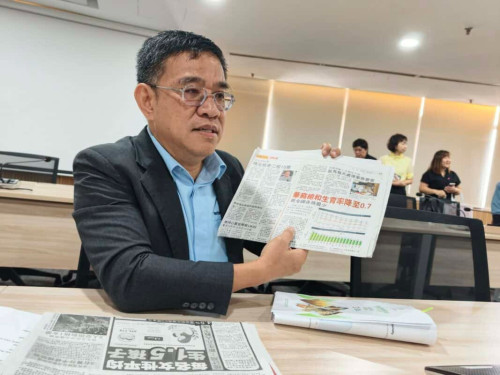

KUALA LUMPUR – The Covid-19 pandemic has worsened Malaysians’ eating habits, which will likely lead to increased cases of non-communicable diseases (NCDs), warned prominent economist Prof Jomo Kwame Sundaram.
He said the government should pay more attention to this as while Malaysian life expectancy exceeds 75 years, healthy life expectancy is almost 10 years less.
“We are not eating enough micronutrients, including vitamins and minerals. We have a lot of NCDs due to poor eating habits, a poor diet, and very often promoted by large food corporations.
“We must really think about improving our food. An additional problem is that Malaysia uses a lot of toxic agro-chemicals.”
He said his proposal for meal programmes for primary school pupils has been ignored by all three administrations.
“We need to do much more. The idea is to have at least one meal in school that fulfils all micronutrient requirements and provides some macronutrients as well. This can be done at a low cost, such as increasing the consumption of vegetables and fruits that can largely be locally sourced.
“Unfortunately, the existing supplementary food programme is in the hands of large food corporations that are making a lot of money.
“Due to the pandemic, people are also relying on unhealthy options like instant noodles,” he said, adding that there is room for the Education, Agriculture and Health Ministries to develop the programme.
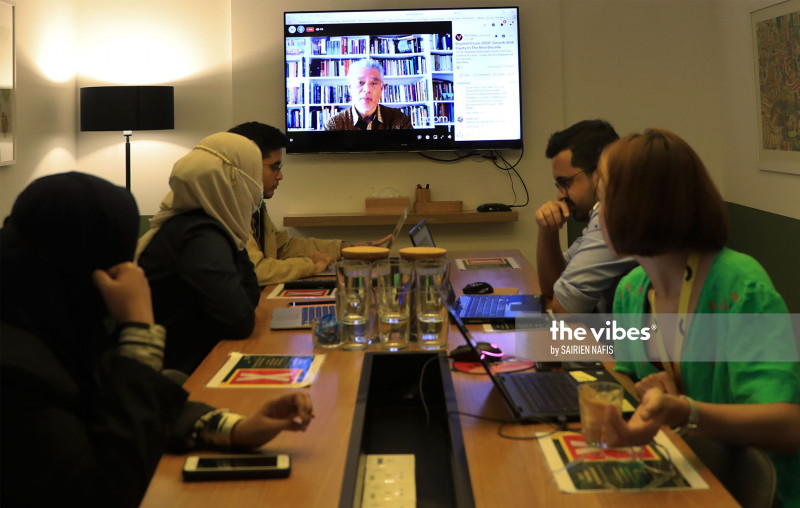
Jomo was speaking at the Beyond Vision 2020: Growth with Equity in the New Decade webinar co-organised by Sekhar Institute, The Vibes and Petra Group on Thursday.
Firas Raad, country manager for the World Bank, echoed Jomo’s opinion that NCDs are a major challenge.
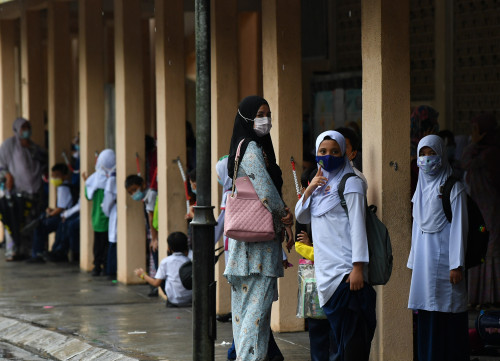
He said 20% of children in Malaysia are stunted, while another 20% are either overweight or obese.
“This is a dual nutrition problem that the country has to deal with. (The government) must think about it. Nutrition problems are a tremendous challenge for society.
“We are seeing a resurgence of intestinal parasites among households in People’s Housing Project (PPR) flats. That is not a good indicator.
“PPR homes are supposed to be a ticket for many families to rise in society, to join the middle class. But, we are seeing bad signs emerging. The government needs to pay attention to this.” –The Vibes, November 14, 2020
Follow The Vibes to read our series of in-depth articles based on discourses held during the webinar titled ‘Beyond Vision 2020: Growth with Equity in the New Decade’, from Thursday till Monday
Related stories:
‘Political necessity derailed Vision 2020’
To say Vision 2020 is terrible is ‘most unfortunate’, says economist