
KUALA LUMPUR – The Malaysian Pharmacists Society (MPS) has urged the Health Ministry to impose a minimum charge for the supply of medicines at public health facilities.
Its president, Amrahi Buang, said the move was the best way to address the current shortage of medicines in the country.
Describing the issue as serious, he observed that there is a tendency among patients who do not use the medicines received even though they were given for free, resulting in a waste of government funds.
“When they (medicines) are given for free, we can already predict what happens. Some (patients) do not appreciate it. They came to take (medicine) but did not consume it. And if the medicine is expensive, it becomes a waste. That means something is wrong.
“Nothing comes for free. In the public sector, this involves public funds, if not taxpayers’ money. So how is this free?” Amrahi said, when contacted by The Vibes’ Bahasa Malaysia sister publication Getaran recently.
The senior pharmacist said several semi-government hospitals in the country have already begun imposing minimum fees for medicines, including the University of Malaya Medical Centre (UMMC), where he used to work.
The centre does not charge civil servants, but the general public is made to pay for services and medicines there.
“For expensive medicines (in UMMC), for example, the charges are not as expensive as private hospitals or clinics. So, this move can be done, but it is up to the government to carry out implementation.”
Amrahi also welcomed the ministry’s move to allow private health facilities to receive medicine on loan from the public sector in the event of emergencies.
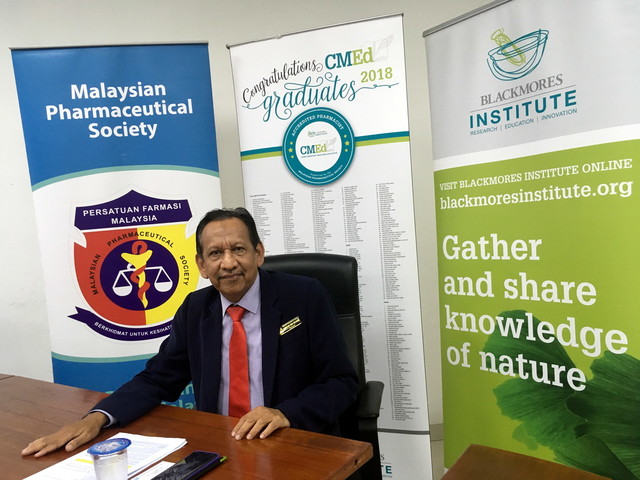
However, he said, Health Minister Khairy Jamaluddin’s announcement on the matter indicated that the shortages of medicines in private clinics, hospitals, and community pharmacies in the country are at a serious level.
“Actually, the MPC had expected this issue to arise, and I had even issued a statement in October last year, asking the government to make appropriate preparations.
“So, if the government’s response has reached this level, it means the issue has become serious. It means that our country was not ready to face this issue,” he said.
Amrahi suggested that the government should be more active in controlling the supply of medicines, as done in other countries.
Based on his observation, other governments play an active role to ensure that medicine supply is always available.
“However, it is different in our country, which has a ‘two-tier’ system, especially with the existence of public and private health facilities. Sometimes, the price of medicine in private facilities also varies. It’s really peculiar,” he said.
“Regardless, this is just the way things are run here. But it is hoped that the issue can open the eyes of the government to find the best solution.”
Last week, Khairy said the move to allow the lending of medicines to private healthcare facilities is aimed at ensuring an adequate supply of medicines at both public and private healthcare centres amid a reported shortage of stock.
However, the minister said public healthcare facilities that loan out their medicine to private centres must ensure their own inventory is adequately stocked. – The Vibes, June 19, 2022

_Petaling_Jaya_-_AZIM_RAHMAN_3.jpg)