
KUALA LUMPUR – The government should use existing laws and not the Security Offences (Special Measures) Act 2012 (Sosma) to prosecute those involved in river pollution, experts said.
“We can understand people’s anger and hardships faced in the few days when water cuts occur. Any acts of a criminal nature can and should be prosecuted using present laws without the need to overreact using laws such as Sosma,” Suhakam Commissioner Jerald Joseph told The Vibes.
Suhakam said the use of Sosma could result in a situation where a suspect is detained without trial, infringing on a core principle of human rights.
It added that Sosma must be amended to include judicial and parliamentary oversight to ensure checks and balances.
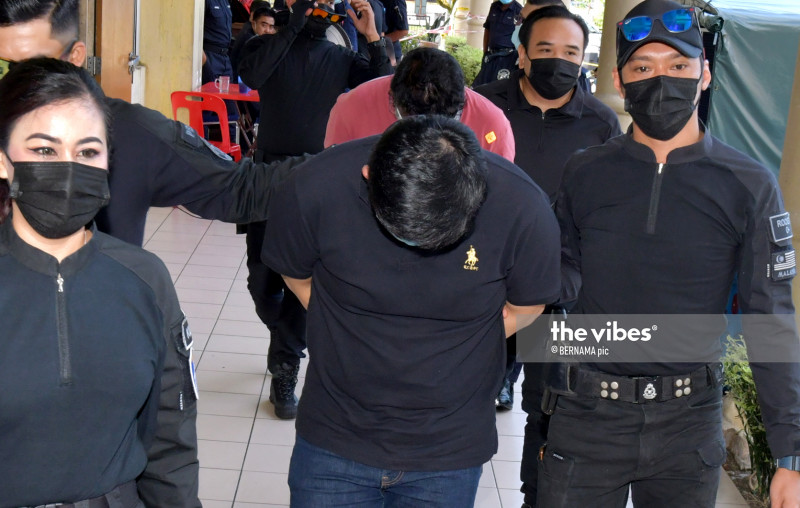
On November 23, two men, including a company director, were the first to be charged under the Sosma with committing sabotage on water services in Selangor.
Contractor R. Nathan, 42, and company director Lim Kian Aik, 42, both claimed trial.
It was reported they can be detained under Sosma for up to 28 days without charge.
“The suspects may be detained for up to 28 days, which is twice as long as the total 14-day detention allowed under the Criminal Procedure Code (CPC). In this regard, Suhakam is concerned that the power of arrest and detention does not provide for judicial oversight,” Jerald said.
In addition to long periods of detention without judicial oversight, Suhakam also expressed concern that prosecutors could order the police to intercept a suspect’s communications, which contravenes Article 12 of the Universal Declaration of Human Rights (UDHR) and Article 17 of the International Covenant on Civil and Political Rights (ICCPR), which prohibits arbitrary interference with an individual’s right to privacy, family, home or correspondence.
Meanwhile, lawyer Syahredzan Johan supports taking heavy measures against those polluting rivers, but not through Sosma.
“I must stress that I am in full support of taking heavy action against those who have sabotaged the clean water supply in Selangor. Their actions have impacted millions in Kuala Lumpur and Selangor and the law should be used against them.
“As such, I support the use of Section 124K of the Penal Code against them, which is the offence of sabotage and carries a penalty of life imprisonment. However, I cannot support the use of Sosma against them,” Syahredzan said.
Syahredzan expressed concern that a lack of bail provisions under Sosma would allow a suspect to be detained without being found guilty.
He added that Sosma would give the prosecution an upper hand in terms of collecting evidence.
“They should be charged under Section 124K of the Penal Code, but must be given the same rights as other accused persons. In other words, Sosma should not be used against them,” he said.
On the other hand, constitutional expert Professor Datuk Gurdial Singh, said Sosma is a legal procedure used by authorities to handle security offences laid out in the Penal Code.
“Sabotage is defined to include any act or omission intending to cause harm to the maintenance of essential services. Water service is one such essential service under the Penal Code. The punishment is imprisonment for life,” Gurdial said.
He added that, since the authorities have classified the matter a security offence, it would be covered by special procedures under Sosma, although there are other Penal Code provisions in which the suspects could have been charged with.
“There are other provisions under the Penal Code for which they could have been charged with, for example, Section 277 makes it an offence to foul the water of a public spring. The punishment under this section is a maximum of three month’s imprisonment.
“There are also offences under the Environmental Quality Act for polluting waterways; also, the Water Services Act and under the Local Council Act,” he said.
He added investigations under Sosma will have human rights implications, similar to those raised in the use of the Internal Security Act (ISA), where a suspect can be detained without trial and without legal representation for a defined period.
Lawyer Kuhan Raj, meanwhile, believes Sosma should be utilised for the purposes it was intended, but fears it may not act as a deterrent for river polluters.
“The government is setting a precedent by charging these river polluters under Sosma. Oftentimes, we see Sosma in the news for the wrong reasons. This instance, it is being used for what it is intended for,” Kuhan told The Vibes.
He similarly said that Sosma encompasses Section 124K of the Penal Code, as it is a security offence.
“The fear is that this could be a one-off situation and the government is merely using this provision against them because of the publicity this case has received, and the frequency of water pollution in Selangor,” Kuhan said.
Pointing towards extra measures needed to curb river pollution, he said the Malaysian Anti-Corruption Commission must identify leakages in enforcement agencies involved in combating pollution.
He also added that where companies are directly involved in river pollution, provisions under the Environment Quality Act, which compels perpetrators to pay for the clean-up costs, could also be used.
On November 23, the media reported that two individuals were charged under Section 124K of the Penal Code in suspicion of polluting Sg Selangor recently.
Because of procedural provisions under Section 124K for Sosma, bail was not offered to both accused persons.
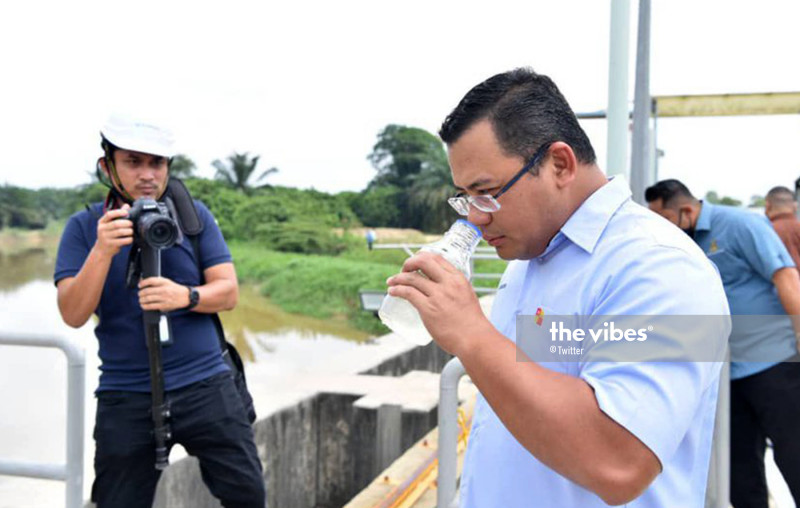
On November 10, pollution in Sg Selangor was detected. Initially, authorities were informed that the pollution came from Indah Water’s sewage treatment plant. However, further investigations revealed that a storage facility in Taman Velox, Rawang, dumped chemical waste into the sewage manhole.
The pollution resulted in water supply disruption in various locations in Selangor, affecting some 1,139,008 households. – The Vibes, November 28, 2020