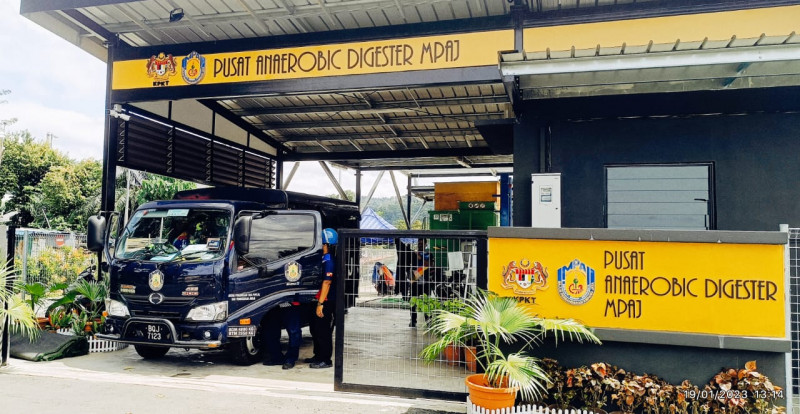

AMPANG – The country’s first integrated anaerobic digester (AD) centre that processes food waste into compost and gas in Ampang Jaya, Selangor, could be extended to other local councils.
It is one of the Local Government Development Ministry’s green initiatives in partnership with the Solid Waste Management and Public Cleansing Corporation (SWCorp) and the Ampang Jaya Municipal Council (MPAJ) towards the execution of a circular economy.
Deputy Local Government Development Minister Akmal Nasrullah Mohd Nasir said the AD centre would be a reference point for the ministry to study the effectiveness of managing food waste before the concept is extended to other local councils.
“We will see the merits of this initiative before looking into whether we can expand this AD concept to several local councils throughout the country,” he said after officiating the opening of Laman Selera MPAJ@Ampang Jaya at Jalan Kolam Ayer Lama yesterday.
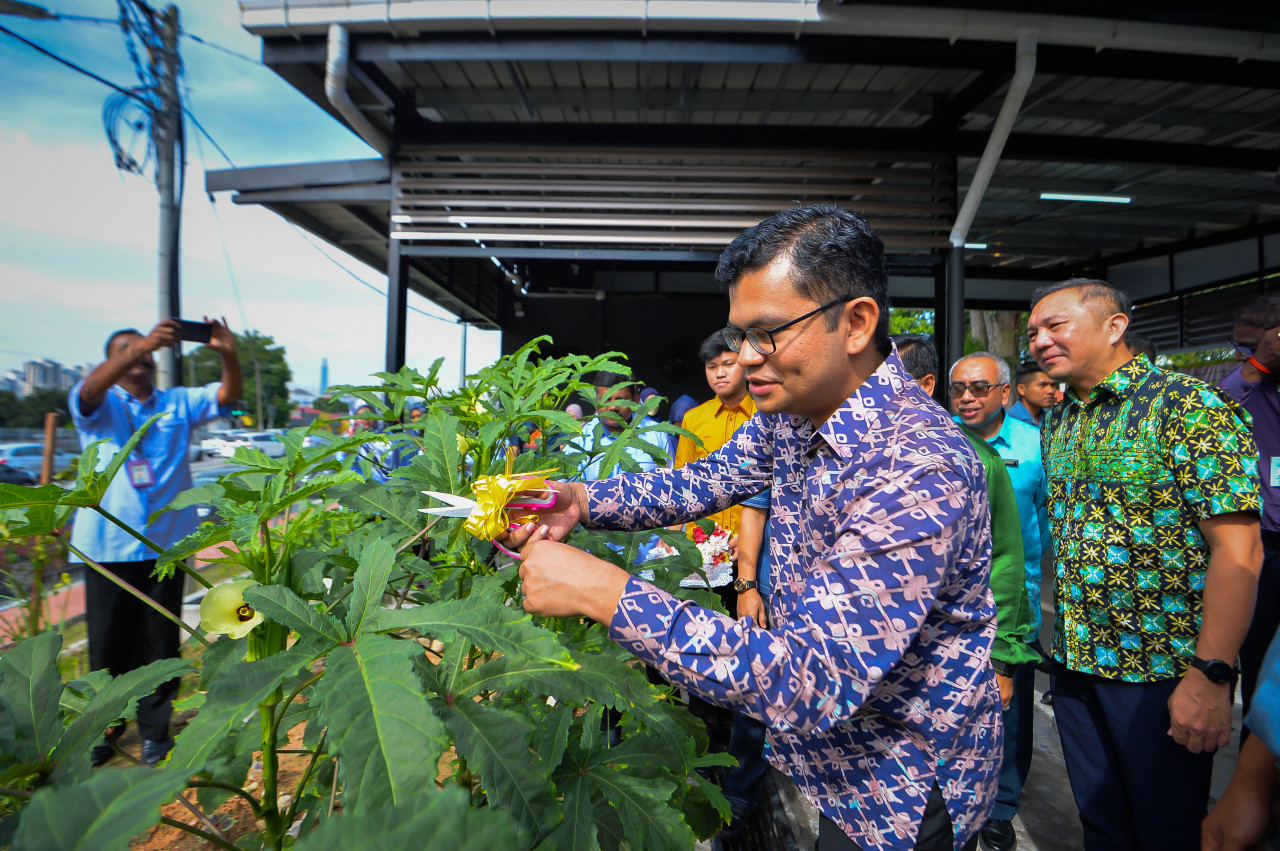
Also in attendance were Selangor Local Government, Public Transport and New Village Development Committee chairman Ng Sze Han; Ampang MP Rodziah Ismail; SWCorp chief executive officer Ismail Mokhtar and MPAJ president Mohd Fauzi Md Yatim.
The facility and Laman Selera fall under a RM4.6 million project under the ministry’s sustainable development agenda. The AD machine is contributed by SWCorp and managed by MPAJ.
Using an Internet of Things network, the AD machine is capable of being remotely monitored by the council’s personnel, even when they are not present at the centre.
“This facility can process 500kg of food waste in a day,” said Ismail.

It is expected that the centre will tackle the excessive waste in the food and beverage industry and ease the burden of landfills within the state.
Several demonstrations were conducted, which include the AD’s ability to produce gas, solar power and liquid compost for plants.
Among the AD’s capabilities, Akmal said, is the production of liquid fertiliser from food waste, which can be used for community gardens or hydroponic plants and biogas for cooking.
“It can be applied as an income generator for the local council via the sale of liquid organic fertiliser produced from food waste, reducing the carbon monoxide emission from garbage trucks to landfills while the centre can be a place for learning about efficient waste management,” he explained.
Now, it is a challenge for MPAJ to ensure the centre is well managed. The ministry wants to see this project as a progressive step that can be continued as it aims to expand this project to other local authorities.
“But for now, we will monitor and see the results at MPAJ first,” he said, adding that the AD centre currently only accepts food waste from selected premises producing a lot of food waste such as hotels, restaurants and others within the local authority’s area.
The 0.015ha AD centre, in operation since July last year, has been receiving food waste so far from 65 food stalls, four hotels and one public hospital.
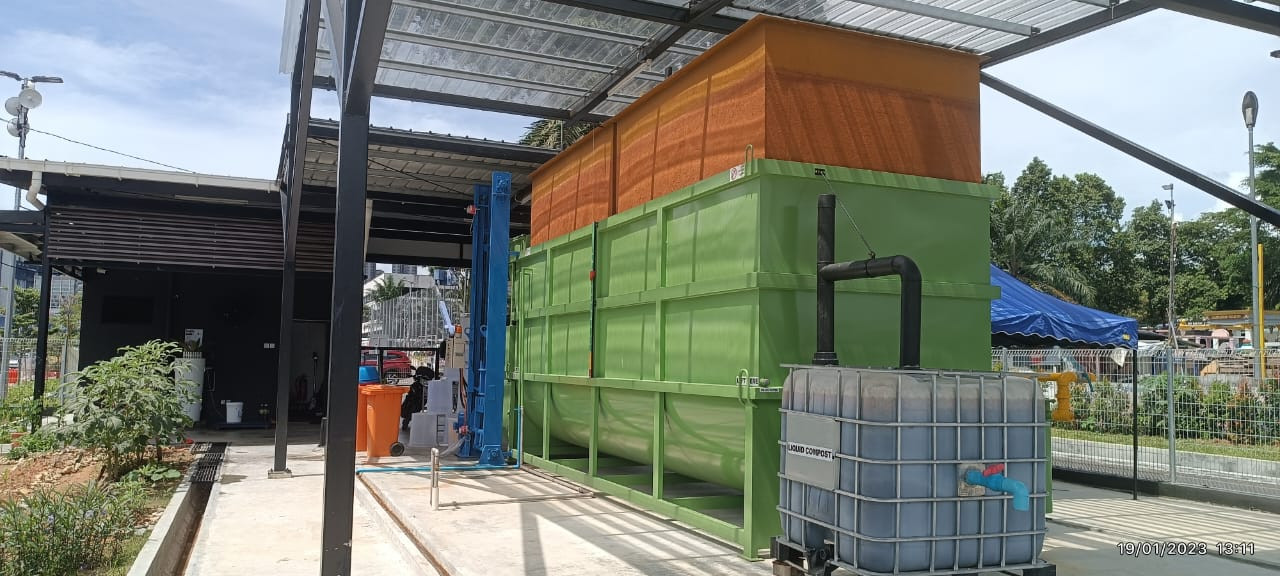
Up to December, a total of 19,120l of compost was successfully produced over 35,000kg of food waste.
“If this is running well, this will assist MPAJ’s vision to make Ampang Jaya a low-carbon city by 2030,” said Fauzi.
In addition, Akmal doesn’t rule out community participation in the near future.
If there is demand and the machine can cope according to its capacity, I don’t see any problems for the machine to be opened to the public.
“The community can also be given the opportunity to contribute or take part. Perhaps a certain day can be set to allow this facility to be used together (by the community) to educate children and interest groups.”
The AD centre is operated from 8am till 5pm all week including weekends and public holidays. – The Vibes, January 20, 2023