
GEORGE TOWN – A water resources expert has supported a call for states to share natural catchment resources with each other in view of the drought threat from climate change currently impacting the country.
Water Watch chairman Chan Ngai Weng said that the federal government, with the help of the National Water Services Commission (SPAN), should act as the moderator to initiate and drive water-sharing among states.
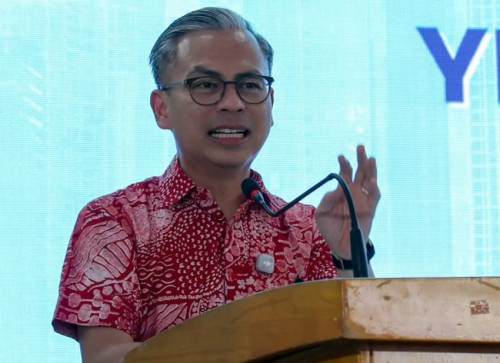
He said this in reacting to SPAN chairman Charles Santiago’s assertion that Malaysia needs a federal water management authority to oversee supply and usage, instead of leaving it to the respective states.
Santiago said that state water authorities should understand the need for transboundary supply agreements and the sharing of water catchment resources.
“Without federal mediation, there is absolutely no chance that any state will willingly give up its legal jurisdiction (based on the federal constitution) on water,” Chan said in an interview with The Vibes.
The federal government must surely understand this, and not merely ask the states to discuss and settle the issue by themselves, he stressed, pointing to a need to expedite such frameworks since the threat from climate change is now real.
“SPAN has indicated and urged all states to work together to come up with strategies to manage water resources and that they can no longer keep water resources to themselves. However, talking is useless. SPAN should take proactive action to achieve this.”
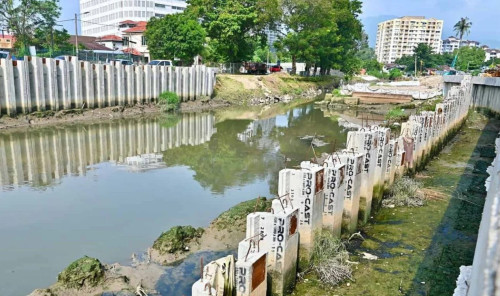
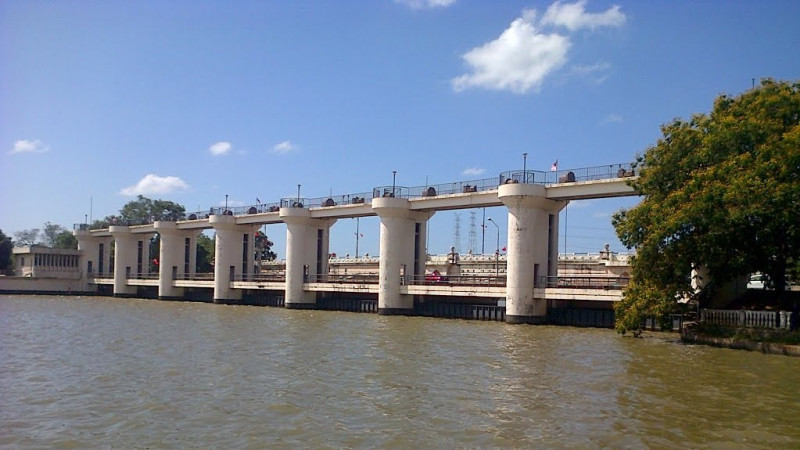
Chan, an academic with Universiti Sains Malaysia (USM), also touched on the Penang-Kedah water border dispute, citing that the transboundary rivers are under the concurrent national jurisdiction list, giving the federal side authority to manage such basins.
With regards to the Sg Muda basin, Putrajaya needs to set up a separate authority (for example the Sg Muda Basin Authority) to manage the basin.
“This is possible given the fact that under the constitution, all transboundary rivers are now under the purview/jurisdiction of the federal government,” he said.
This is exactly the case of the Sg Muda Basin which is partly in Kedah (upstream section) and partly in Penang (downstream section), Chan underlined.
“I also totally agree with Santiago who said that no single state should have the power to hold another hostage, especially in the face of climate change and events like El Nino, which could significantly affect water availability.
“But don’t just talk. Do something to initiate and implement this. The federal government (via SPAN) has the authority on transboundary rivers.”
Santiago had earlier proposed that water no longer become an exclusive right of states but more in the national context as climate change has made it less accessible and more costly.
He said that the time has come for states to draw up mutual agreements to share water resources, citing a possible situation in Penang where it extracts raw water from the overflowing rivers in Perak.
In return, Penang treats and distributes the drinking water back to Perak.
Santiago made such observations following the constant water disruptions in Kedah and Penang owing to droughts and severe floods while unresolved disputes between both state governments over who has riparian rights over Sg Muda complicate matters.
“Instead of blaming one another, all states should work together for a mutual benefit,” Santiago said, adding that SPAN is willing to help promote this cause of water sharing.
Chan also commented on the issue of desalination, saying that the cost of converting seawater to freshwater has come down tremendously as technology advances.
“Penang needs desalinisation to truly become totally independent like Singapore. I think given Penang’s ability as an advanced state, desalination is feasible,” he said.
He also spoke of Penang water authority’s (PBAPP) role as a premier water treatment body and distributor, saying that they have the means to distribute and supply water effectively in the northern region up to northern Perak.
“I agree with this. Penang’s cost of treating water is also much lower than all other states, so this makes sense. But do water service providers in other states need to come under PBAPP? This is the million-dollar question,” said Chan.
Averting a water crisis is an agenda which Penang wants to address effectively.
Penang Chief Minister Chow Kon Yeow said that having a reliable water resource is a challenge which the state faces now besides distributing and treating the precious commodity. – The Vibes, May 26, 2023