
KOTA KINABALU – Warisan took time in the state assembly today to criticise the Sabah government’s actions to remedy the state’s dismal power supply situation, cautioning it not to sideline ordinary consumers while providing for large-scale investors.
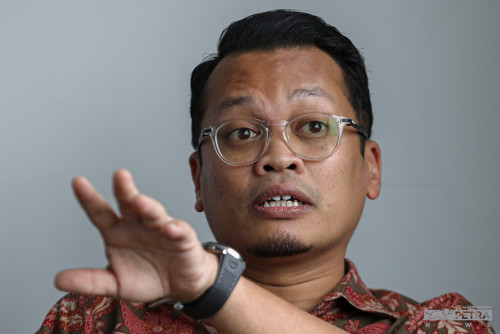
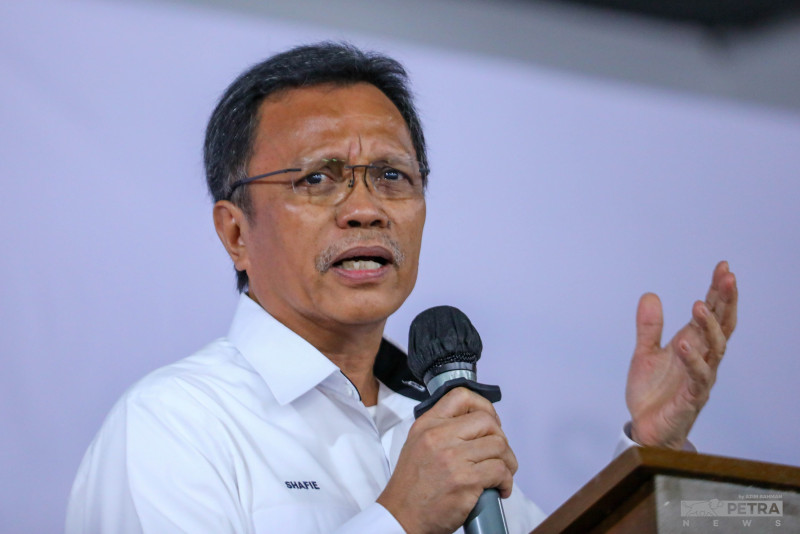
During the question-and-answer session, party president Datuk Seri Mohd Shafie Apdal expressed reservations about the power agreement made with major foreign investor SK Nexilis, suggesting that it prioritises the investor at the expense of regular energy consumers.
The Sabah opposition leader made the statement after state Industrial Development and Entrepreneurship Minister Phoong Jin Zhe detailed the electric supply agreement between Sabah Electricity Sdn Bhd (SESB) and Korean firm SK Nexilis signed on July 17.
Phoong had earlier outlined the deal at Kota Kinabalu Industrial Park, with SESB as the utility firm to supply 5MW this year and 70MW by mid-2024 to meet Nexilis’ power supply needs.
Nexilis is investing RM2.3 billion in Sabah and is in the midst of building a copper foil plant and other facilities at the KKIP area.
Recent reports revealed SESB has agreed to provide a stable and reliable power supply at an attractive rate.
“We realise that Sabah needs foreign investments for revenue and job opportunities, but when we hear about the longstanding issue of power supply problems, assurance seems to be given to investors.
“I ask whether the assurance of sufficient power is also given to the people also. It seems you have sacrificed the needs of the people as they are facing a serious power crisis,” said Shafie in his additional question over the power agreement deal.
Sabah faces power crisis
Phoong in response to Shafie noted that a new power plant with the capacity to generate 100MW would be developed in the west coast of Sabah to cater to both domestic and SK Nexilis’ supply needs.
The response from the state minister also coincides with an earlier question posed by Daud Yusof (Bongawan-Warisan) who sought answers from the chief minister’s office on plans to increase the state’s power generation capacity.
Assistant Minister to the Chief Minister Datuk Nizam Abu Bakar Titingan said in response that a power development plan to meet the demands of consumers in the short run has been approved by the Committee for Planning of Electricity Supply and Tariffs.
The committee comprises federal and state members, and is jointly chaired by Chief Minister Datuk Seri Hajiji Mohd Noor, who is also natural resources, environment, and climate change minister.
According to him, several fast-tracked projects (2023-2025) have been decided in efforts to obtain a stable 30% reserve margin, including the leasing of 224MW powerships.
“The powerships will be operational in the east coast of Sabah by end of this year,” he said.
Nizam said powerships will be supplied by Turkey firm Karpowership Global DMCC and be stationed at sites on the east coast of Sabah, including the main entry substation at POIC Lahad Datu and POIC Sandakan.
The lease term will be for five years, he added.
In the medium term (2026-2030), the state will look into generation capacity from hydro sources of around 400MW and 100MW from large-scale projects, and other venues, he said.
The state will also look into strengthening the capacity and stability of the state grid through a major transmission line development involving a 275kV line connecting the Sabah grid to Sarawak, and the southern link transmission line connecting Sipitang to Tawau, he said.
“Beyond 2030 and as a long-term solution, the state will look into enhancing hydroelectric potential through the hydro development plan currently being conducted by the Energy Commission of Sabah.
“Moreover, exploration of new generation technologies and sources such as geothermal, wind, hydrogen, and battery energy storage systems will be pursued.
“Plans for interconnection transmission lines between Sabah and North Kalimantan will also be explored based on the feasibility study to be conducted this year,” he said.
Nizam said the state government will assume regulatory authority over electricity supply and renewable energy on January 3, 2024, through a special session of the state assembly, followed by the enactment of the 2024 Electricity Supply Enactment, the 2024 Renewable Energy Enactment, and amendments to the Sabah Energy Commission Enactment, including additional functions for regulating electricity and renewable energy on the same day. – The Vibes, August 9, 2023