
IN HIS dystopian social science fiction novel 1984, George Orwell wrote: “Until they become conscious they will never rebel, and until after they have rebelled they cannot become conscious.”
Political consciousness is both a blessing and a curse for the youth; while we garner awareness on controversies plaguing the nation, it also comes hand-in-hand with a sense of helplessness as the constant onslaught of distressing news discloses no sign of light at the end of the tunnel.
We are quickly realising, however, that there is no longer time for silence, nor space for apathy. The ability to remain in blissful ignorance of all that is happening while choosing to turn a blind eye to the plight faced by others is a privilege that comes at the cost of human suffering.
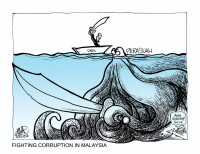
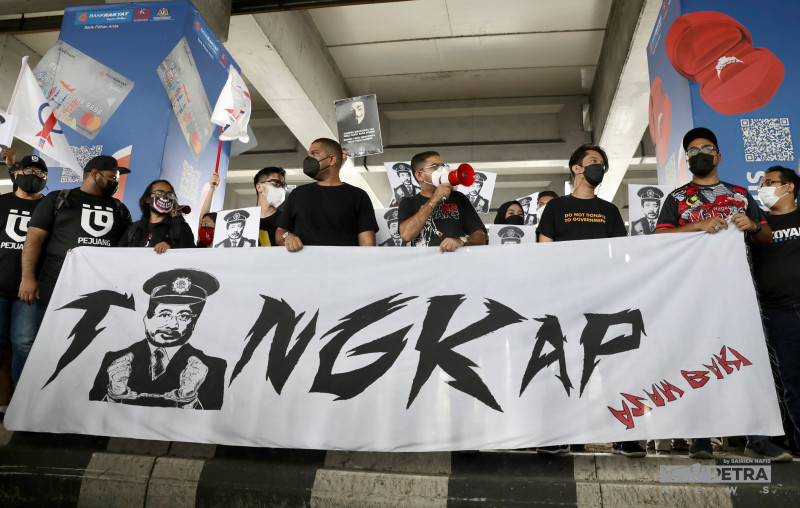
Only last weekend, Malaysia witnessed how nearly 350 youths, who were rightfully angry about corruption taking place in the very agency tasked with eradicating it, took to the streets despite a lockdown on the capital city.
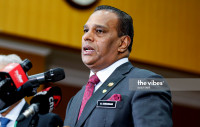
While the protest against Malaysian Anti-Corruption Commission (MACC) chief Tan Sri Azam Baki on January 22 was undeniably one of the latest examples of youths mobilising a movement to the best of their abilities, it has also garnered criticism from people quick to compare it with past demonstrations.
#TangkapAzamBaki may not have had the numbers in the thousands boasted by previous rallies such as the legendary Bersih protests, but it was still undeniably driven by the very same spirit of rebellion which had ignited the flames of dissent in past demonstrations.
Different circumstances surrounding the rallies must also be considered. Besides the #TangkapAzamBaki protest being planned only nine days in advance, the public also saw their movement being restricted as police were heavy-handed with road and public transportation closures while a pandemic continues to have its claws hooked in the nation.
Considering all of the above, there is already an unequal basis of comparison. Is it then justified to claim that the smaller crowd can be equated to a lack of public support towards the cause?
This writer would assert that it is not. It is no secret that Azam’s controversy over his ownership of shares has drawn significant criticism from the public, with many from significant positions disavowing him, even prior to the protest.
For example, members of the Anti-Corruption Advisory Board, excluding its chairman Tan Sri Abu Zahar Ujang, had on January 8 distanced themselves from the embattled MACC chief.
Centre to Combat Corruption and Cronyism founding director Cynthia Gabriel had also urged Prime Minister Datuk Seri Ismail Sabri Yaakob to immediately convene a high-level task force to investigate Azam Baki.
Regardless of who and how many showed up, the rally did prove one thing: those in power are afraid of the people and what we can do as a united force actively willing to risk detainment if it is the price for opposing the elites.
Staring down Federal Reserve Unit personnel standing by with shields, batons, tear gas, and a few water cannon trucks, the protestors marched peacefully towards the armed officers and sat on the road instead of giving up at the intimidating front.
As Errico Malatesta, an Italian anarchist, once said: “The only limit to the oppression of the government is the power with which the people show themselves capable of opposing it.”
Rebellion is not something that you are born with. It is a trait that is planted by the seeds of discontent and watered by the constant failures of a corrupt government that is more interested in lining its pockets than protecting the people it had sworn to serve.
Only time will tell if the #TangkapAzamBaki rally will have a long-lasting impact but as of the time of writing, it has been a week since the gathering and there has yet to be any news of action being taken against Azam.
Numerous youth politicians and activists, however, have since been investigated by the police, with many reiterating the demands of the rally they had been hauled in by police for while standing firm on their stand against Azam.
With all the flak constantly dished out to younger generations for our adherence to ‘woke’ culture and political correctness, such critics might also be content to remain complacent with the way things are while youths initiate rebellion for the sake of the entire nation.
We are the same generation that rallied together our forces, clad in the sombre colour of mourning to symbolise the dire conditions of a country that is willing to sacrifice valuable resources and manpower just to protect the ruling class.
These “snowflakes” were the same ones who, despite the employment of numerous intimidation tactics by authorities, took to the streets and put themselves on the frontlines in the fight for change while refusing to back down from adversity.
Remember that at the end of the day, the strongest blizzards all began with a single snowflake. – The Vibes, January 30, 2022
Qistina Nadia Dzulqarnain is a journalist at The Vibes