CHINA has pledged to cut its greenhouse gas emissions by 7% to 10% from their peak by 2035, marking the first time the world’s largest emitter has committed to an absolute reduction, rather than a slowdown in growth.
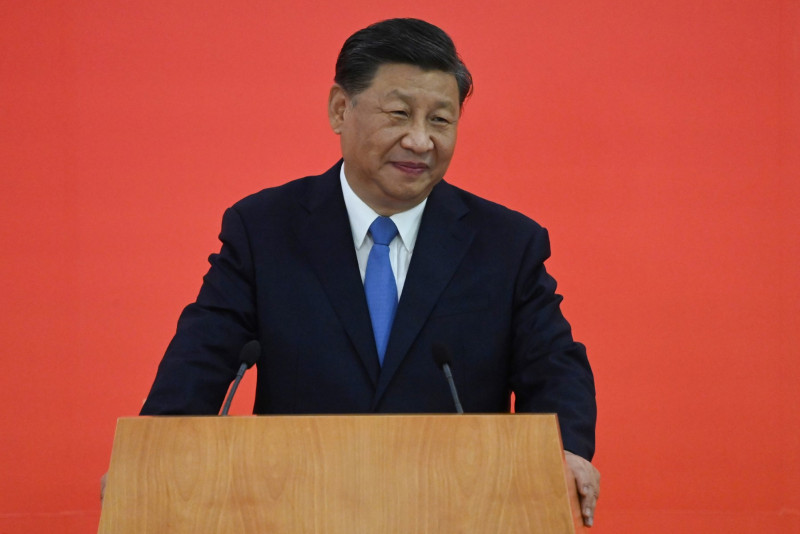
Reuters reported on Thursday the announcement was made by President Xi Jinping during a climate leaders’ summit convened by UN Secretary-General António Guterres on the sidelines of the UN General Assembly.
Delivering his message via live video from Beijing, Xi called on developed nations to uphold their climate responsibilities and criticised what he described as a reversal of progress by unnamed countries—widely interpreted as a reference to the United States.
“Green and low-carbon transformation is the trend of our times. Despite some countries going against the trend, the international community should stay on the right track, maintain unwavering confidence, unwavering action, and undiminished efforts,” Xi said.
His remarks came one day after U.S. President Donald Trump used his General Assembly speech to dismiss climate change as a “con job,” label scientists “stupid,” and double down on fossil fuels.
Trump also confirmed the United States’ second withdrawal from the Paris Agreement, which aims to limit global temperature rise to below 1.5°C.
Xi’s new target, while historically significant, was seen by some analysts as modest. China also pledged to increase its solar and wind capacity sixfold from 2020 levels over the next decade, aiming for non-fossil fuels to make up over 30% of its energy consumption.
Li Shuo, director of the China Climate Hub at the Asia Society, described Beijing’s approach as cautious.
“China’s commitment represents a cautious move that extends a long-standing political tradition of prioritising steady, predictable decision-making but also hides a more significant economic reality,” he said.
Ian Bremmer of the Belfer Center argued that Trump’s stance had handed China an opportunity to dominate the global green energy market. “Trump wants fossil fuels and the United States is indeed a powerful petro-state,” he said. “But letting China become the world’s sole powerful electro-state is the opposite of making America great again … at least if you care about the future.”
World Leaders Fall Short of 1.5°C Goal
Despite calls for stronger climate action ahead of the COP30 summit in Brazil next year, most new national pledges failed to align with the scientific consensus required to limit warming.
Brazilian President Luiz Inácio Lula da Silva said global leaders risked losing the trust of their people. “Society is going to stop believing its leaders,” he warned. “And all of us will lose because denialism may actually win.”
Brazil has committed to reducing emissions by between 59% and 67% by 2035, alongside stepped-up efforts to combat deforestation.
Australia, which is slated to host the UN climate summit in 2026, announced a target of cutting emissions by 62% to 70% below 2005 levels by 2035.
Prime Minister Anthony Albanese said Australia’s plan would not come at the cost of jobs or national security. “We want to bring the world with us on climate change,” he said.
The European Union, meanwhile, has yet to finalise its updated 2035 target, though EU Commission President Ursula von der Leyen said the bloc remained on track to slash emissions by 55% by 2030. A range of 66% to 72% is under consideration for the next milestone.
Small island states also made their voices heard. Palau, representing the 39-member Alliance of Small Island States (AOSIS), committed to cutting emissions to 44% of 2015 levels by 2035.
President Surangel Whipps cited a recent opinion by the International Court of Justice, which affirmed a legal obligation for states to take stronger action. “Those with the greatest responsibility and the greatest capacity to act must do far more,” he said.
UN Secretary-General António Guterres acknowledged the shortfalls but insisted that progress was being made. “The Paris Agreement has made a difference,” he said, noting that current commitments have reduced the projected global temperature rise from 4°C to 2.6°C.
“Now, we need new plans for 2035 that go much further, much faster,” he urged.
Despite this, scientists warn the world is already more than 1.2°C warmer than pre-industrial levels, leaving little room for delay. - September 25, 2025