PARIS – Smoke from monster wildfires in Australia caused a chemical reaction that widened the ozone hole 10%, researchers said today, raising fears that increasing forest fires could delay the recovery of Earth’s atmospheric protection against deadly ultraviolet radiation.
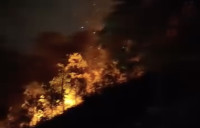
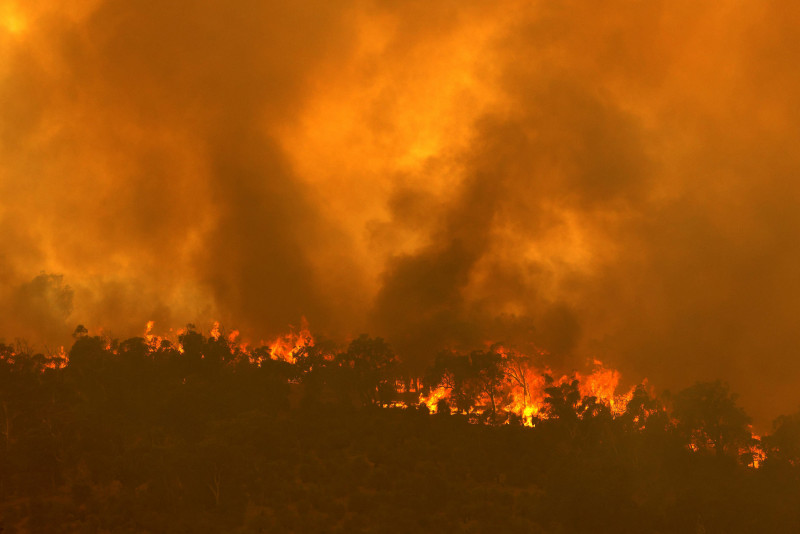
Severe summer heat and drought helped drive the deadly “Black Summer” fires from late 2019 to early 2020, which destroyed vast swathes of eucalyptus forest and enveloped Sydney and other cities in smoke and ash for months.
Previous research concluded that the more than one million tonnes of smoke pumped into the atmosphere by the fires prolonged the Antarctic ozone hole that opens up above Antarctica each spring.
In a new study, published in the journal Nature, researchers in the United States and China identified a newly identified chemical reaction in the wildfire smoke that increased the depletion of ozone – the atmospheric gas that reduces the amount of ultraviolet radiation reaching the Earth’s surface.
Susan Solomon, the Massachusetts Institute of Technology professor who led the research, said that this reaction had chipped away at the edges of the ozone hole over Antarctica, expanding the hole by more than 2 million sq km – 10% of its area compared to the previous year.
“These chemical reactions are happening right on the edge of the region where the ozone hole happens,” she said, explaining that the “particles give it a little extra push”.
The ozone hole was first created by human pollution – particularly chlorofluorocarbons (CFCs) emitted from many refrigerators – but in recent decades, a global agreement on these chemicals has given the ozone layer a chance to heal.
The 1987 Montreal Protocol, ratified by 195 countries, sharply reduced the amount of CFCs pumped in the atmosphere, although the molecules linger for decades.
United Nations modelling predicts that the ozone layer over the southern hemisphere should fully heal by 2060.
But Solomon, who first identified the chemicals responsible for the Antarctic ozone hole in the 1980s, expressed concern that the effects of climate change could slow that recovery.
“We think wildfires are going to become more frequent and intense,” she said, adding the ozone hole “will get better eventually, I believe, but it’s conceivable that wildfires could certainly slow it down.
“I don’t think it’s going to stop the recovery altogether. But it could stop it from actually recovering when we think it should.”
Ozone ‘shocker’
Scientists have long associated ozone hole formation with extreme cold, as clouds at these very low temperatures provide a surface that lingering CFCs react with, turning them into other chemicals that makes the chlorine more damaging to the ozone layer than it otherwise would be.
But Solomon said that the new research shows that fire smoke particles rising into the atmosphere also act to take up these molecules and set off a series of chemical reactions that produce ozone-depleting chlorine monoxide.
This can happen, they found, without needing the extreme cold temperatures.
By triggering this reaction, the new study found that the fires likely contributed to a temporary three to five percent depletion of total ozone at mid-latitudes in the southern hemisphere, over Australia, New Zealand, and parts of Africa and South America.
“Honestly, I’ve never seen anything like what happened after the Australian fires, and I never expected to,” said Solomon, a leading climate scientist.
“It’s another shocker.”
Research published in August by researchers in Britain found that a build-up of smoke particles from the Black Summer fires caused changes in atmospheric temperatures that prolonged the Antarctic ozone hole.
More than 30 people died in the Black Summer fires, which killed or displaced an estimated one to three billion animals.
Climate change driven by fossil fuel pollution is expected to create the hotter and drier conditions associated with more intense wildfires. – AFP, March 9, 2023