LONDON – British companies are struggling with a large amount of red tape as a result of Brexit, nearly two weeks since the country's final divorce from the European Union.
Senior government minister Michael Gove recently admitted there will be “significant disruption” at the border because of increased bureaucracy that is slowing the flow of freight – and is especially damaging for fresh produce.
Under the Brexit trade deal, which came into force on January 1, UK exporters now face costly and time-consuming paperwork, including customs declarations, regulatory food safety checks and “rules of origin” levies.
Logistics
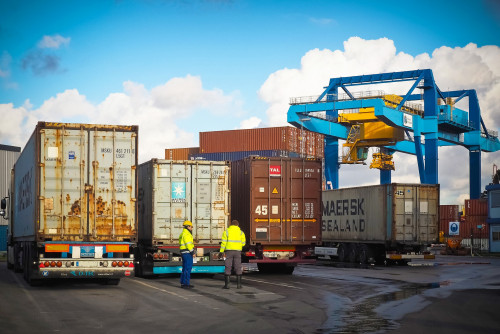
The logistics industry is experiencing a major headache with traffic slowing at the border, particularly at the Channel port of Dover.
Even before Brexit, traffic had been hit by new Covid-19 border restrictions, as European nations sought to curb spiking infections, particularly from a virulent new strain.
Logistics companies are now trying to curb their dependence on Dover. They are undertaking far longer journeys to reach Ireland, for example, by staying within the European Union to bypass the UK.
Freight had already begun shifting away since the Brexit referendum in 2016, with goods increasingly travelling to eastern English ports, and also via railway.
UK-registered trucks are meanwhile now only allowed one stop in the European Union to unload goods, which has placed the music concert touring industry in crisis.
Manufacturing
Britain's chemicals, electrical equipment, machinery, metals, minerals and textile sectors have been snared by the trade deal's so-called "rules of origin".
This is because their supply chains tend to rely on a vast number of imported components from outside the European Union.
Under the provision, any goods will be subject to a customs levy if it arrives in Britain from abroad and is then exported into the bloc.
For example, if a British clothing producer imports Chinese-made textiles, it would have to pay a customs charge if it re-exports the items to a member nation of the EU's single market and customs union.
Retail
Britain's Road Haulage Association has warned that the retail supply chain with Northern Ireland is on the brink of collapse and faces chronic delays because of post-Brexit red tape.
The industry body warns that supermarkets are "experiencing considerable difficulties" stocking shelves with fresh goods since the Brexit transition period ended on December 31.
The British Retail Consortium says at least 50 of its members are facing potential tariffs for re-exporting goods to the EU.
Collapsed UK department store Debenhams has shut its online website in Ireland owing to uncertainty over the new trade rules, while London’s high-end department store Fortnum & Mason has suspended EU deliveries.
Fishing
Scotland's seafood industry claims that post-Brexit paperwork and border delays have threatened livelihoods, stoking fears freshly-caught produce will end up rotting in the bin.
The prized seafood – including langoustines, scallops, oysters, prawns and lobsters – is mainly exported to markets in northern France, and then shipped across Europe.
However, the industry relies on rapid transportation to reach dinner tables, supermarkets and restaurants on the continent.
Export prices are reportedly sliding because of paperwork delays that have sparked severe holdups.
Financial services
The Brexit trade deal did not include the financial services industry, the future of which is now cloaked in uncertainty.
Britain and the EU aim to seal a memorandum of understanding on financial services by March to establish a roadmap for cooperation, but officials have downplayed its impact.
Bank of England governor Andrew Bailey remains optimistic of negotiating a so-called “equivalence” regime that makes rules compatible to keep trade in certain services flowing smoothly.
From January 1, the financial sector lost single-market access and its European "passport", a device that allows UK financial products and services to be sold in the EU. – AFP, January 13. 2021