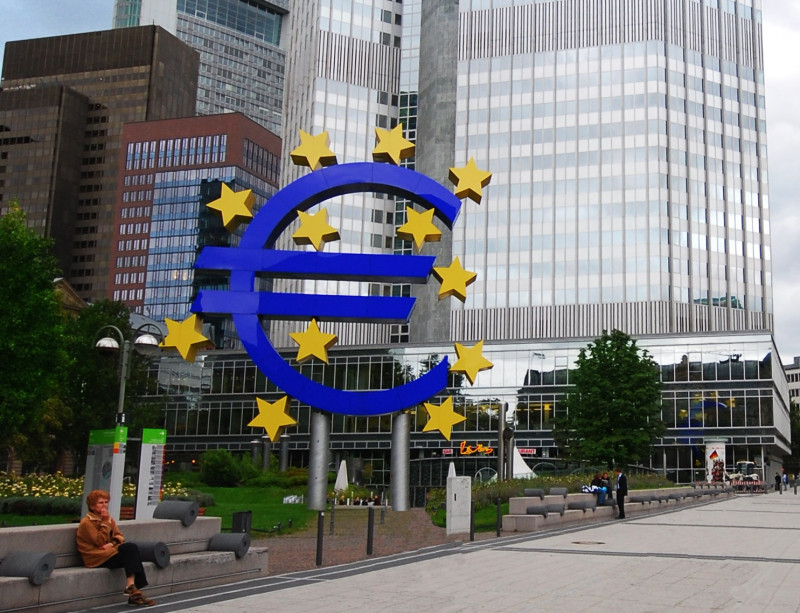
FRANKFURT AM MAIN – A resurgence in the coronavirus pandemic and a bumpy start to vaccination drives are likely to weigh on the minds of European Central Bank governors when they meet Thursday, but they are expected to stop short of taking fresh action.
The ECB's 25-member governing council is likely to leave its ultra-loose monetary policy unchanged after injecting more stimulus into the battered eurozone economy at last month's meeting.
The Frankfurt institution bulked up its pandemic emergency bond-buying programme (PEPP) by €500 billion (RM2.4 trillion) to €1.85 trillion and prolonged the scheme until March 2022.
It also announced more ultra-cheap loans for banks.
"Policymakers will be happy to sit out the meeting... and repeat the mantra that they will do whatever is required to support the eurozone through the pandemic," said Andrew Kenningham at Capital Economics.
Their main concern, he said, would be the impact of the pandemic on hopes for an economic rebound in the first quarter of 2021.
Many European governments are reimposing tough restrictions to contain a second wave of Covid-19 cases, compounded by the emergence of new, more contagious strains in Britain and South Africa.
Smaller-than-expected deliveries of the first batches of Covid-19 vaccines, especially in the European Union, have further fuelled fears that the pandemic could wreak havoc for longer.
The ECB in December forecast economic growth in the 19-nation euro area at 3.9% in 2021, after a fall estimated at 7.3% in 2020.
ECB chief Christine Lagarde recently said she had "no reasons to believe our forecast is wrong at this point".
But it would become "a concern", she said, if member states had to extend their shutdowns beyond March.
'Inflation surprise'
Under Lagarde, the central bank has unleashed unprecedented support to steer the eurozone through the health crisis, while also urging governments to do their bit through fiscal stimulus.
Alongside the emergency bond purchases, the ECB has kept interest rates at record-low levels, and it is still buying €20 billion a month in corporate and government debt under a pre-pandemic asset purchasing scheme.
The bond purchases are aimed at keeping borrowing costs low to encourage spending and investment, in a bid to bolster growth and drive up inflation.
But inflation has stayed stubbornly low for years and even turned negative in 2020.
By the ECB's own estimates, eurozone inflation will gradually inch up to 1.4% by 2023, still far off the bank's target of just under 2%.
Last month, inflation held steady at minus 0.3%.
Analysts say inflation could bound higher later this year, fuelled by pent-up consumer demand once the lockdowns start easing, particularly in travel and restaurant sectors.
The start of 2021 also marked the end of a six-month sales tax cut in Germany, the EU's largest economy, that had dragged on inflation.
"The return of inflation could be one of the biggest surprises in 2021," said ING bank economist Carsten Brzeski.
ECB executive board member Isabel Schnabel, however, has said any such boost would be temporary and that a sustained increase in inflation "is likely to only emerge very slowly".
"That is why it would not significantly influence our monetary policy decisions, which are oriented towards a medium-term horizon," she said.
At Thursday's press conference, former French finance minister Lagarde is likely to also be quizzed about the recent strength of the euro against the dollar.
"The currency remains a concern for the ECB as it could add to deflationary pressures and hurt the recovery," said HSBC economist Fabio Balboni.
A stronger euro makes imports cheaper, keeping the lid on consumer prices, while exports become less competitive, hurting growth prospects.
"There is arguably little the ECB can do about it," said Pictet Wealth Management strategist Frederik Ducrozet.
"Although there is more they could say, for instance putting growing emphasis on their tolerance for inflation overshoot in the future." – AFP, January 18, 2021